
KGM
Rexton
From $46,990
GWM
Model Profile
From $47,990
Driveaway estimate · NSW · priced Aug 2026. Varies by state. Details →
A ladder frame, low-range gearing and locking diffs for the money most buyers take to a mid-size SUV showroom. The Tank 300 has been that offer in Australia since 2023, and it spans five grades across three drivetrains: turbo-diesel, turbo-petrol and, since March 2026, the Hi4-T plug-in hybrid. Pricing ran $48,990 to $61,990 driveaway as of mid-2026, thousands under a Toyota Prado or Ford Everest, with the plug-ins carrying a $7,000 grade-for-grade premium at launch-offer prices. GWM backs the gamble with seven years of warranty, roadside assistance and capped-price servicing. The number nobody can quote you is resale: no Tank 300 is old enough to have a record. It seats five, with no seven-seat option at any grade.
2023
GWM's retro-styled ladder-frame off-roader, five grades across three drivetrains.
$48,990
Driveaway at mid-2026, thousands under a Prado or Everest.
Low range + lockers
Part-time four-wheel drive with locking diffs at both axles, standard on every grade.
135–300kW
Power380–750Nm
Torque3000kg
Braked towing1.9–9.5L/100km
Fuel economyRange shown across the Tank 300 line-up. Pick a priority to see the numbers that matter to you.
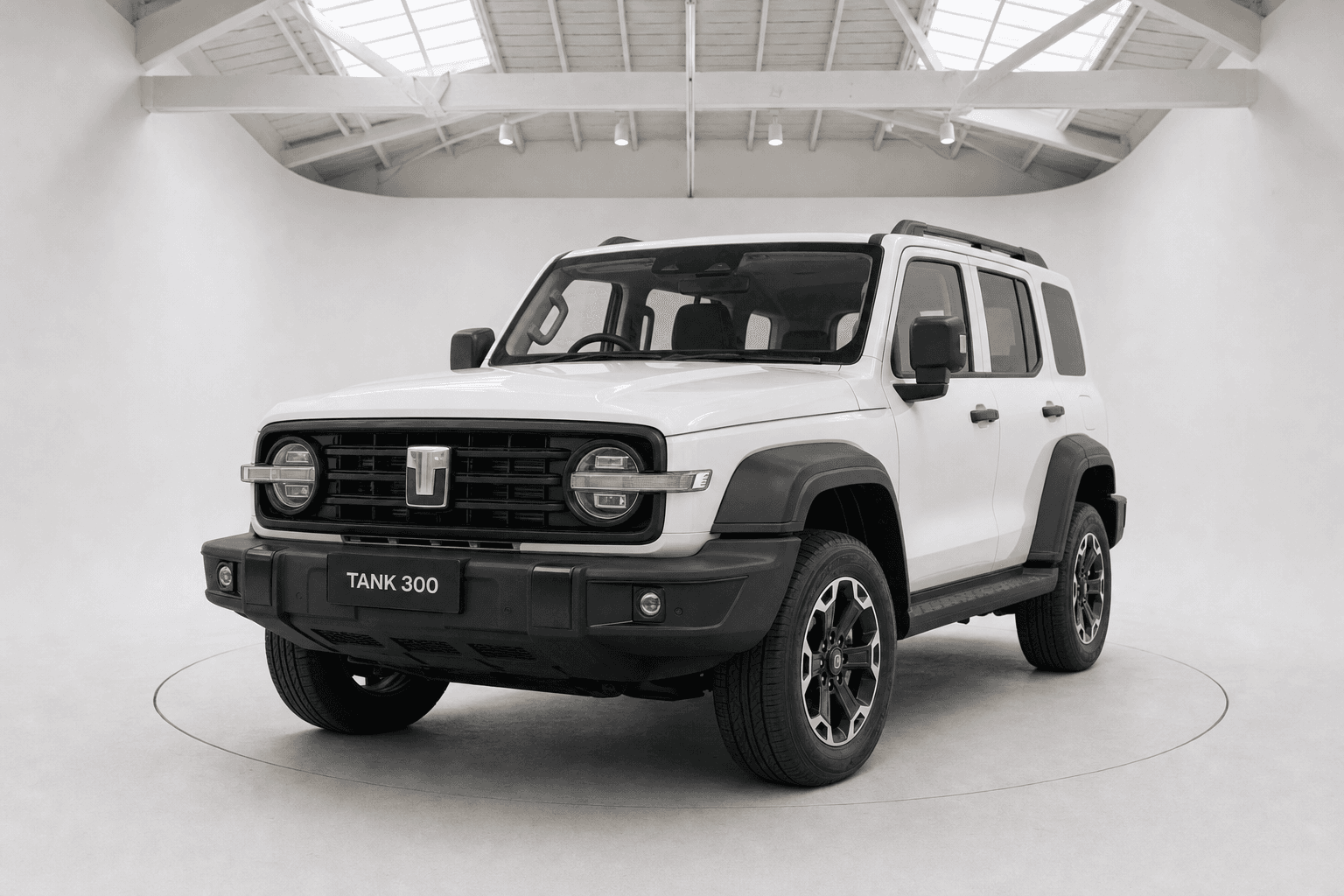
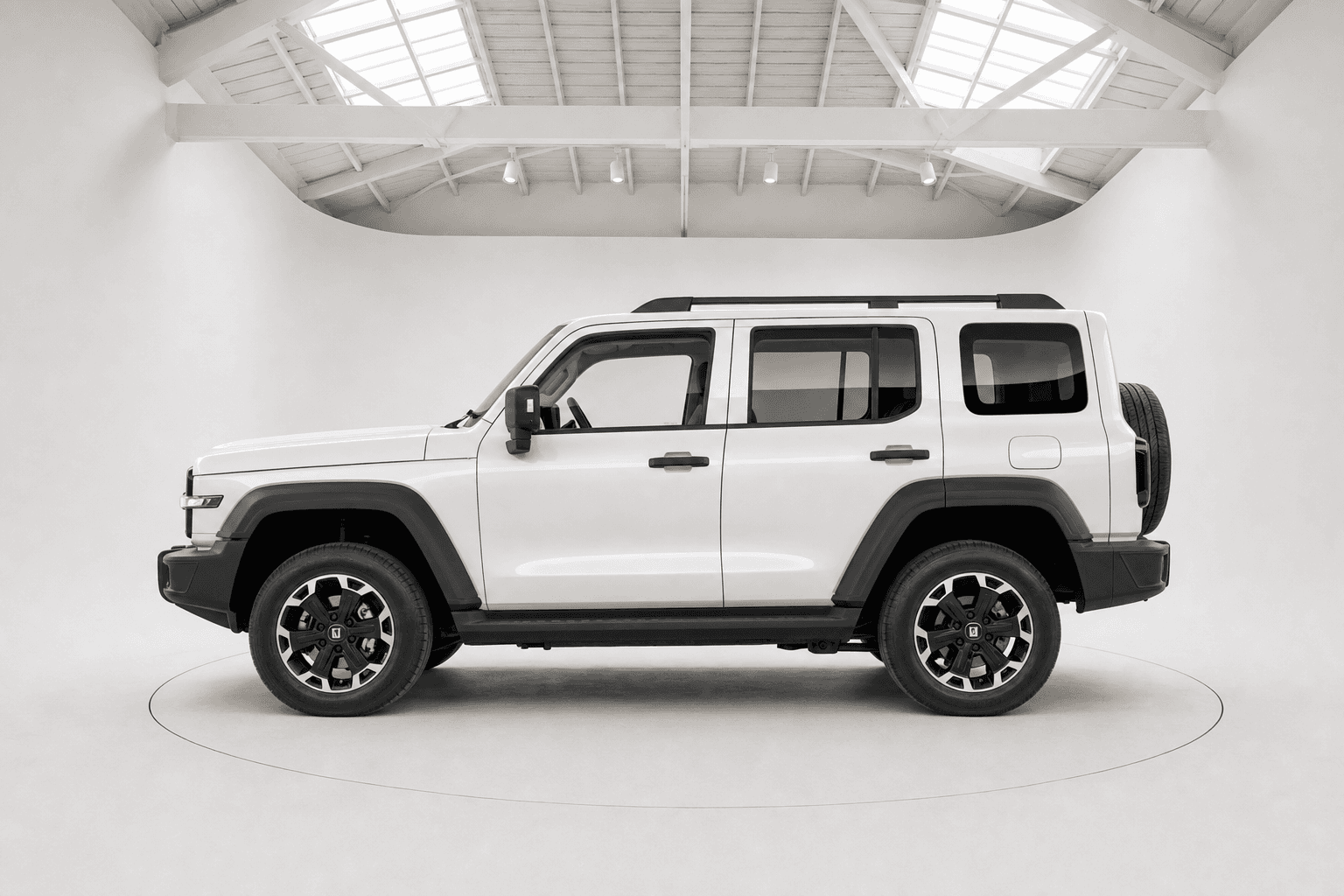
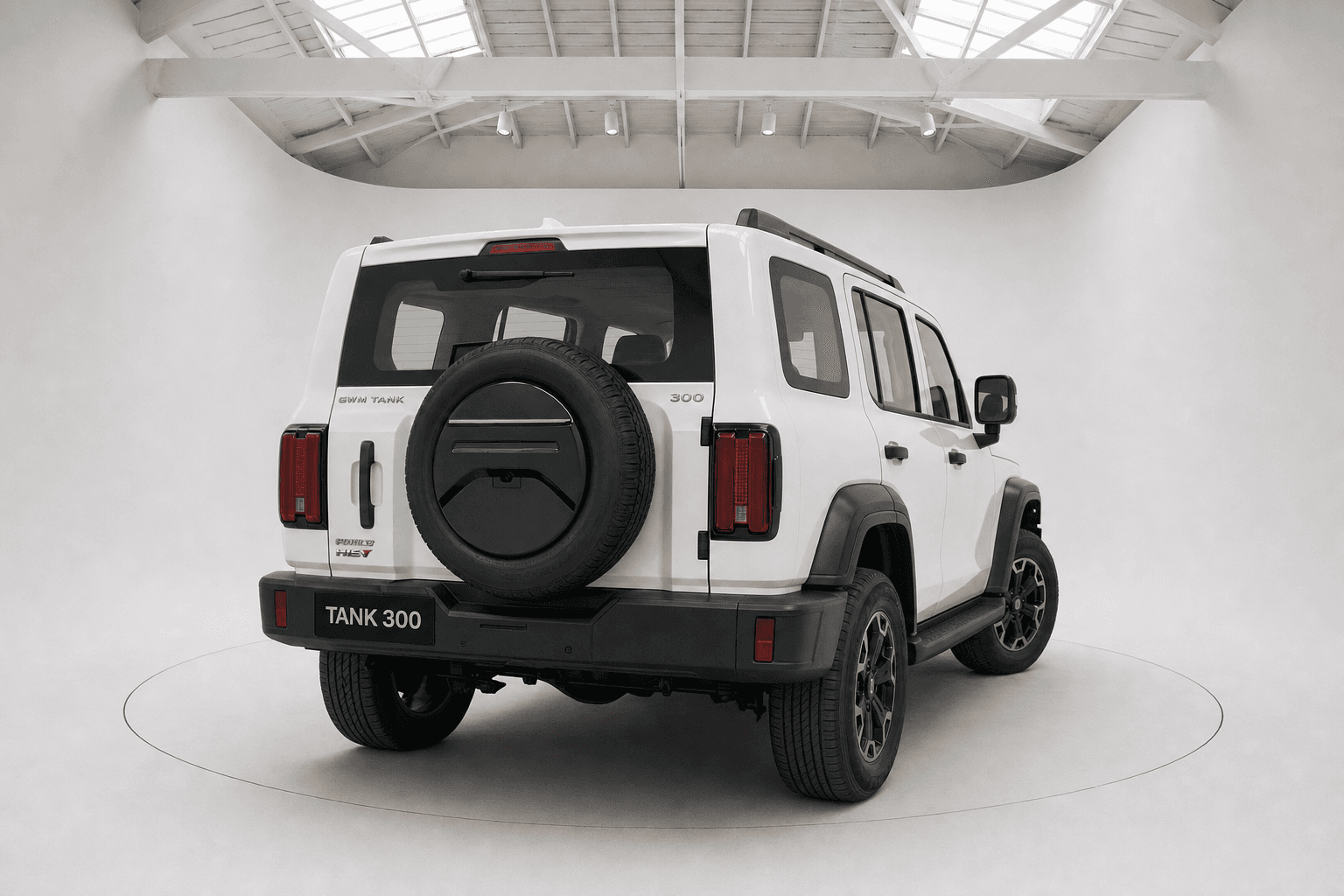
Images are illustrative and digitally rendered. They may not reflect the exact variant, colour or trim. Details →
Under the retro body the engineering is old-school and complete: a ladder frame, part-time four-wheel drive and low-range gearing, with locking differentials front and rear, roughly 224mm of ground clearance, a 29-degree approach angle and 800mm of wading depth. It seats five, which shapes the cross-shop against the seven-seat Prado and Everest from the start. The ownership terms are published and long, seven years across warranty, roadside assistance and capped-price servicing, so the homework before signing is simple: confirm your nearest servicing dealer.
Three drivetrains cover most briefs. The 2.4-litre turbo-diesel (135kW, 480Nm) is the touring engine and the cheapest way in, the 2.0-litre turbo-petrol (162kW, 380Nm) suits lighter duty, and the Hi4-T plug-in hybrid, in showrooms since March 2026, pairs 300kW and 750Nm with a claimed 115km of electric range on the NEDC cycle. The plug-in gives up nothing mechanical, keeping the low-range hardware and the 800mm wading figure, though it tops the range on price. Whatever the engine, the tow rating reads 3,000kg braked. Without a home charger, the diesel makes the stronger long-term case on fuel range and running costs.
The Lux-to-Ultra step is gentler than the two badges suggest. Lux grades already carry dual-zone climate, wireless smartphone mirroring and a 360-degree camera; Ultra money buys Nappa leather in place of the Lux's synthetic trim, heated and ventilated front seats, a massaging power driver's seat, a heated steering wheel and 18-inch alloys. At mid-2026 pricing the ladder started with the $48,990 Lux Diesel rather than a base petrol, stepped through the Ultra Petrol and Ultra Diesel at about $51,000 and $53,000, and reached the plug-ins at $55,990 and $59,990 on launch offers ($57,990 and $61,990 at standard pricing). The plug-in premium over the equivalent diesel works out at $7,000 on offer, $9,000 without.
Australian launch coverage agrees on where the polish runs out. Driver-assist tuning drew the most complaints, with overspeed chimes and lane-keep assist described as intrusive enough to switch off at the start of each drive, alongside laggy throttle response, a cabin tighter than the square body suggests, and real-world fuel use above the official figures. Set against the gripes: a five-star ANCAP rating from 2022 testing, current to December 2028, a 3,000kg tow rating on every variant, and pricing thousands below the established alternatives. Our pick is the Ultra Diesel, because the engine with the touring range also gets the better-equipped cabin and skips the plug-in premium. Buyers who can charge at home and commute inside the battery's range should weigh the Hi4-T grades instead; both paths are priced grade by grade below.
3
Petrol, diesel and a 300kW plug-in hybrid, all on the same low-range hardware.
Every figure below is driveaway, the basis GWM advertises on, and correct as of mid-2026. The ladder opens with a diesel rather than a base petrol and tops out with the plug-in hybrid; Lux or Ultra trim layers over the engine choice, and both plug-in grades carried launch offers $2,000 under their standard prices.
From $47,990
The $48,990 opener holds the 2.4-litre turbo-diesel, the complete off-road kit, dual-zone climate, wireless smartphone mirroring and the 360-degree camera. What the extra Ultra money buys is comfort trim, so a buyer chasing hardware alone can stop right here.
From $49,990
About $51,000 swaps in the 2.0-litre turbo-petrol (162kW, 380Nm) and adds Nappa leather, ventilated front seats, the massaging driver's seat and 18-inch alloys. Same 3,000kg tow rating; expect more fuel use than the diesel on long hauls.
From $51,990
About $53,000 puts the touring engine under the richer cabin: 480Nm and the long-haul fuel range, alongside the heated steering wheel, seat memory and semi-autonomous parking assist. The rest of the range is judged against this rung.
From $56,990
$55,990 driveaway on the launch offer, $57,990 at standard pricing, brings the full Hi4-T system: 300kW, 750Nm, about 115km of claimed electric range and unchanged 3,000kg towing, carried in the plainer Lux cabin.
From $60,990
$59,990 on offer and $61,990 standard tops the range, pairing the plug-in drivetrain with the complete Ultra cabin. The strongest and dearest Tank 300, and the grade that most needs a home charger.
Driveaway estimate · NSW · priced Aug 2026. Varies by state. Details →
Fuel or charging, insurance, servicing, tyres and rego, with repayments if you finance it. Estimates for a NSW private buyer, not a quote.
The GWM Tank 300 is rated to tow up to 3,000 kg with a braked trailer and 750 kg without trailer brakes.
Heaviest braked trailer allowed, quoted as ATM: the loaded trailer including ball weight.
3,000 kg
Limit for trailers without their own brakes.
750 kg
Gross vehicle mass: the most the loaded vehicle may weigh, ball weight included.
2,880 kg
Gross combination mass: vehicle and trailer together, both fully loaded.
5,580 kg
The vehicle as delivered, before people, cargo and accessories.
2,280 kg
Everything you may add: people, cargo, accessories and ball weight.
600 kg
Downward load on the tow ball; it counts toward GVM. Assumed at 10 per cent of the tow rating: GWM does not publish a limit.
300 kg
Assumed 10%
Hook up 3,000 kg with 300 kg on the ball (assumed at 10 per cent) and the Lux Diesel 2.4L Turbo Diesel AWD has 300 kg of payload left for people, cargo and accessories.
The GCM allows the full payload and the full tow rating at the same time, which is rarer than it sounds in this class.
Assuming 10 per cent of the trailer weight.
Two adults plus luggage is roughly 400 kg.
Over a limit. This combination does not comply.
Tow rating
0 kg under the 3,000 kg braked rating
Vehicle GVM
Over GVM by 100 kg. Lighten the load or the ball.
Combined GCM
Over GCM by 100 kg. Trailer and load cannot both stay.
Tow ball limit
No published limit. Vans usually need 8 to 12 per cent of ATM on the ball.
Figures are manufacturer maximums for the Lux Diesel 2.4L Turbo Diesel AWDand can change with model year; the compliance plate and handbook of your exact vehicle govern. In Australia, trailers over 750 kg GTM (the loaded weight on the trailer's own wheels) need their own brakes, and over 2,000 kg they need brakes on all wheels plus a breakaway system. Ball weight typically runs 8 to 12 per cent of ATM. Axle loads and tyre ratings are not modelled here. Checking a different car against your van? Use the towing calculator.
ANCAP · Tested 2022
This vehicle achieved the highest possible ANCAP safety rating, with strong results across occupant protection, pedestrian safety and safety-assist technology.
Judged as hardware per dollar the Tank 300 is hard to beat: low range and lockers on every grade, 3,000kg of braked towing, a five-star ANCAP rating and seven years of warranty and capped-price servicing, spanning $48,990 to $61,990 driveaway at mid-2026 prices. A Toyota Prado or Ford Everest answers with seven seats, a long reliability record and known resale, and charges thousands more for the privilege. Weigh the discount against the unknowns and choose on need. Take the Ultra Diesel if the hardware is what brought you here: touring range plus the better-equipped cabin, without the plug-in premium. The Hi4-T grades make sense only with home charging in place, and a buyer who cannot move without a third row or a proven record is a Prado or Everest buyer paying the extra.
Past generations. Context, not the car on sale today.
The Tank 300 introduced GWM's Tank sub-brand to Australia and set its recipe early: serious off-road hardware at a discount to the incumbents. The body and chassis have not changed since launch; the engine list has, growing one drivetrain at a time.
The turbo-petrol version reached showrooms in June 2023, priced under the established four-wheel-drive set. A petrol-hybrid grade was announced earlier, but supply pushed its deliveries to late 2023.
The 2.4-litre turbo-diesel went on sale in March 2025, adding the fuel range and towing pull touring buyers had asked for and pointing the range squarely at the diesel Prado and Everest set.
The 300kW, 750Nm Hi4-T reached showrooms in March 2026, Ultra first with the Lux following in April, keeping the mechanical four-wheel-drive hardware while adding battery commuting at the top of the price ladder. For a few weeks it overlapped the run-out of the older petrol-hybrid, so the Tank 300 briefly sold with four drivetrains at once before the lineup settled at three.
By Yuri Cartland, Editor

