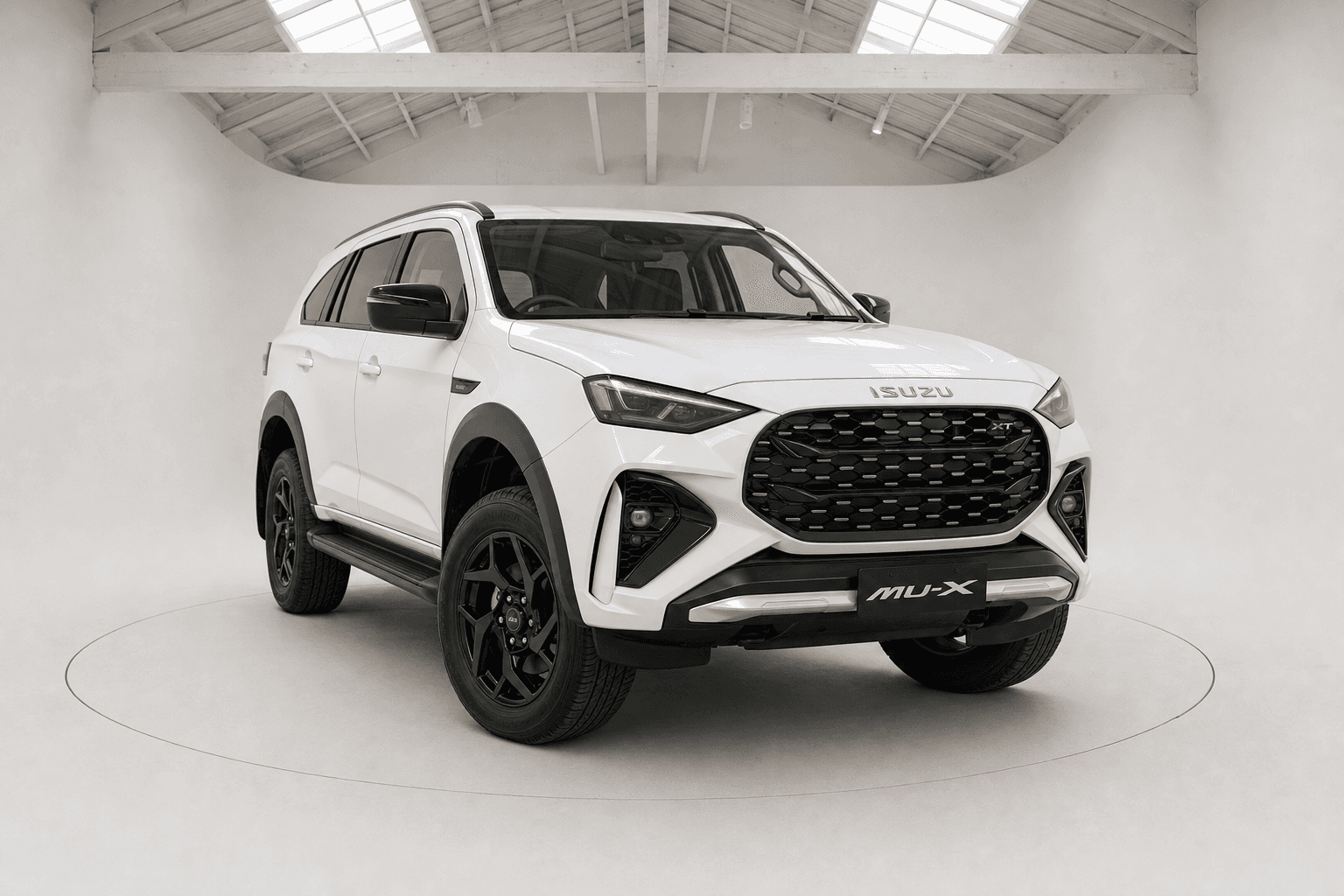
Isuzu
MU-X
From $76,490

GWM
Model Profile
From $75,990
Driveaway estimate · NSW · priced Aug 2026. Varies by state. Details →
For years, a seven-seat ladder-frame off-roader with quilted leather and a triple-screen dash meant paying Prado or LandCruiser money. The GWM Tank 500 is built to break that maths. It is a body-on-frame, dual-range four-wheel drive aimed directly at the Prado, Everest and MU-X, but it undercuts them by thousands while throwing near-premium kit at the price. The catch is in the details, not the showroom: AU reviews consistently flag a busy ride and intrusive driver-assist tech, and the tow rating trails the class. The freshness is the Hi4-T plug-in hybrid added late in 2025, a ladder-frame PHEV no Toyota or Ford rival can answer yet.
Seven
Hybrid grades seat seven; the plug-in hybrid trades the third row for its battery and seats five.
5 stars
Rated 2024: 85 per cent adult, 93 per cent child, 81 per cent vulnerable road user.
Undercuts Prado
A body-on-frame, dual-range seven-seater aimed at the Prado and Everest for thousands less.
255–300kW
Power648–750Nm
Torque3000kg
Braked towing2.1–8.5L/100km
Fuel economyRange shown across the Tank 500 line-up. Pick a priority to see the numbers that matter to you.
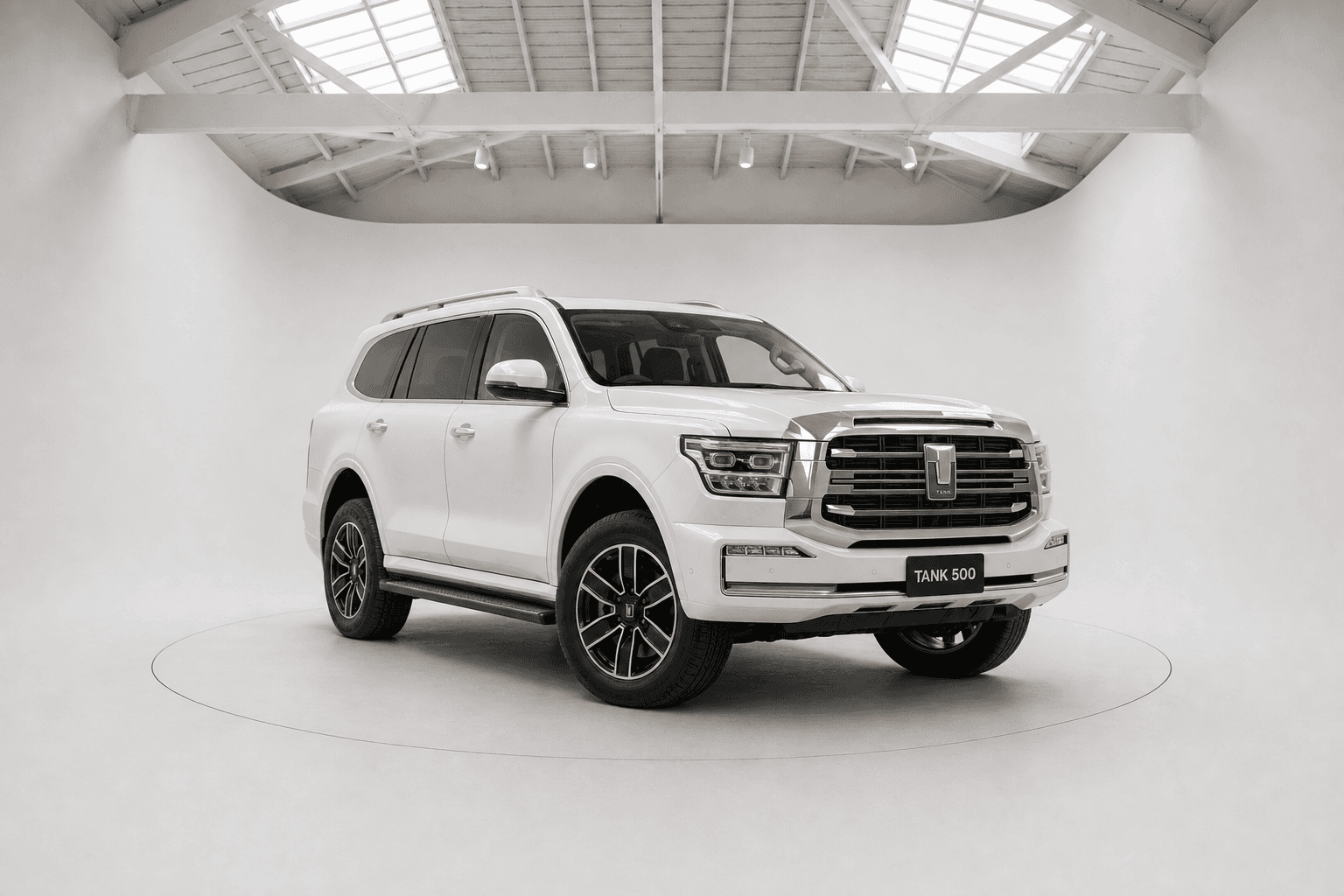
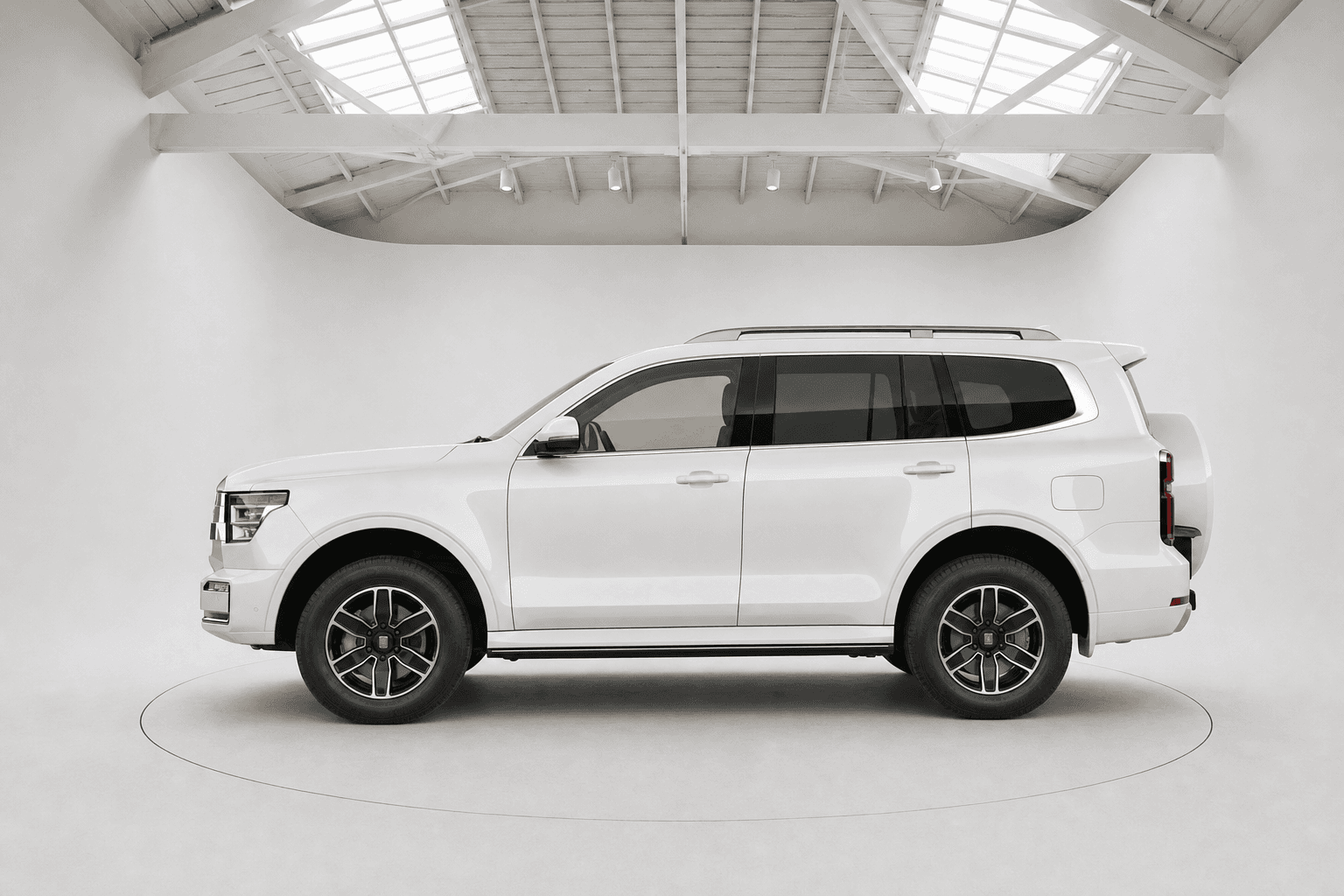
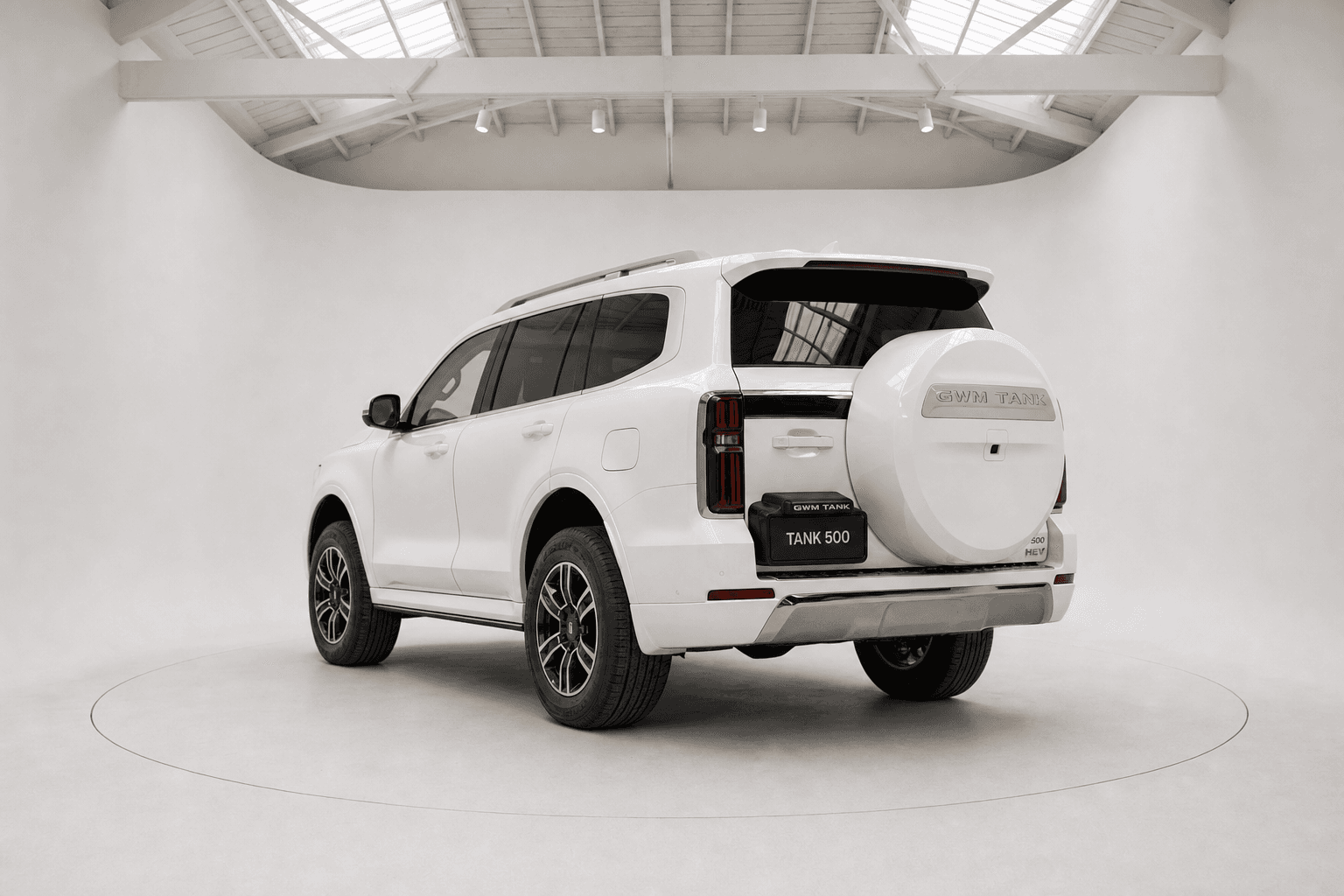
Images are illustrative and digitally rendered. They may not reflect the exact variant, colour or trim. Details →
The Tank 500 is GWM's most ambitious Australian play yet. It is a full-size, body-on-frame off-road wagon with seven seats, a dual-range four-wheel-drive system, locking diffs and a cabin that punches well above its price, and it lands in the part of the market established seven-seat off-road wagons have owned for years. The offer is simple. Most of the capability and most of the luxury, for noticeably less money.
Mechanically the range splits two ways, and the split is the whole buying decision. The three hybrid grades, Lux, Ultra and the blacked-out Vanta, run a 2.0-litre turbo-petrol hybrid making 255kW and 648Nm. They seat seven and claim around 8.4L/100km, though reviewers report real-world figures closer to 11 to 12L given the better part of 2.8 tonnes to haul. Above them sits the Hi4-T plug-in hybrid: 300kW and 750Nm, a 37.11kWh battery good for about 120km of electric running, a combined 2.1L/100km claim and a 6.9-second 0-100km/h. It is quick, and if you charge it, cheap to run. The trade-off is the third row. The PHEV deletes it for the battery and seats five.
Inside is where it wins the showroom. Every grade gets a 14.6-inch touchscreen, a 12.3-inch digital cluster, leather, heated and ventilated front seats, wireless phone charging, a 360-degree camera and an electric sunroof, with a head-up display from the Ultra up. The driver-assist suite is standard across the range: autonomous emergency braking, lane-keep, adaptive cruise, blind-spot and rear cross-traffic alert. That kit is how it holds a five-star ANCAP rating from 2024. The recurring complaint is the tuning, not the coverage. The same tech can be overzealous in practice, with speed-sign misreads and an eager driver-attention monitor.
The honest caveats are real. AU reviews consistently call the ride firm and, over sharp bumps, busy, a function of the ladder chassis and the weight, and the driver-assist tech needs calibrating to taste. The 3,000kg braked tow rating sits 500kg shy of the 3,500kg most rivals offer, a real cross-shop weakness if you pull a big van. The Tank 500 earns its place on seven-seat, near-luxury off-road capability for well below establishment money, for the buyer who can live with a firm ride and a tow rating below the benchmark. Start with the Ultra hybrid for the seven-seat sweet spot, or the Hi4-T if you can charge and can drop the third row. Anyone towing a big van or banking on strong resale should keep the established names on the list.
120km
The Hi4-T plug-in hybrid is a class-first: a ladder-frame, dual-range PHEV Ford and Toyota have no direct answer to.
The Tank 500 now comes two ways: a fully-equipped seven-seat hybrid and a plug-in hybrid that swaps the third row for electric range. In NSW the Vanta hybrid opens around $75,000 driveaway and the Hi4-T plug-in sits near $79,000, so the real question is seven seats versus a plug rather than which trim to climb to.
From $75,990
A 2.0-litre turbo-petrol hybrid (255kW/648Nm) with seven seats and dual-range 4WD, front and rear diff locks, leather, a 14.6-inch touchscreen, 360-degree camera, head-up display, an electric sunroof and blacked-out exterior styling, plus the full driver-assist suite.
From $79,990
The Hi4-T plug-in hybrid: 300kW/750Nm, a 37.11kWh battery, ~120km of EV range, 2.1L/100km claimed and vehicle-to-load power, with the most off-road hardware in the range. The catch is five seats: the third row goes to the battery.
Driveaway estimate · NSW · priced Aug 2026. Varies by state. Details →
Fuel or charging, insurance, servicing, tyres and rego, with repayments if you finance it. Estimates for a NSW private buyer, not a quote.
The GWM Tank 500 is rated to tow up to 3,000 kg with a braked trailer and 750 kg without trailer brakes.
Heaviest braked trailer allowed, quoted as ATM: the loaded trailer including ball weight.
3,000 kg
Limit for trailers without their own brakes.
750 kg
Gross vehicle mass: the most the loaded vehicle may weigh, ball weight included.
3,430 kg
Gross combination mass: vehicle and trailer together, both fully loaded.
6,430 kg
The vehicle as delivered, before people, cargo and accessories.
2,820 kg
Everything you may add: people, cargo, accessories and ball weight.
610 kg
Downward load on the tow ball; it counts toward GVM.
300 kg
Hook up 3,000 kg with 300 kg on the ball and the Ultra has 310 kg of payload left for people, cargo and accessories.
The GCM allows the full payload and the full tow rating at the same time, which is rarer than it sounds in this class.
Assuming 10 per cent of the trailer weight.
Two adults plus luggage is roughly 400 kg.
Over a limit. This combination does not comply.
Tow rating
0 kg under the 3,000 kg braked rating
Vehicle GVM
Over GVM by 90 kg. Lighten the load or the ball.
Combined GCM
210 kg spare across the whole combination
Tow ball limit
0 kg under the 300 kg ball limit
Figures are manufacturer maximums for the Ultraand can change with model year; the compliance plate and handbook of your exact vehicle govern. In Australia, trailers over 750 kg GTM (the loaded weight on the trailer's own wheels) need their own brakes, and over 2,000 kg they need brakes on all wheels plus a breakaway system. Ball weight typically runs 8 to 12 per cent of ATM. Axle loads and tyre ratings are not modelled here. Checking a different car against your van? Use the towing calculator.
ANCAP · Tested 2024
This vehicle achieved the highest possible ANCAP safety rating, with strong results across occupant protection, pedestrian safety and safety-assist technology.
The Tank 500 is the value disruptor of the seven-seat off-road class. It brings a near-luxury cabin, real dual-range hardware and a five-star ANCAP rating for thousands less than a Prado or Everest, and the late-2025 Hi4-T plug-in hybrid gives it a ladder-frame PHEV no rival offers. Where it loses is polish and pulling power. The ride is firm, the driver-assist tech is overzealous, and the 3,000kg tow rating is 500kg short of the class standard. Pick the Ultra hybrid for the seven-seat sweet spot, step to the Hi4-T if you can charge and do not need the third row, and look at the Prado or Everest if towing a big van or long-term resale leads your brief.
Past generations. Context, not the car on sale today.
Tank is GWM's off-road sub-brand, and the Tank 500 is a new nameplate with no prior Australian generation. There is no used-buyer minefield here, just a short and still-unfolding local story.
The Tank 500 arrived in Australia in early 2024 as a 2.0-litre turbo-petrol hybrid in Lux, Ultra and Vanta grades, pitched as a value alternative to the Prado, Everest and Patrol with seven seats, real off-road hardware and a near-premium cabin.
GWM added the Hi4-T plug-in hybrid, revealed and priced in October 2025 with 300kW, a 37.11kWh battery and around 120km of EV range. That made the Tank 500 one of the few ladder-frame PHEVs on sale and gave it a clear class-first over its Toyota and Ford rivals.
By Yuri Cartland, Editor