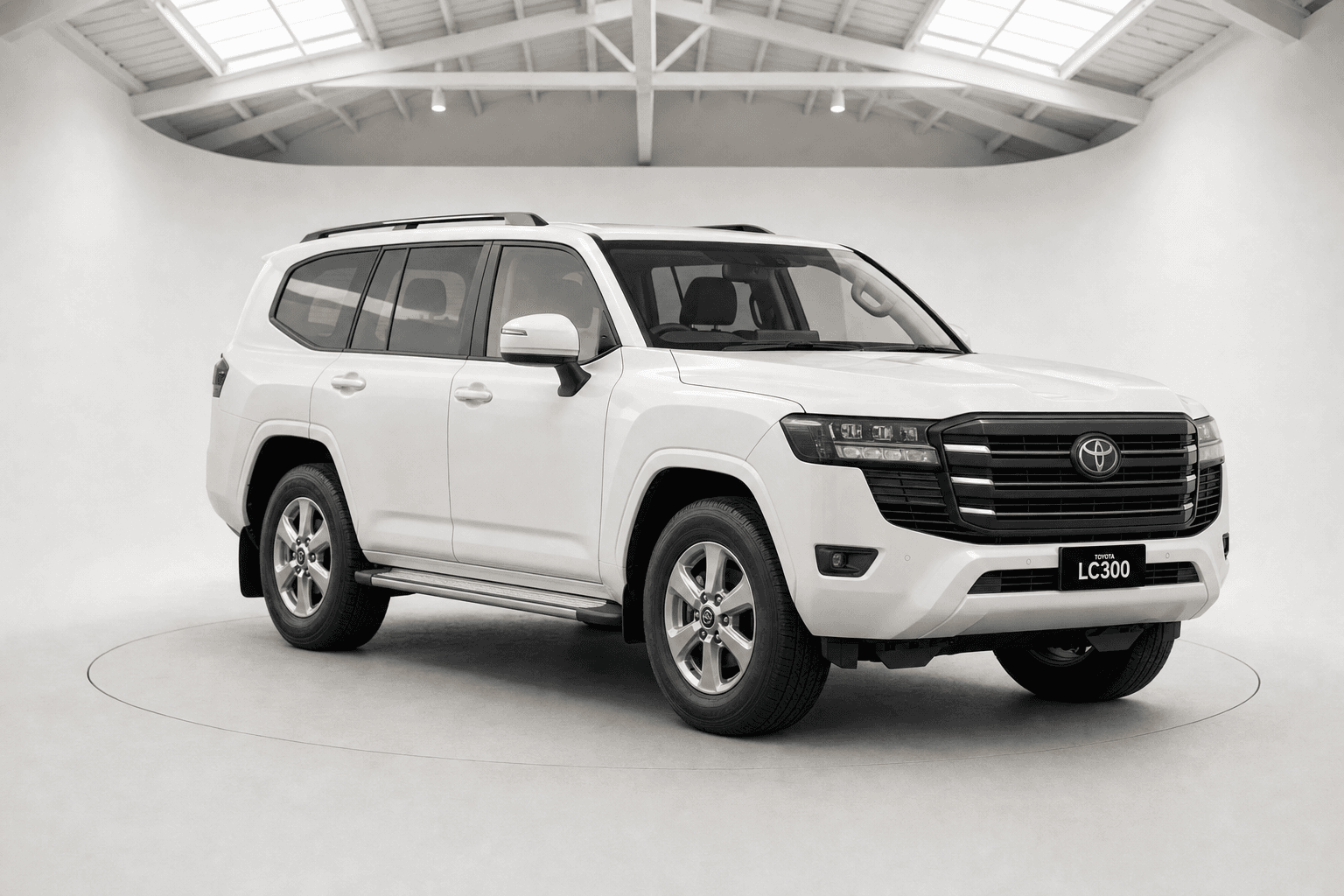
Toyota
LandCruiser 300
From $107,394

Nissan
Model Profile
From $105,408
Driveaway estimate · NSW · priced Aug 2026. Varies by state. Details →
Out past the bitumen, the Nissan Patrol still sounds like nothing else on sale: a 5.6-litre petrol V8, naturally aspirated, in an era busy taxing exactly that away. It has anchored Nissan's local line-up since the Y62 landed in 2012, and it is now in run-out, with V8 production ending in August 2026 before a twin-turbo V6 takes over. For a fifteen-year-old design it remains hugely in demand (Nissan can't build them fast enough) because it does the big things well: eight seats, 3,500kg of towing, real off-road hardware and a thunderous engine, for less than a LandCruiser. The cabin shows its age and it drinks. But the appeal was never subtle.
Ends Aug 2026
The last naturally aspirated 5.6-litre V8; a twin-turbo V6 takes over after.
3,500kg
Eight seats, a 7,000kg gross combination mass and a 140-litre tank for outback range.
No rating
The platform predates current crash testing, though it still ships with autonomous emergency braking.
298kW
Power560Nm
Torque3500kg
Braked towing14.4L/100km
Fuel economyRange shown across the Patrol line-up. Pick a priority to see the numbers that matter to you.
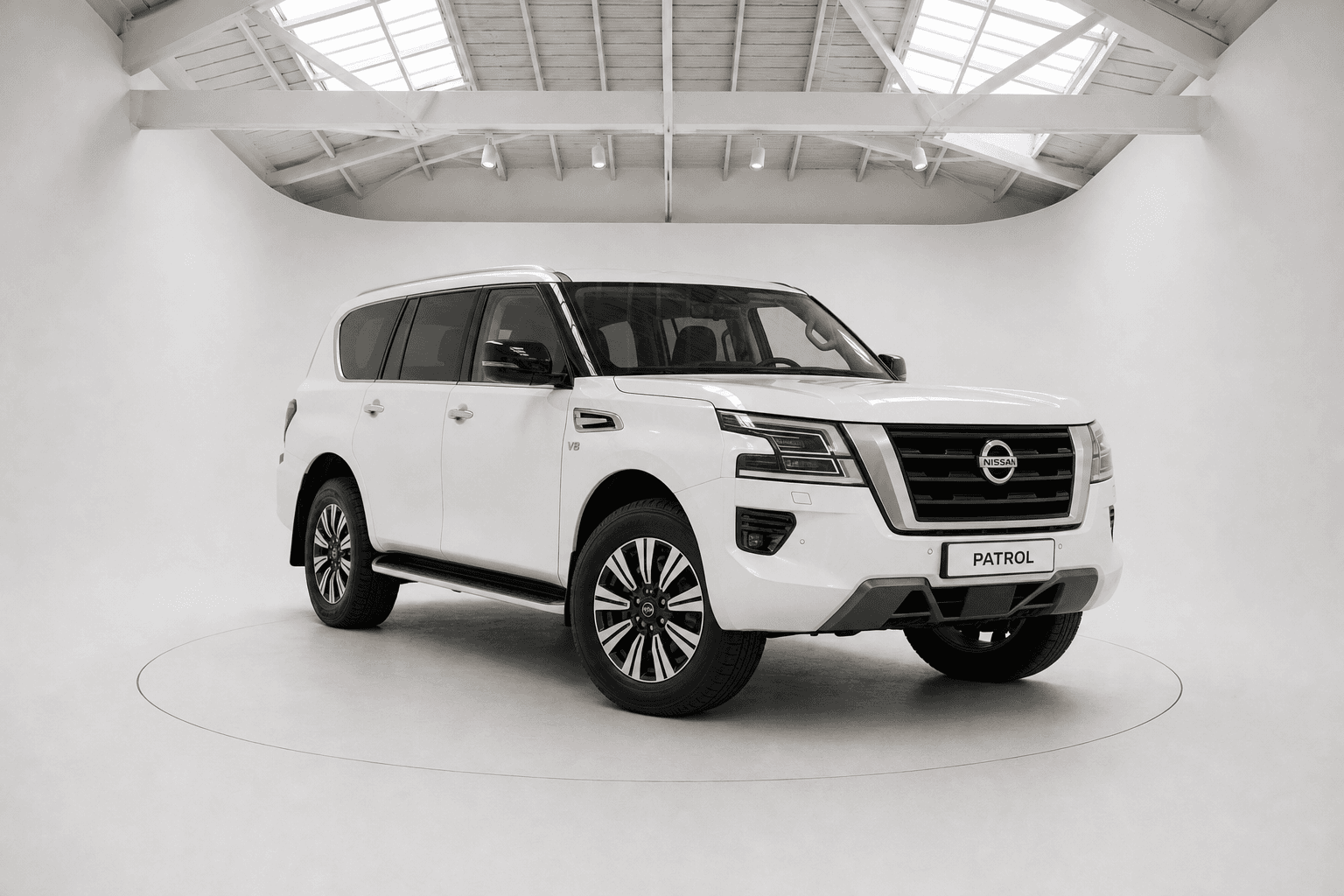
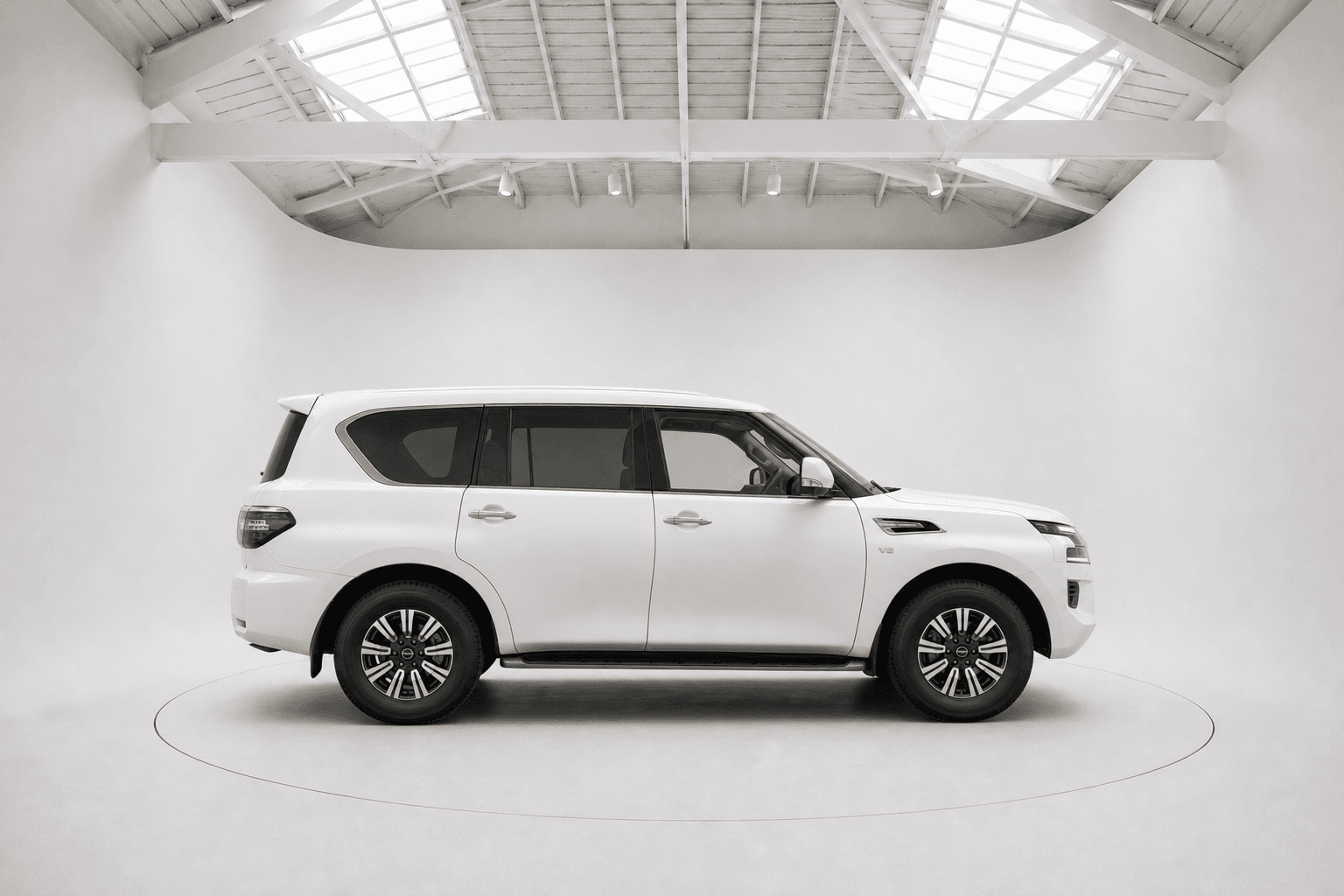
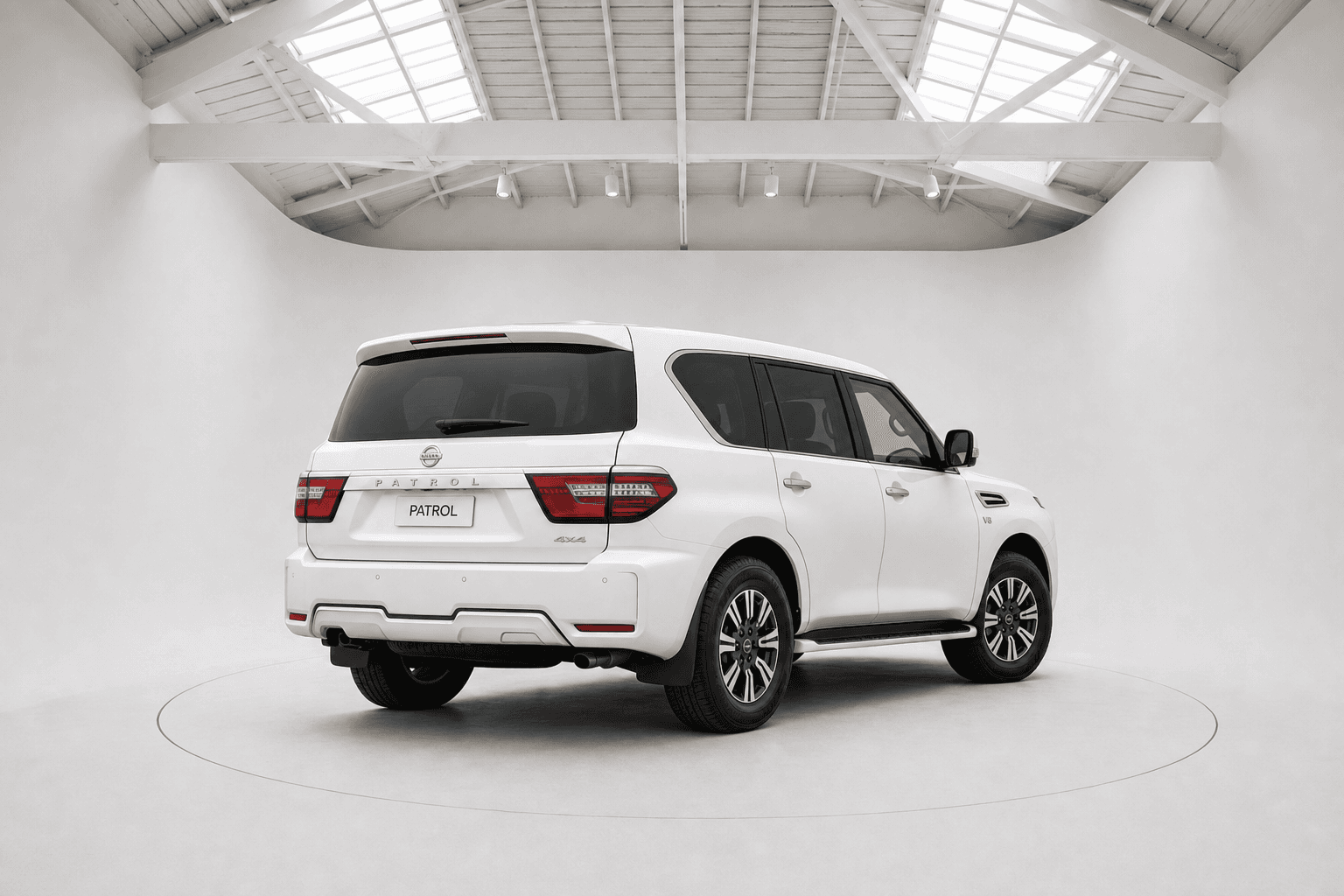
Images are illustrative and digitally rendered. They may not reflect the exact variant, colour or trim. Details →
The Patrol's pitch in 2026 is unusually simple: it is one of the last, and cheapest, ways into a brand-new V8. The 5.6-litre VK56VD makes 298kW and 560Nm, drives all four wheels through a seven-speed automatic, and pulls a big body-on-frame wagon with a character no turbo can fake. Emissions rules are closing that recipe down, and Nissan has confirmed V8 production ends in August 2026 (final Australian deliveries in the closing months of the year), replaced by a twin-turbo V6. Demand has only climbed as word spread, which is why the run-out, not the spec sheet, is the story.
Most buyers land on the eight-seat Ti, the entry into the range. It carries the full off-road hardware, the V8 and the towing, without the flagship's luxury tax. The argument for it is ownership rather than equipment: a five-year, unlimited-kilometre warranty, capped-price servicing at a predictable rate, and a 140-litre tank that stretches close to 1,000km between fills despite the thirst. The catch sits in the logbook. The Patrol wants a service every six months or 10,000km, more often than most rivals, so factor that into the maths before the V8 soundtrack wins you over.
Step up and the range splits two ways. The Ti-L is the comfort flagship, trading two seats for power-adjustable heated and ventilated front chairs, a heated wheel, a sunroof, ambient lighting and a Bose sound system. The Warrior goes the other way: an Australian-developed, Premcar-engineered off-road special with a wider track, retuned suspension, more clearance and all-terrain tyres. It is the enthusiast's send-off for the V8, and the one to shortlist if you spend real time off the blacktop rather than in the school queue.
The rest is honest. The Patrol has no ANCAP rating at all (the platform predates current testing), though it carries autonomous emergency braking, adaptive cruise, blind-spot monitoring, rear cross-traffic alert and a 360-degree camera as standard. The 2025 update modernised the dashboard with a larger central touchscreen and wireless Apple CarPlay and Android Auto, but AU reviews still place the surrounding architecture behind newer rivals, and three price rises between early 2025 and early 2026 have blunted the value case. The Patrol earns its keep on the V8, the eight seats and the 3,500kg tow rating, for the buyer who wants that hardware before emissions rules retire it. Anyone weighing resale and running costs above the engine has more rational options, and the eight-seat Ti is where this case starts.
1951
The Patrol nameplate dates to 1951, the same year Toyota launched the LandCruiser. A 60-Series Patrol went on to make the first vehicle crossing of the Simpson Desert in 1962.
 Side elevation
 Front elevation
0–5269mm
Length0–2079mm
Width0–1990mm
Height0mm
WheelbaseThe Patrol ladder is short and clear: an eight-seat value entry, a seven-seat comfort flagship, and an Australian-developed off-road special on top. Ti and Ti-L prices below are NSW driveaway; the Warrior is quoted before on-road costs.
From $105,408
The eight-seat entry, about $105,212 driveaway. The full V8, dual-range four-wheel drive, 3,500kg towing and the active-safety suite, on cloth-and-leather-accented trim with manual front seats. The whole car, minus the luxuries.
From $117,483
Around $117,287 driveaway, the comfort flagship. Drops to seven seats but adds power-adjustable heated and ventilated front seats with memory, a heated wheel, a sunroof, ambient lighting and a Bose sound system.
Driveaway estimate · NSW · priced Aug 2026. Varies by state. Details →
Fuel or charging, insurance, servicing, tyres and rego, with repayments if you finance it. Estimates for a NSW private buyer, not a quote.
The Nissan Patrol is rated to tow up to 3,500 kg with a braked trailer and 750 kg without trailer brakes.
Heaviest braked trailer allowed, quoted as ATM: the loaded trailer including ball weight.
3,500 kg
Limit for trailers without their own brakes.
750 kg
Gross vehicle mass: the most the loaded vehicle may weigh, ball weight included.
3,500 kg
Gross combination mass: vehicle and trailer together, both fully loaded.
7,000 kg
The vehicle as delivered, before people, cargo and accessories.
2,786 kg
Everything you may add: people, cargo, accessories and ball weight.
714 kg
Downward load on the tow ball; it counts toward GVM.
350 kg
Hook up 3,500 kg with 350 kg on the ball and the Ti has 364 kg of payload left for people, cargo and accessories.
The GCM allows the full payload and the full tow rating at the same time, which is rarer than it sounds in this class.
Assuming 10 per cent of the trailer weight.
Two adults plus luggage is roughly 400 kg.
Over a limit. This combination does not comply.
Tow rating
0 kg under the 3,500 kg braked rating
Vehicle GVM
Over GVM by 36 kg. Lighten the load or the ball.
Combined GCM
314 kg spare across the whole combination
Tow ball limit
0 kg under the 350 kg ball limit
Figures are manufacturer maximums for the Tiand can change with model year; the compliance plate and handbook of your exact vehicle govern. In Australia, trailers over 750 kg GTM (the loaded weight on the trailer's own wheels) need their own brakes, and over 2,000 kg they need brakes on all wheels plus a breakaway system. Ball weight typically runs 8 to 12 per cent of ATM. Axle loads and tyre ratings are not modelled here. Checking a different car against your van? Use the towing calculator.
This model doesn't carry an ANCAP safety rating. Here's the active-safety equipment fitted across the range.
Buy the Patrol if you want a real V8 family four-wheel drive before emissions rules end the breed, and you value towing, space and outback range over polish. The 5.6-litre V8 makes 298kW and 560Nm, every grade tows 3,500kg braked, and the eight-seat Ti is still the cheapest way into a new V8. Where it loses is on the things a fifteen-year-old design can't hide: there's no ANCAP rating, it drinks at a claimed 14.4L/100km, the cabin trails newer rivals, and the LandCruiser 300 holds better resale. Pick the Ti for the value and the V8; step to the Warrior if you go off-road often.
Past generations. Context, not the car on sale today.
The Patrol nameplate goes back to 1951 (the same year Toyota started the LandCruiser) and reached Australia around 1960, where it built a reputation as an outback workhorse across six decades. The current Y62 is the petrol-V8 chapter; the generations before it are where the used-buyer cautions live.
The 60 Series was the first Patrol sold in Australia, and a G60 famously completed the first vehicular crossing of the Simpson Desert in 1962. The MQ 160 Series that followed in 1980 introduced the first seven-seat wagon and a turbo-diesel option, growing the Patrol into a serious recreational four-wheel drive.
The all-coil-spring GQ landed before Toyota's 80 Series and, for a time, outsold the then-leaf-sprung LandCruiser. It cemented the Patrol as a genuine Cruiser rival and is still revered among four-wheel drivers for its simplicity and toughness.
The long-lived GU is the one used buyers must research. Its 3.0-litre ZD30 turbo-diesel (particularly early, pre-common-rail examples) earned a reputation for overheating and cracked or melted pistons if worked hard or poorly maintained. The 4.2-litre diesel and 4.8-litre petrol sixes are regarded as far more durable. State of maintenance matters more than badge here.
The current Patrol switched to a 5.6-litre petrol V8 and independent suspension, wagon-only, and controversially dropped diesel altogether. Strong and comfortable, but thirsty, and a factor in ceding touring ground to the diesel LandCruiser. A 2025 cabin update modernised the dashboard, and the V8 is running out, with production ending in August 2026 before the twin-turbo-V6 Y63 takes over.
By Yuri Cartland, Editor

