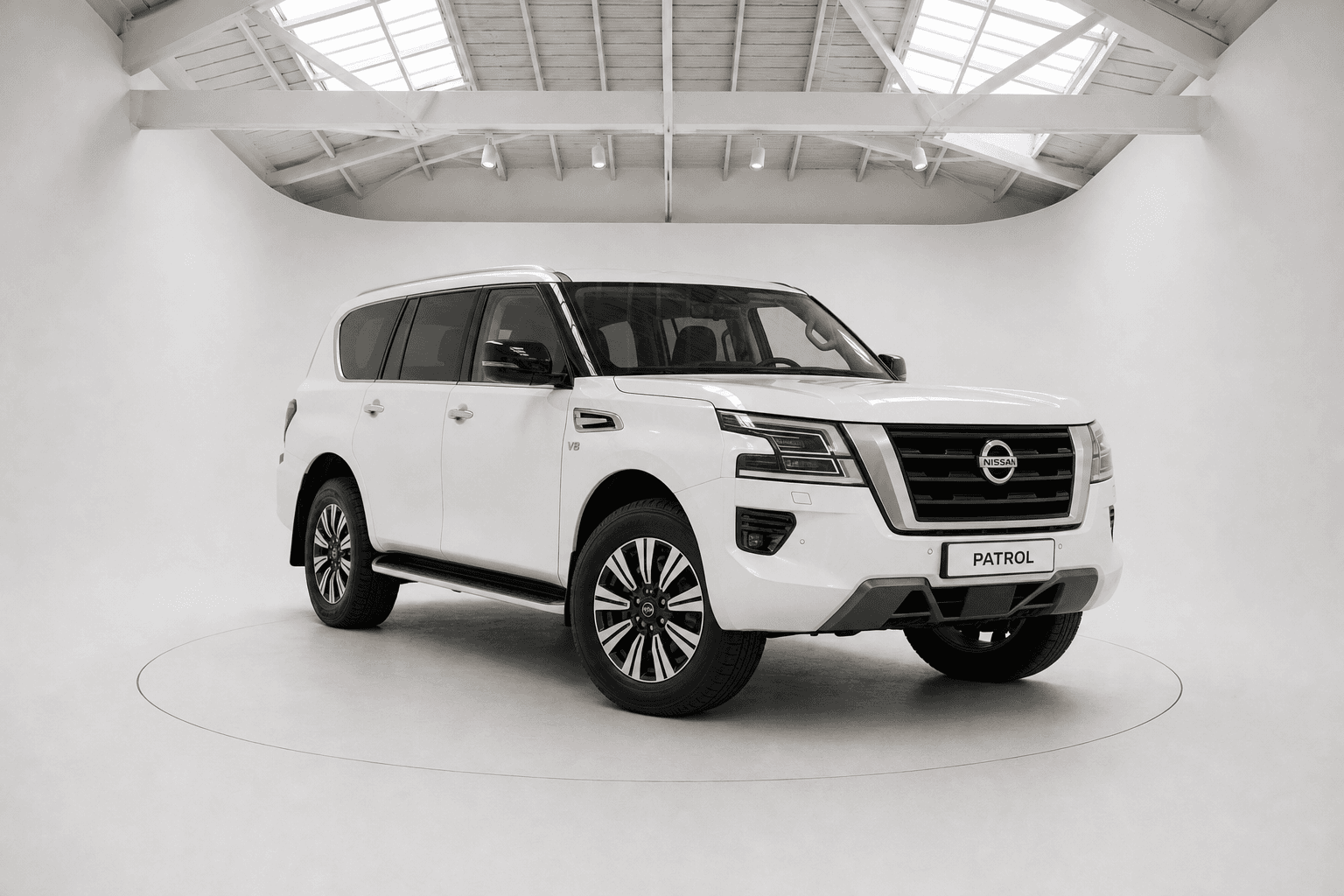
Nissan
Patrol
From $105,408

Toyota
Model Profile
From $107,394
Driveaway estimate · NSW · priced Jul 2026. Varies by state. Details →
The 'king of the road' comes with the price tag and capability specs you would expect from royalty. The cheapest LandCruiser 300 costs $107,315 driveaway in NSW as of mid-2026, and Australia buys more of them than anyone else. It was the model's biggest market in the world in 2024, ahead of Japan and the Gulf states. The pitch is a ladder-frame wagon running a 3.3-litre twin-turbo V6 diesel, with 3,500kg of braked towing and a 110-litre tank on all six grades. The range starts at the cloth-trimmed GX and ends at two very different flagships, the leather-lined Sahara ZX and the diff-locked GR Sport, with petrol-electric hybrid versions of those two announced and due around August 2026. Capability was settled long ago. The live question is which rung of a six-figure ladder deserves your money.
V6 turbo-diesel
The 3.3-litre twin-turbo V6 that replaced the 200 Series' 4.5-litre V8, now judged smoother and stronger.
3,500kg
On all six grades, inside a 6,750kg gross combination mass with a 110-litre tank.
5 stars
From a 2022 test, valid to December 2028, with an 89 per cent adult occupant score.
227kW
Power700Nm
Torque3500kg
Braked towing8.9L/100km
Fuel economyRange shown across the LandCruiser 300 line-up. Pick a priority to see the numbers that matter to you.
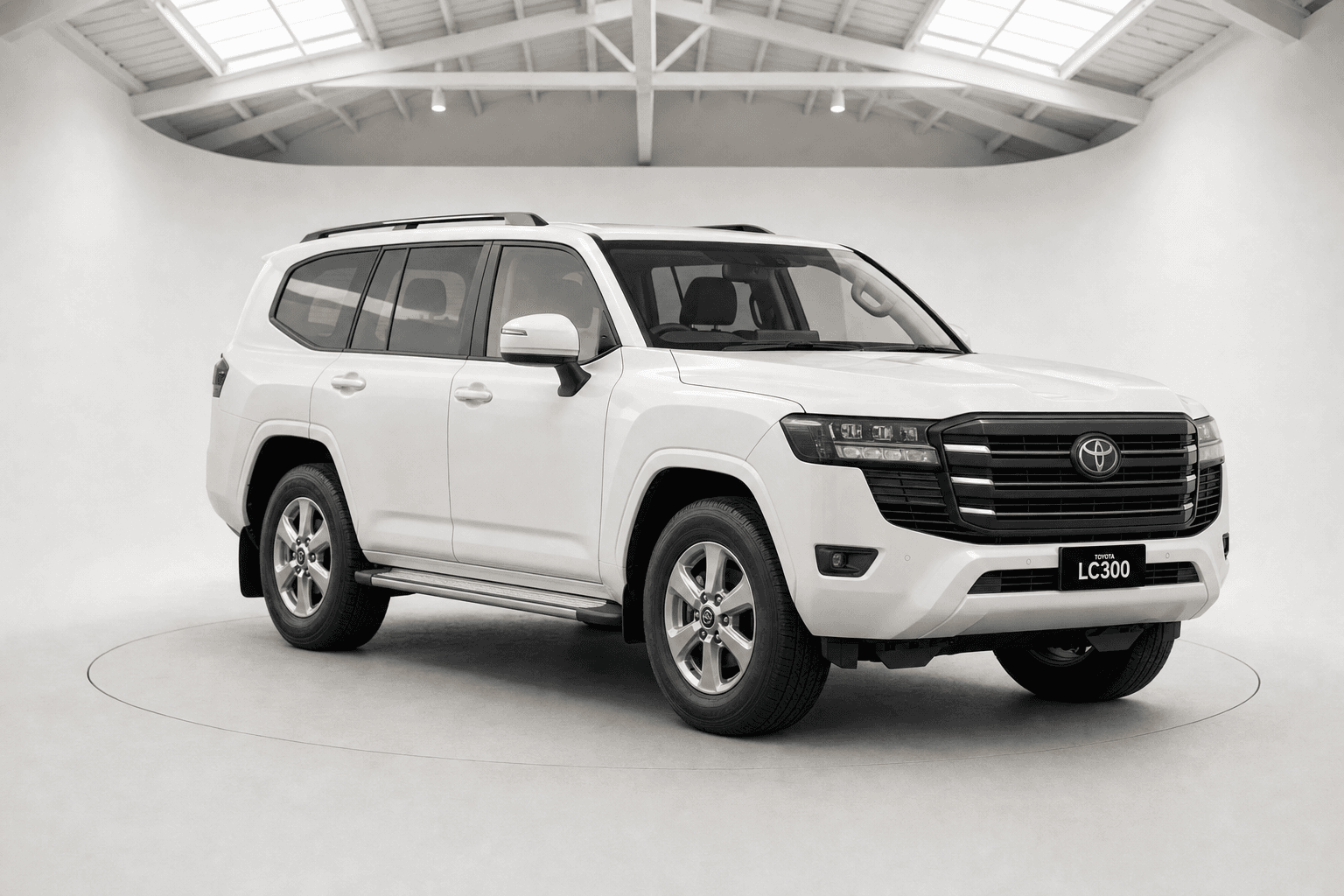
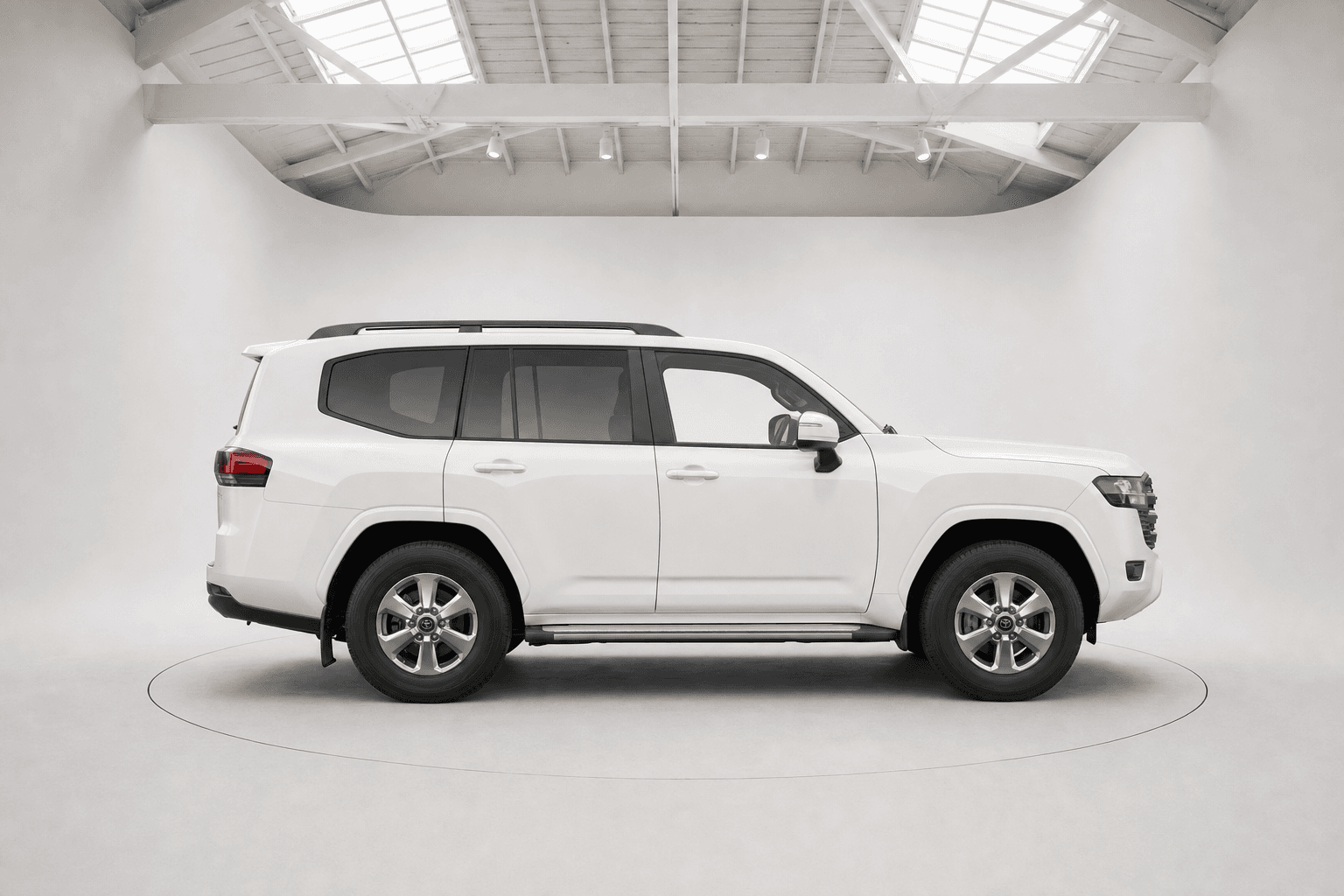
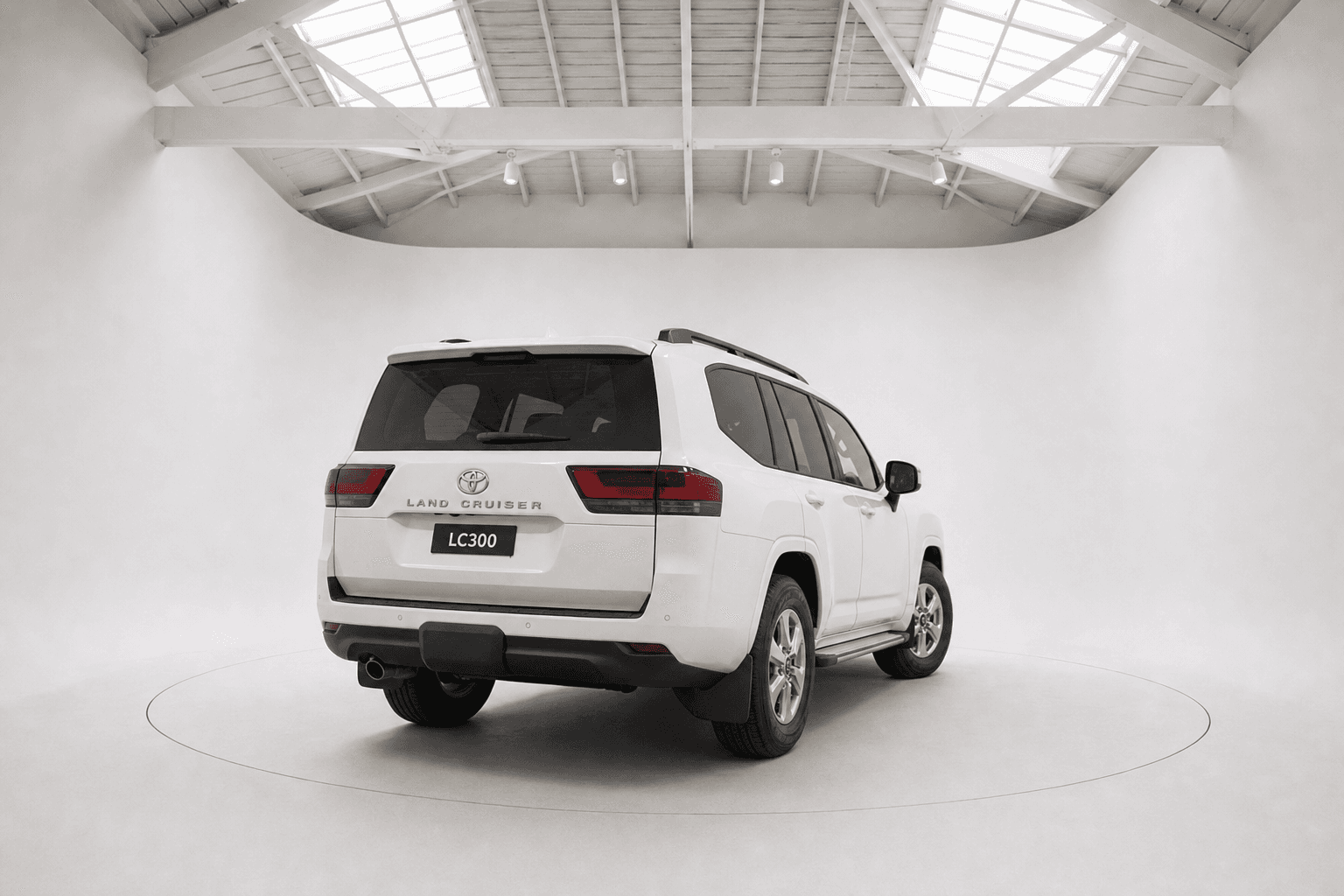
Images are illustrative and digitally rendered. They may not reflect the exact variant, colour or trim. Details →
Toyota sells the 300 Series in one mechanical spec: 227kW and 700Nm from the twin-turbo diesel V6, a 10-speed automatic and full-time 4WD, unchanged since the wagon replaced the 200 Series late in 2021. The six grades sort by job. GX and GXL cover fleets and remote touring, VX and Sahara handle the luxury brief, and the top two split it: Sahara ZX for comfort, GR Sport for the range's only front and rear diff locks. ANCAP's five-star rating, awarded from a 2022 test and current to December 2028, covers every grade except the unrated GR Sport.
The grumbling is about price. A GX listed at $89,990 plus on-roads when the range landed in 2021; the January 2026 rise took the same grade to $99,340 before on-roads, which lands past $107,000 on the road in NSW, and the ladder tops out near $159,000 for the Sahara ZX, all as of mid-2026. Value, not ability, is the recurring criticism. Ownership cuts both ways: warranty runs five years with no kilometre cap, engine and driveline cover stretches to seven years for cars serviced on schedule, and services are due every six months or 10,000km, a cadence inherited from the 200 Series.
The spec sheet is the same at every rung. All six grades tow 3,500kg braked inside a 6,750kg GCM with a 3,280kg GVM, claim 8.9L/100km and carry a 110-litre tank, and ground clearance sits near 245mm range-wide. Seating is the split to settle first: GXL, VX and Sahara carry seven, while GX, GR Sport and Sahara ZX seat five, and no option box adds a third row to the five-seaters.
The next move is petrol-electric, announced but not on sale as of early July 2026. Hybrid GR Sport and Sahara ZX grades pair a 3.5-litre twin-turbo petrol V6 with an electric motor for 341kW and 790Nm, five seats only, priced at $156,060 and $156,810 plus on-roads, roughly $8,900 over the matching diesels; arrival slipped from autumn to around August 2026. Toyota conceded in September 2025 the hybrid would likely land on the wrong side of the NVES emissions rules in force since July 2025, and says it will offset penalties across its hybrid-heavy fleet rather than pay fines. We'd pick the GXL, the cheapest of the seven-seaters, with the same driveline and tow ratings as grades $38,000 dearer; luxury money goes to the Sahara, and the GR Sport belongs to buyers whose tracks demand the lockers.
#1
13,790 sold to Australians in 2024, ahead of Japan, Saudi Arabia and the UAE.
 Side elevation
 Front elevation
0mm
Length0mm
Width0mm
Height0mm
WheelbasePrices are NSW driveaway, current as of mid-2026. Seats shape the ladder as much as money: GX, GR Sport and Sahara ZX seat five, while GXL, VX and Sahara carry seven. Toyota has also announced hybrid GR Sport and Sahara ZX grades, due around August 2026; they are excluded from this diesel walk until they reach showrooms.
From $107,394
The fleet and touring base at $107,315 driveaway. Five seats, cloth trim, no leather, no factory navigation and no 360-degree camera; Toyota keeps it deliberately plain for station work, mine sites and remote tourers who want the driveline without kit they won't use.
From $120,499
$120,415 driveaway buys the cheapest seven-seat LandCruiser 300. Over the GX it adds the third row and digital radio while keeping the cloth cabin, and its value-pick reputation rests on driveline and tow ratings that match the flagships.
From $133,038
The first luxury rung at $132,946 driveaway. Over the GXL it brings leather upholstery, heated front seats, ambient lighting, a 360-degree camera and factory navigation, still with seven seats, which makes it the family grade for comfort without flagship money.
From $150,678
$150,586 driveaway tops the seven-seat side of the range: ventilated front seats, rear climate control, a heated steering wheel and a power tailgate over the VX kit. Nothing above it carries a third row, so this is where seven-seat luxury peaks.
From $157,868
The off-road flagship at $157,781 driveaway and the only grade with factory front and rear differential locks, plus a head-up display, in a five-seat body. The lockers are the purchase: hardware bought for ruts, rock and sand, not the brochure.
From $158,658
The dearest diesel at $158,566 driveaway is a five-seat luxury flagship carrying the full comfort suite and a head-up display. Its styling kit lowers the approach angle to 23 degrees against 31 for the other grades, worth knowing before pointing it at the high country.
Driveaway estimate · NSW · priced Jul 2026. Varies by state. Details →
Fuel or charging, insurance, servicing, tyres and rego, with repayments if you finance it. Estimates for a NSW private buyer, not a quote.
The Toyota LandCruiser 300 is rated to tow up to 3,500 kg with a braked trailer and 750 kg without trailer brakes.
Heaviest braked trailer allowed, quoted as ATM: the loaded trailer including ball weight.
3,500 kg
Limit for trailers without their own brakes.
750 kg
Gross vehicle mass: the most the loaded vehicle may weigh, ball weight included.
3,280 kg
Gross combination mass: vehicle and trailer together, both fully loaded.
6,750 kg
The vehicle as delivered, before people, cargo and accessories.
2,600 kg
Everything you may add, ball weight included. Calculated: 3,280 kg GVM minus 2,600 kg kerb weight.
680 kg
Calculated
Downward load on the tow ball; it counts toward GVM.
350 kg
Hook up 3,500 kg with 350 kg on the ball and the GR Sport has 330 kg of payload left for people, cargo and accessories.
The GCM allows the full payload and the full tow rating at the same time, which is rarer than it sounds in this class.
Assuming 10 per cent of the trailer weight.
Two adults plus luggage is roughly 400 kg.
Over a limit. This combination does not comply.
Tow rating
0 kg under the 3,500 kg braked rating
Vehicle GVM
Over GVM by 70 kg. Lighten the load or the ball.
Combined GCM
250 kg spare across the whole combination
Tow ball limit
0 kg under the 350 kg ball limit
Figures are manufacturer maximums for the GR Sportand can change with model year; the compliance plate and handbook of your exact vehicle govern. In Australia, trailers over 750 kg GTM (the loaded weight on the trailer's own wheels) need their own brakes, and over 2,000 kg they need brakes on all wheels plus a breakaway system. Ball weight typically runs 8 to 12 per cent of ATM. Axle loads and tyre ratings are not modelled here. Checking a different car against your van? Use the towing calculator.
ANCAP · Tested 2022
This vehicle achieved the highest possible ANCAP safety rating, with strong results across occupant protection, pedestrian safety and safety-assist technology.
Each of the six grades pulls 3,500kg braked inside a 6,750kg GCM, the 110-litre tank suits real distance, and the V6 diesel proved smoother and stronger than the V8 it replaced. Against all of that sits a six-figure price at every rung, servicing twice a year, and a second row tighter than the body suggests. Buy the GXL for the cheapest seven seats, the Sahara for the full luxury kit, and the GR Sport only if its front and rear diff locks have real work ahead. The hybrids announced for around August 2026 bring more power at a premium; wait only if the extra shove justifies it. The cross-shop is Nissan's Patrol: the run-out Y62 outsold this car for four months to March 2025, VFACTS had the LandCruiser back in front 907 sales to 410 by January 2026, and the all-new Y63 arrives late 2026.
Past generations. Context, not the car on sale today.
Australia's LandCruiser story opens in 1958, when contractor Leslie Thiess brought FJ25s in for work on the Snowy Mountains Scheme, a deal which grew into Toyota's first Australian distributorship. By the nameplate's 70th birthday in 2021, Australian sales had passed 1.14 million. The 300 is one branch of a long family tree, and a few of the older chapters matter if you're shopping used.
The Thiess FJ25s worked the Snowy scheme, and the 40 Series built the bush legend through the 1960s and 70s. The 60 and 80 Series carried the wagon toward family touring, while the 70 Series split away as a separate workhorse line in 1985 and remains on sale beside the 300 today.
The 100 Series wrote the modern brief: genuine outback ability underneath, luxury-car comfort on top. It pushed the wagon further upmarket without losing the country buyer, and every wagon-line LandCruiser since, the 200 and 300 included, has traded on the mix it established.
A 4.5-litre twin-turbo V8 diesel powered the 200 Series and earned it the King of 4WDs tag. For used buyers: early-build V8s could consume excess oil (a piston-design flaw Toyota fixed with a running change), and hard off-road use could pull dust past the airbox. The six-month service interval applied then as well.
The V8 gave way to the V6 on Toyota's TNGA-F platform, and early demand ran so far ahead of supply the top grades carried waits of two to three years. Recall history is short: a February 2024 campaign covered about 28,400 cars for a transmission fault allowing creep in neutral, and a February 2026 campaign took in roughly 11,020 MY2025 to 2026 builds for a transmission solenoid, both fixed in software. The hybrid pair announced for around August 2026 is the next entry in the log book.
By Yuri Cartland, Editor

