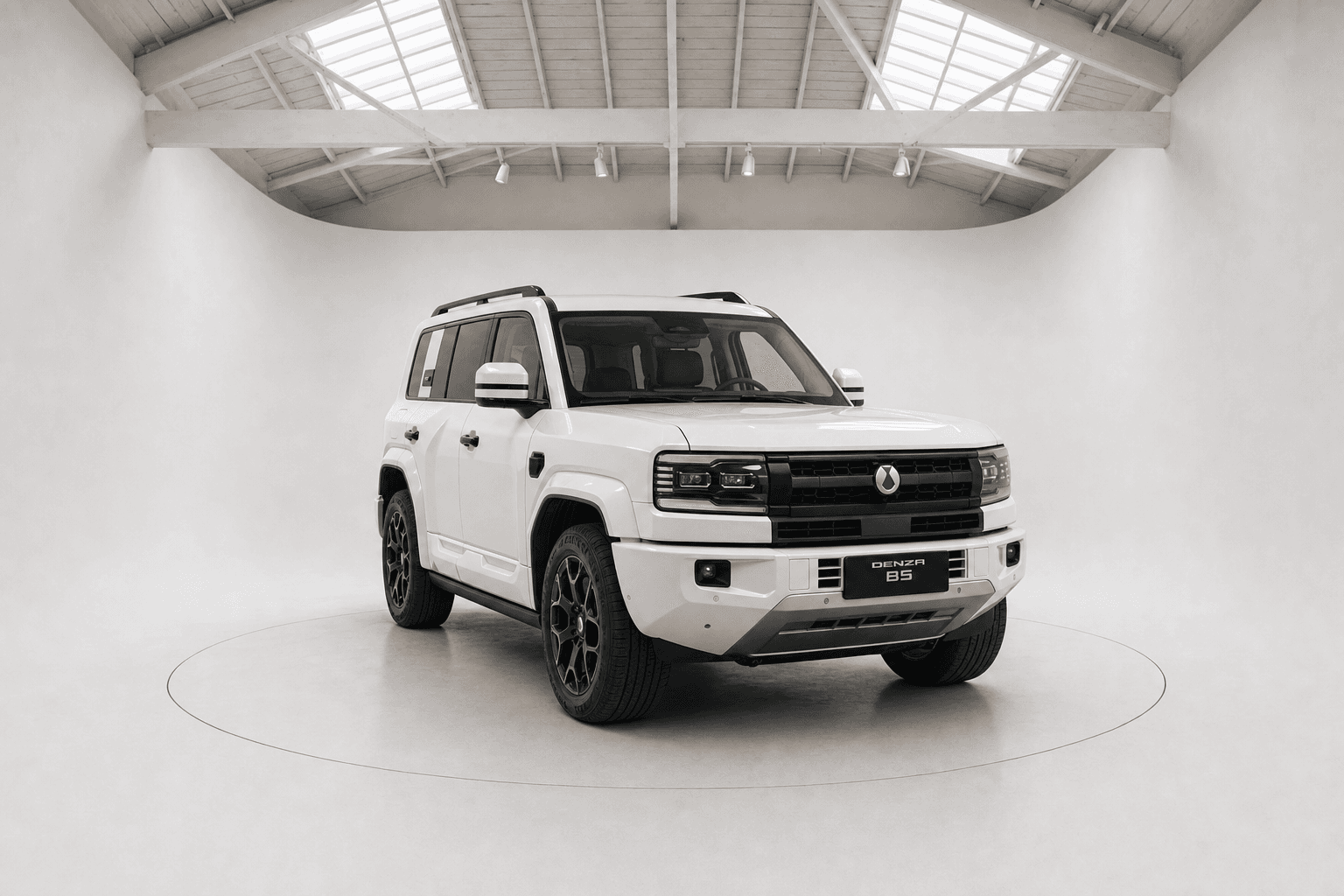
Denza
B5
From $82,138

Toyota
Model Profile
From $79,390
Driveaway estimate · NSW · priced Jul 2026. Varies by state. Details →
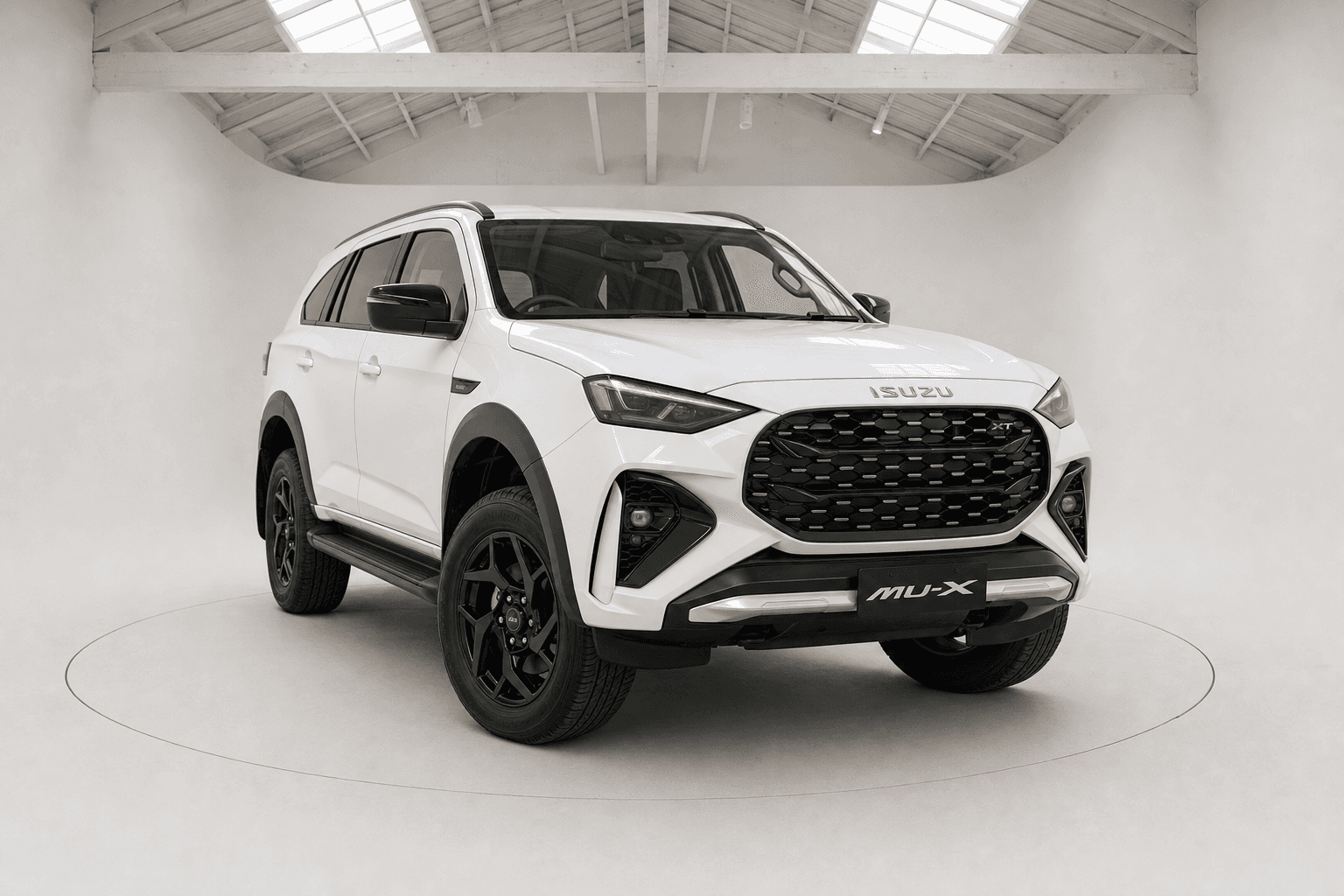
Is it a footy mums daily or a rugged outback tourer? Why not both? Prado pricing runs from $79,369 driveaway for the five-seat GX to $109,049 for the seven-seat Kakadu as of July 2026, the dearest the badge has been in its three decades as Toyota's go-anywhere family 4WD. Every grade shares one driveline: a 48-volt-assisted 150kW/500Nm 2.8-litre turbo-diesel, an eight-speed auto, full-time 4WD, a 3,500kg braked tow rating and a 110-litre tank for the long empty stretches. The 250 Series is the first all-new Prado since 2009, and it sits on the LandCruiser 300's ladder frame. The buying traps are specific: seven-seat versions surrender boot space to the 48-volt battery under the floor (the five-seat GX and GXL added in 2025 fix it), and the swaybar disconnect for the real rough stuff is Altitude-only.
1996
On sale here for three decades as its own model line.
Best seller
Australia's best-selling large SUV for most of its three decades, until the Everest took the 2025 crown.
15 years
First clean-sheet redesign since the 150 Series, built on the LandCruiser 300's platform.
150kW
Power500Nm
Torque3500kg
Braked towing7.6L/100km
Fuel economyRange shown across the Prado line-up. Pick a priority to see the numbers that matter to you.
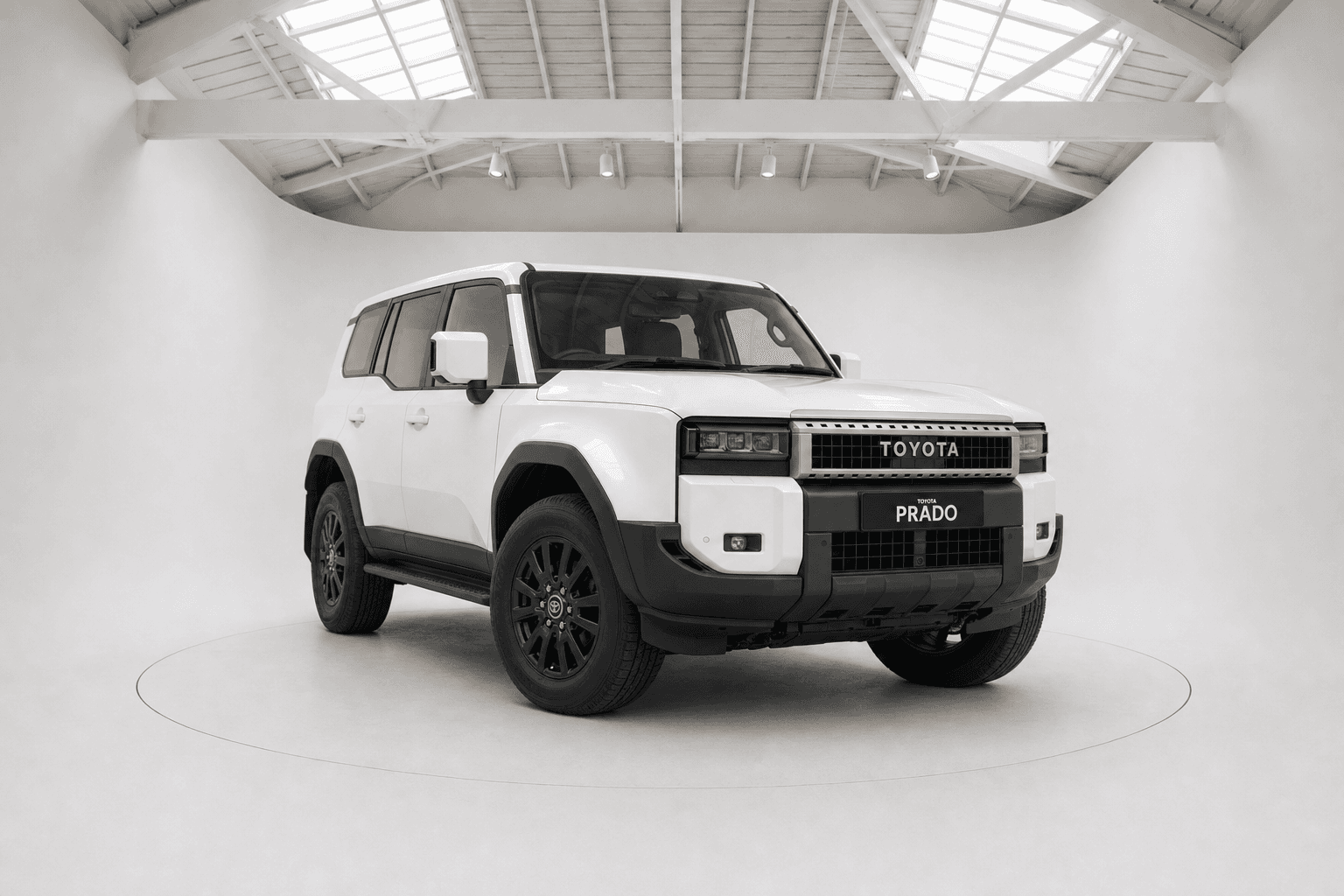
Images are illustrative and digitally rendered. They may not reflect the exact variant, colour or trim. Details →
Underneath sits Toyota's TNGA-F platform, the architecture shared with the LandCruiser 300 and the Lexus GX, and it's the biggest change over the previous generation. Across AU road tests the findings repeat: sharper steering, a more settled ride, and off-road ability at or near the top of the large-SUV class, with electronics doing enough of the work for a novice to look handy on a difficult track. The capability isn't on under scrutiny, so the real decisions left to a buyer are grade and seat count.
The number of seats is the first thing to decide, because the rest of the choice follows from it. The 48-volt battery is packaged beneath the boot floor, and the seven-seat consequence is a third row folding down onto the floor instead of dropping into it, with no sliding second row to win the space back. With seven aboard the boot is shallow and stepped, and the penalty stays even with the row folded. Order a GX or GXL without the third row and the cargo bay returns to full depth. At July-2026 pricing, a five-seat GXL runs $86,430 driveaway, $1,365 under its seven-seat twin, which makes the call easy for anyone not filling row three.
Which grade to buy depends on how hard the tracks get. The driveline never varies: one 2.8-litre turbo-diesel tuned to 150kW and 500Nm, a 48-volt mild-hybrid assist Toyota badges as a hybrid (it is not the full kind, and there is no V6 alternative or it'd be cutting into LandCruiser 300 series territory), an eight-speed automatic, full-time 4WD and a 3,500kg braked tow rating on every rung of the ladder. What varies is hardware and trim. The Altitude is the single grade fitted with the Stabiliser Disconnect Mechanism, freeing the front swaybar for more wheel travel, and it wears Toyo Open Country all-terrain tyres from the factory. If the itinerary includes rutted climbs and rock, the Altitude is the one to have.
The money is the honest gripe. A GXL lands in the high $80,000s driveaway and two grades top six figures, top-shelf pricing in a class where the road-biased alternatives push hard on cabin space and value. Toyota's counter is the ownership case: a five-year unlimited-kilometre warranty (the engine and driveline stay covered to seven years with on-schedule servicing), capped-price servicing, a long resale record, and a five-star ANCAP result from 2024 testing across all variants, nine airbags included. On the numbers the five-seat GXL is the buy: the GX's full safety kit plus the comfort gear, a full-depth boot, and $22,619 short of Kakadu money for an identical driveline. Only buyers bound for properly hard country should choose the Altitude instead.
1996
Three decades a standalone nameplate, and the top-selling large SUV for most of them.
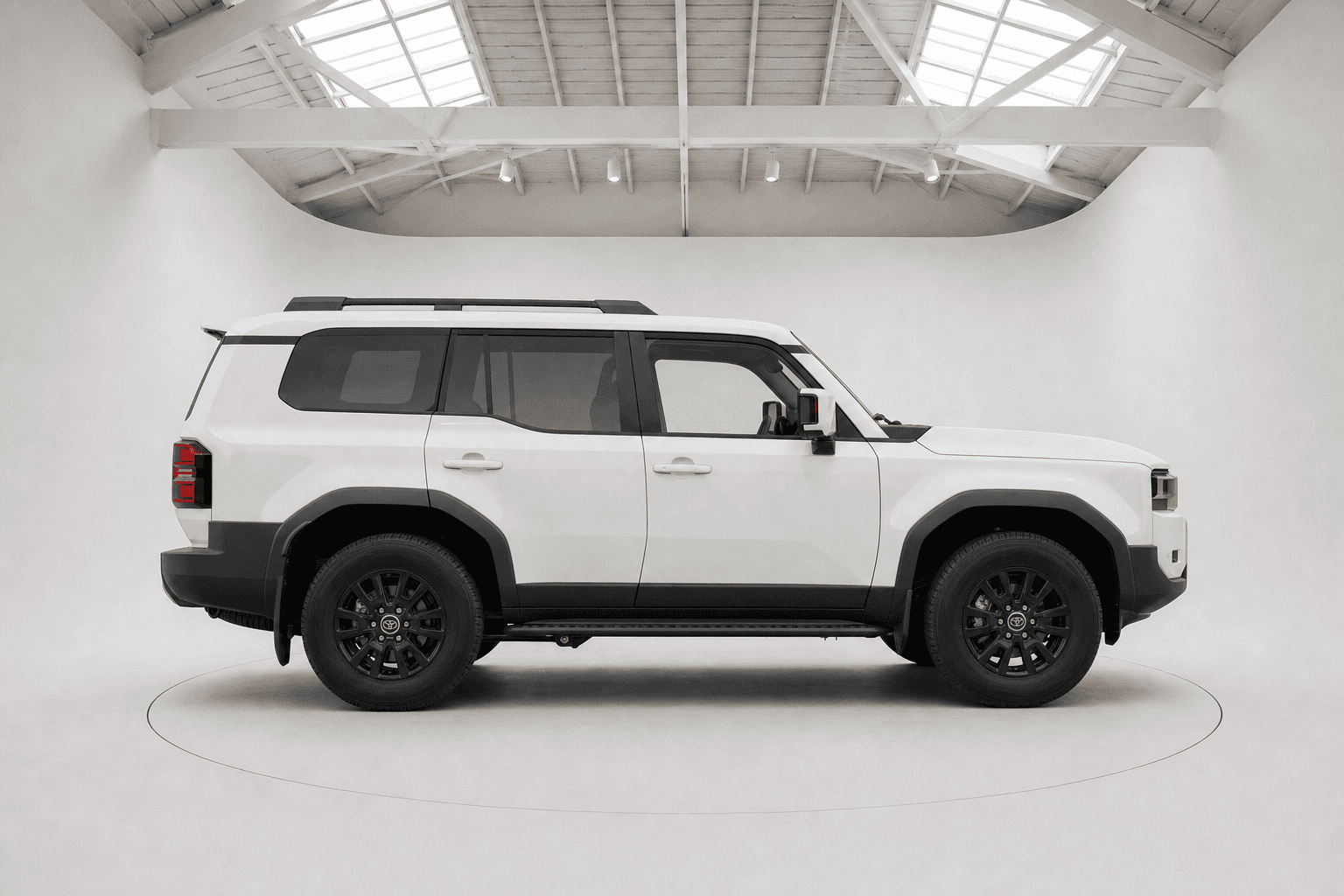
 Side elevation
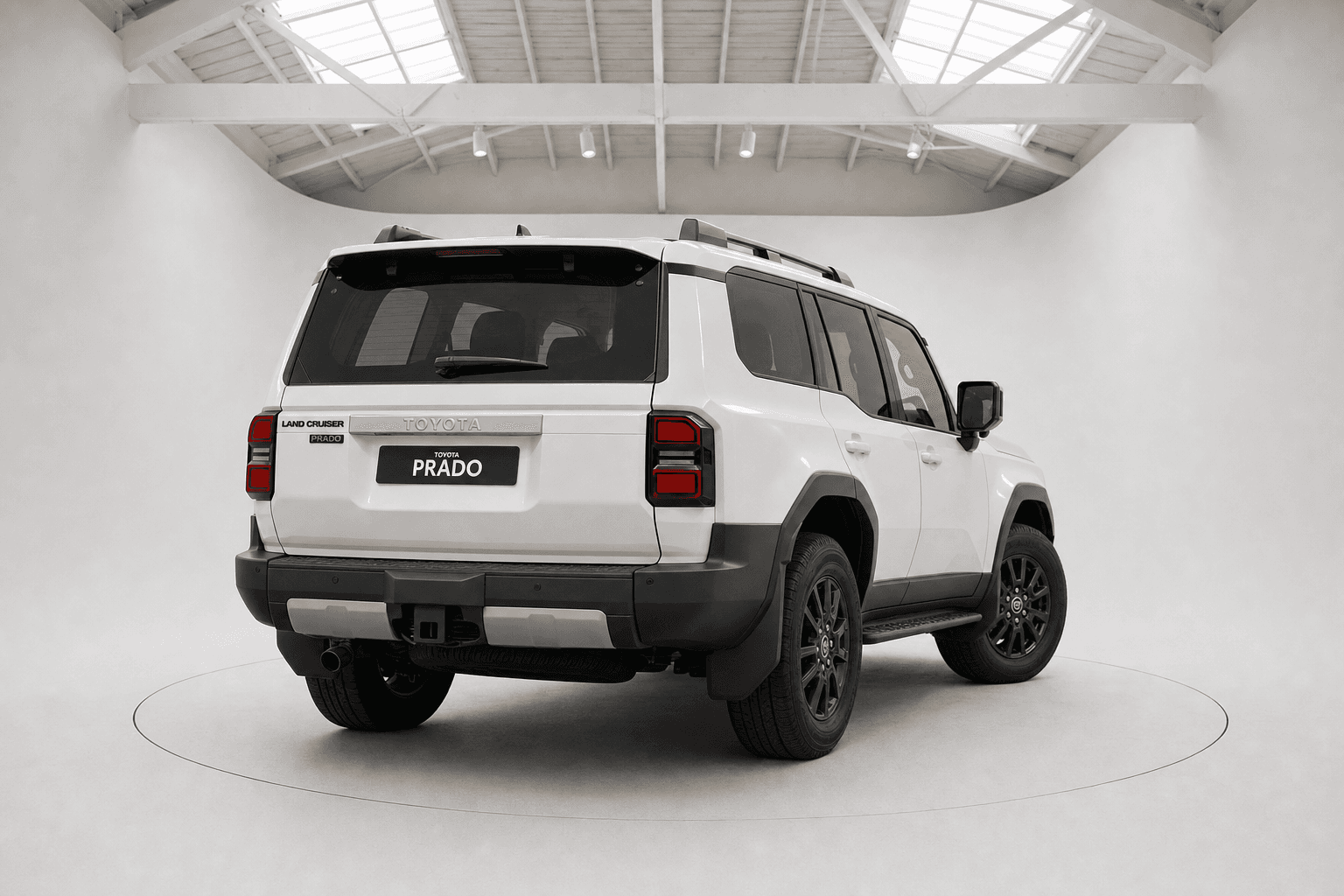
 Front elevation
0mm
Length0mm
Width0mm
Height0mm
WheelbaseThe driveline is the same on every grade. Prices here are NSW driveaway, checked July 2026; Toyota lifted list prices by up to $700 from 1 January 2026, the first increase since the 250 launched in late 2024, so confirm the number on the day. Seating is the other axis: the GX and Altitude seat five, the VX and Kakadu seat seven, and the GXL comes either way.
From $79,390
The range opens at $79,369 driveaway with five seats, and it is specced closer to a mid-ranger than a base car. Wireless Apple CarPlay and Android Auto, onboard satnav, a reversing camera plus the Panoramic View Monitor, and the full Toyota Safety Sense suite (AEB, active cruise control, lane support) are all standard, running through the same 2.8-litre diesel and full-time 4WD as the flagship. Being a five-seater, it also gets the full-depth boot. The gaps are comfort items: no leather, no heated seats, no seven-seat option. Cloth trim and 18-inch alloys.
From $86,451
The volume grade at $86,430 with five seats or $87,795 with seven, and the only Prado offering both counts. The safety case was settled at GX level, so this money buys comfort: wireless phone charging, privacy glass, roof rails, rear-seat air vents with climate control, an auto-dimming mirror, plus heated and ventilated front seats.
From $87,816
From $95,594
Seven seats standard at $95,573. This is where the spend shifts from capability to cabin: a 12.3-inch digital instrument cluster, adaptive bi-LED headlights, 20-inch wheels, leather-accented seats, 14-speaker JBL audio, Adaptive Variable Suspension and a set of selectable drive modes.
From $101,159
The off-road specialist seats five only and lands at $101,138 driveaway. It is the one grade with the Stabiliser Disconnect Mechanism, and it ships on 18-inch Toyo Open Country all-terrain rubber; a heated steering wheel and tilt-and-slide moonroof keep it liveable between trips.
From $109,078
The flagship Kakadu seats seven at $109,049. Over the VX it adds illuminated side steps, a panoramic moonroof, a heated steering wheel, and heating and ventilation for the rear outboard seats. The extra spend is entirely about comfort; the off-road hardware peak sits one rung down at the Altitude.
Driveaway estimate · NSW · priced Jul 2026. Varies by state. Details →
Fuel or charging, insurance, servicing, tyres and rego, with repayments if you finance it. Estimates for a NSW private buyer, not a quote.
The Toyota Prado is rated to tow up to 3,500 kg with a braked trailer and 750 kg without trailer brakes.
Heaviest braked trailer allowed, quoted as ATM: the loaded trailer including ball weight.
3,500 kg
Limit for trailers without their own brakes.
750 kg
Gross vehicle mass: the most the loaded vehicle may weigh, ball weight included.
3,100 kg
Gross combination mass: vehicle and trailer together, both fully loaded.
6,600 kg
The vehicle as delivered, before people, cargo and accessories.
2,510 kg
Everything you may add: people, cargo, accessories and ball weight.
580 kg
Downward load on the tow ball; it counts toward GVM. Assumed at 10 per cent of the tow rating: Toyota does not publish a limit.
350 kg
Assumed 10%
Hook up 3,500 kg with 350 kg on the ball (assumed at 10 per cent) and the Altitude has 230 kg of payload left for people, cargo and accessories.
The GCM allows the full payload and the full tow rating at the same time, which is rarer than it sounds in this class.
Assuming 10 per cent of the trailer weight.
Two adults plus luggage is roughly 400 kg.
Over a limit. This combination does not comply.
Tow rating
0 kg under the 3,500 kg braked rating
Vehicle GVM
Over GVM by 170 kg. Lighten the load or the ball.
Combined GCM
190 kg spare across the whole combination
Tow ball limit
No published limit. Vans usually need 8 to 12 per cent of ATM on the ball.
Figures are manufacturer maximums for the Altitudeand can change with model year; the compliance plate and handbook of your exact vehicle govern. In Australia, trailers over 750 kg GTM (the loaded weight on the trailer's own wheels) need their own brakes, and over 2,000 kg they need brakes on all wheels plus a breakaway system. Ball weight typically runs 8 to 12 per cent of ATM. Axle loads and tyre ratings are not modelled here. Checking a different car against your van? Use the towing calculator.
ANCAP · Tested 2024
This vehicle achieved the highest possible ANCAP safety rating, with strong results across occupant protection, pedestrian safety and safety-assist technology.
The 250 Series repairs most of what had dated on the old Prado and keeps what rivals can't easily buy: off-road pedigree, dealer coverage past the last big town, and a proven resale record. Every grade tows 3,500kg, wades to 700mm and carries the five-star ANCAP rating from 2024 testing. The catch is the company the price keeps: as of mid-2026 a seven-seat GXL sits within a few thousand dollars of a top-spec Ford Everest Platinum driveaway, and the Everest packages its seven seats without a battery under the boot floor while holding the better on-road report card. Buy the Prado for the hardware, the badge and the ownership case, as a five-seat GXL unless hard tracks justify the Altitude. If cabin space, road manners or value lead your list, drive the Everest first.
Past generations. Context, not the car on sale today.
Prado has been its own nameplate here since July 1996, the road-friendlier LandCruiser for buyers who didn't need the full-size wagon. It set the pace of large-SUV sales for most of three decades; the Ford Everest finally took the full-year crown in 2025, by 55 units on VFACTS figures, and results to May 2026 had the pair trading the monthly lead. Four generations on, the used-buyer homework comes down to engine eras, and one diesel saga in particular.
The nameplate's Australian debut: petrol and diesel engines, priced and sized under the full-size LandCruiser, and pitched at families wanting real ability without the bulk or the bill. It set the school-run-to-scrub template every Prado has followed since.
Bigger and hugely popular. On a used 120 the engine to check is the 1KD-FTV 3.0-litre turbo-diesel: injectors wear, and Euro 4 versions carry a piston-cracking risk under sustained heavy towing or high boost. Toyota addressed it through a service bulletin and revised parts, not a recall, so paperwork beats a low odometer here.
The long-runner, holding the segment for 15 years. Its asterisk: diesels built between 2015 and 2020 fell inside Toyota's DPF defect, the same issue affecting HiLux and Fortuner, which ended in a Federal Court class action in 2022. A field fix exists; on any build from those years, confirm it has been applied before money changes hands.
The car this page covers: the first ground-up redesign since 2009, moving the Prado onto the TNGA-F frame it shares with the LandCruiser 300. One engine only, the 2.8-litre diesel with 48-volt assist, and from 2025 a five-seat option on GX and GXL to answer the seven-seat boot problem.
Announced in June 2026 and covering 13,042 vehicles: VX, Altitude and Kakadu grades built between June 2024 and June 2025 carry a software error in the 12.3-inch combination meter which can stop oil-pressure and coolant-temperature warnings appearing at startup. The fix is a free software update, available through dealers or over the air; buying used from this build window, check the update has been done.
By Yuri Cartland, Editor