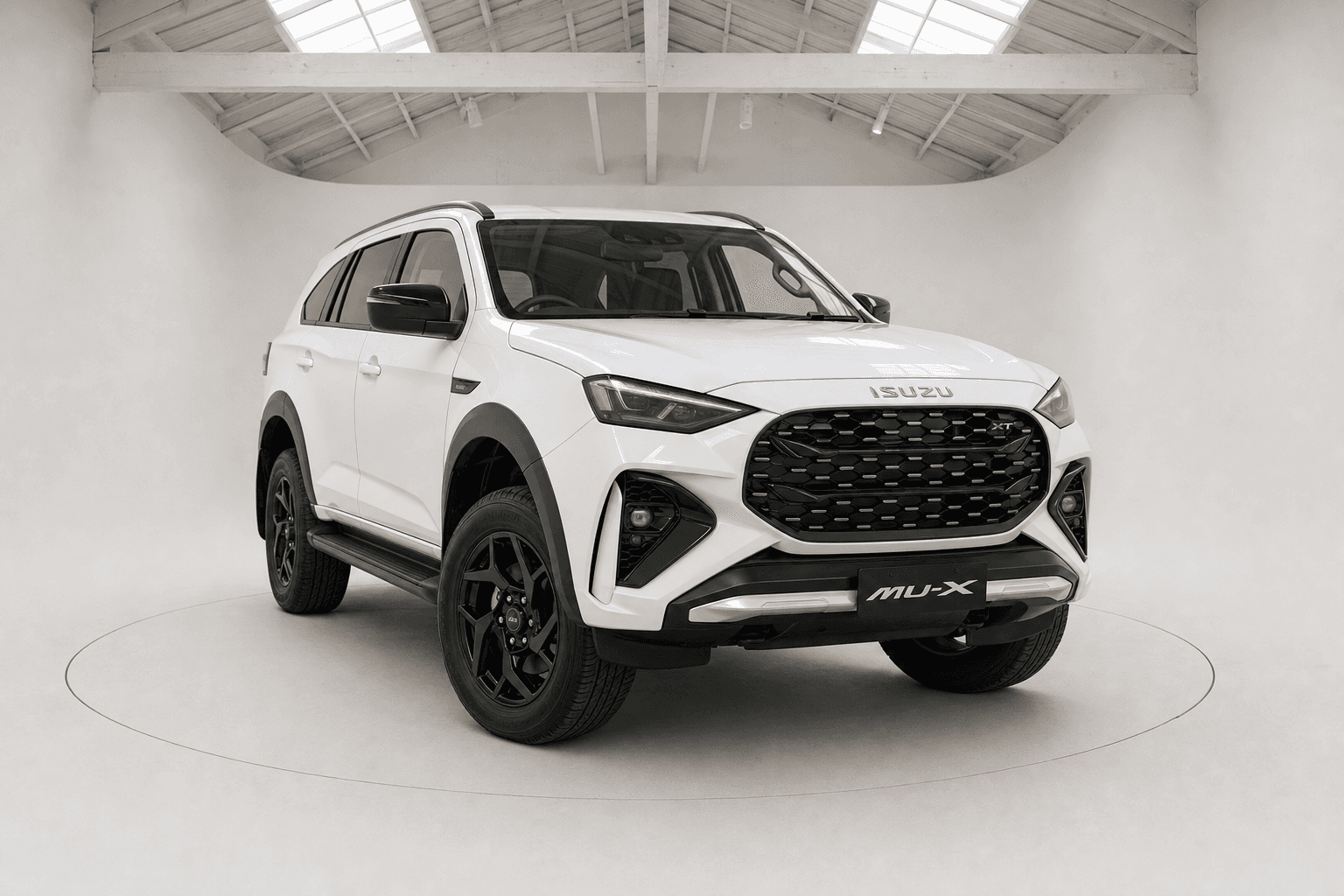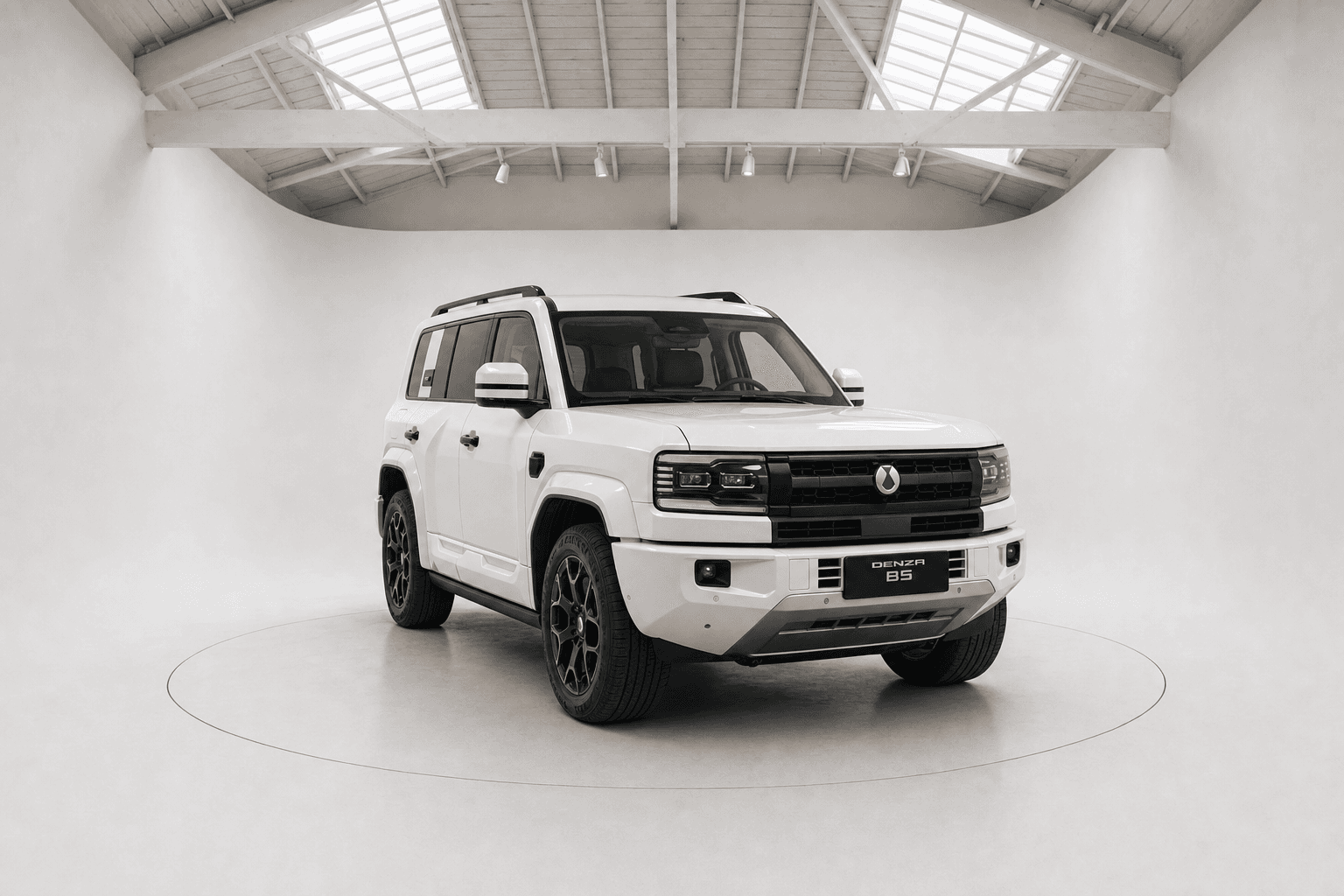
Denza
B5
From $82,138

Toyota
Model Profile
From $81,959
Driveaway estimate · NSW · priced Aug 2026. Varies by state. Details →
A LandCruiser 70 now starts at $83,586 driveaway in NSW and runs to about $94,600, and the conversation is finally less about the queue than the car. This is a working 4WD whose basic design is four decades old, and the current range is the boldest rewrite in that history: the V8 is gone, a 2.8-litre four-cylinder turbo-diesel and the 70's first automatic in a generation do the work, and the line-up spans single and double cab-chassis utes, a Troop Carrier and a wagon. An eight-month production pause from September 2025 fitted the cleaner Euro 6 engine with AdBlue; the wider range is back in good supply through 2026, with only the GXL Wagon automatic still under an order pause.
1985
One platform generation, four decades on sale, and still no natural replacement.
2.8 turbo-diesel
The 4.5-litre V8 ended in 2025; a four-cylinder turbo-diesel and the 70's first automatic in a generation replace it.
3,500kg
Cab-chassis utes, a Troop Carrier and a wagon, built for where breakdowns are measured in days.
150kW
Power500Nm
Torque3500kg
Braked towing9.6L/100km
Fuel economyRange shown across the LandCruiser 70 line-up. Pick a priority to see the numbers that matter to you.
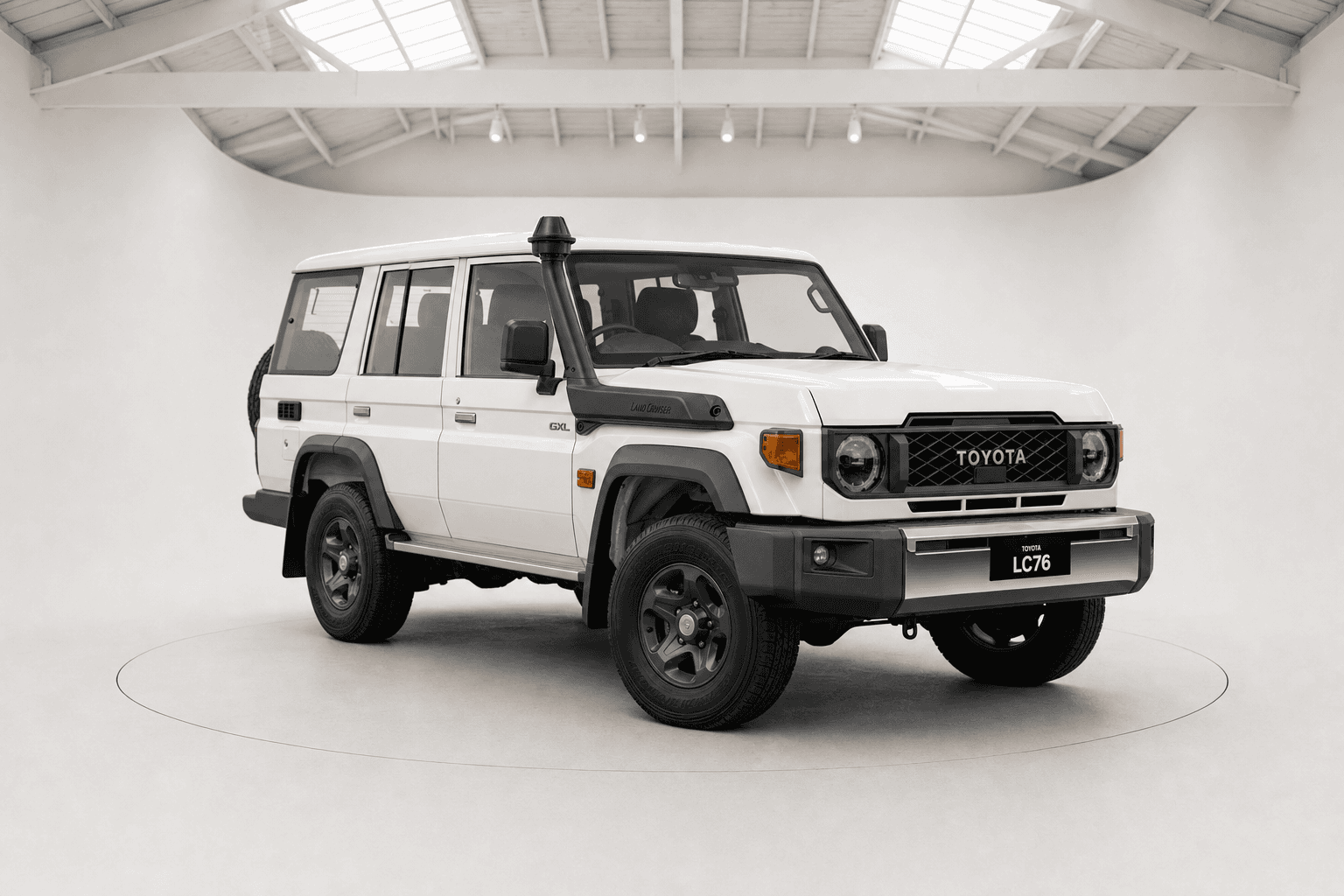
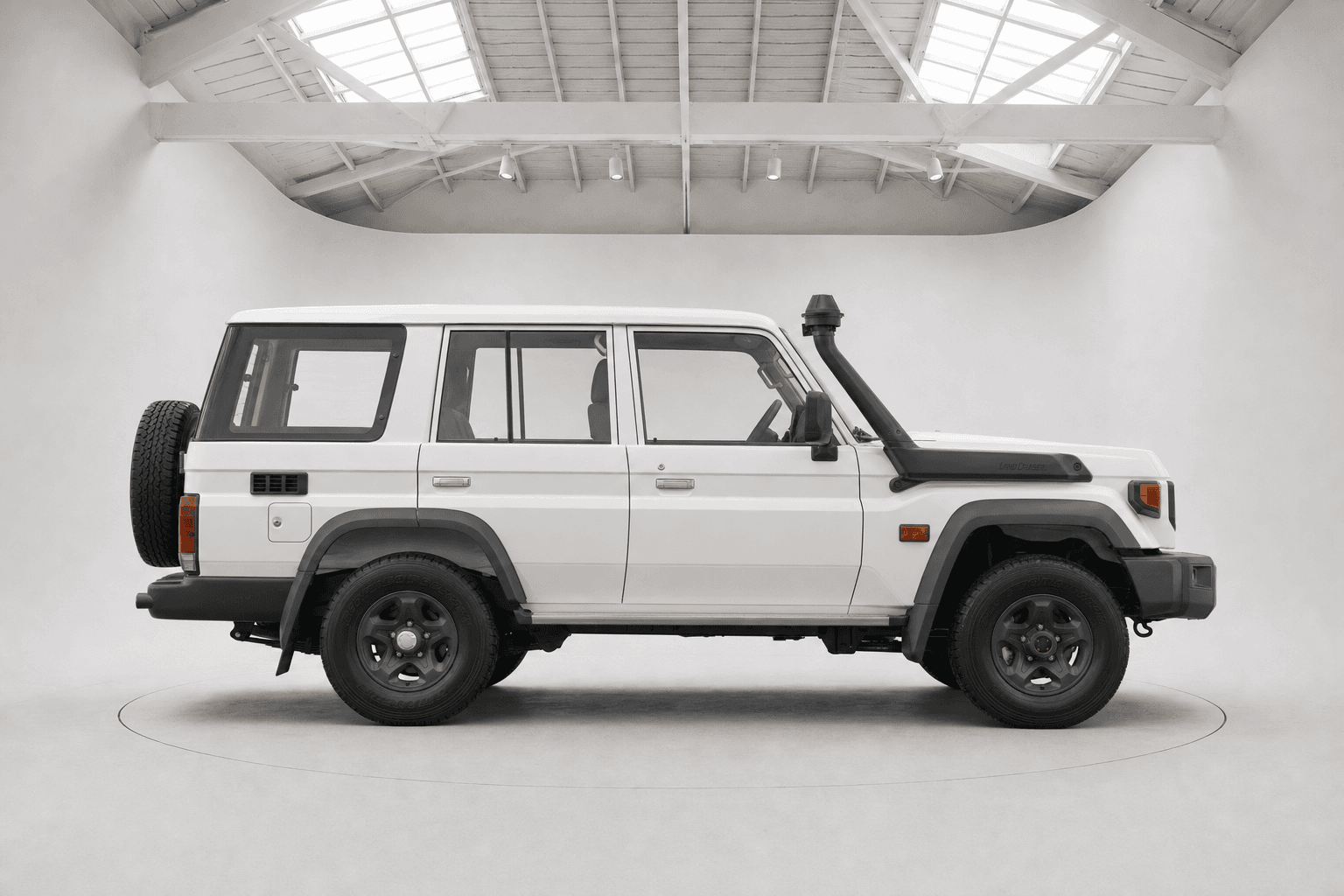
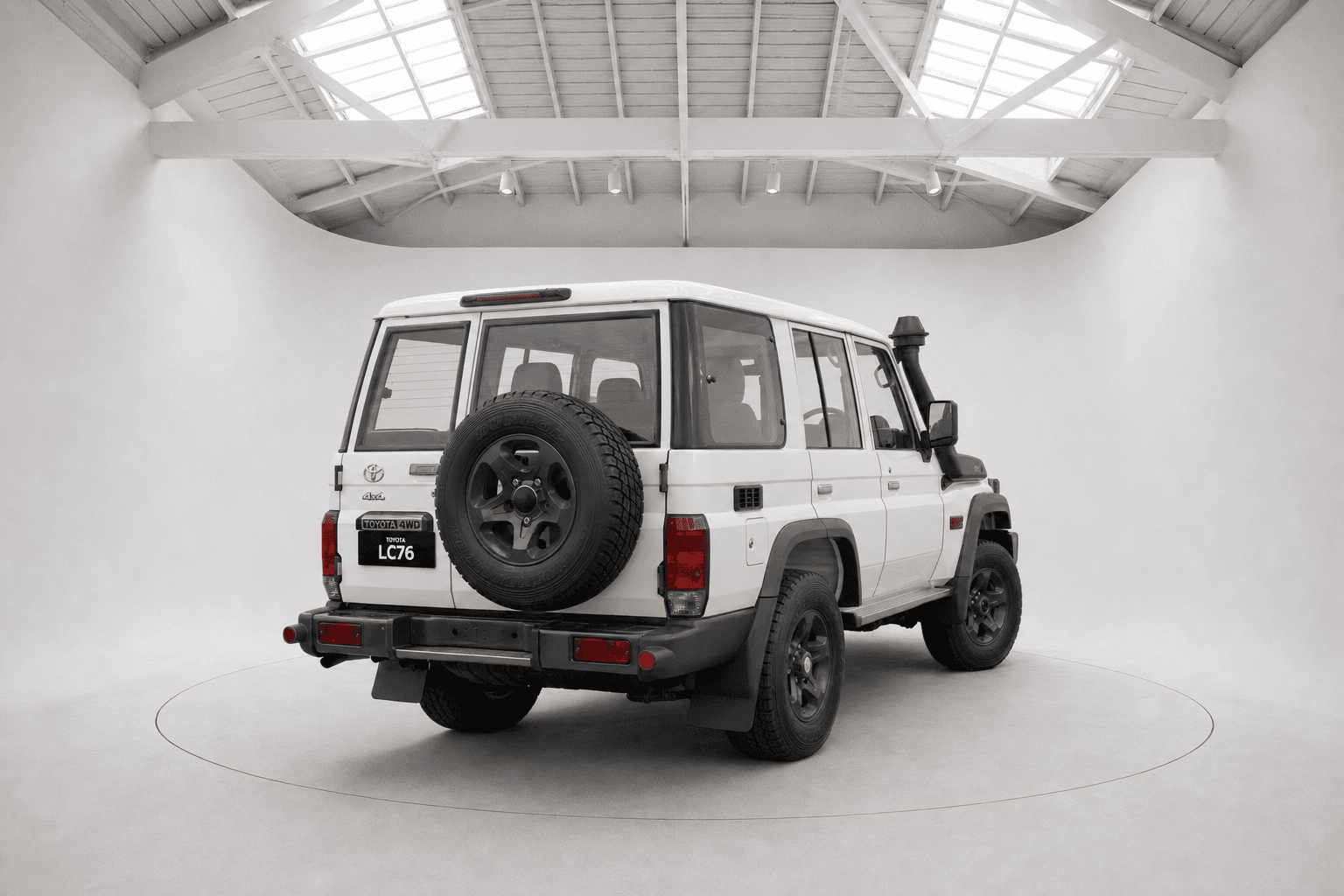
Images are illustrative and digitally rendered. They may not reflect the exact variant, colour or trim. Details →
The LandCruiser 70 is the last of the old-school heavy-duty 4WDs sold new in Australia: a ladder frame, live axles at both ends, part-time four-wheel drive and a body you choose by job. The 79 single and double cab-chassis carry trays for stations and mine sites, the 78 Troop Carrier hauls people and touring fit-outs into the never-never, and the 76 wagon does the family-farm run. Nothing else new works like it. That is why demand has outrun supply since the V8 order books shut in 2022.
The grade walk is short and the money is close. As of July 2026 the range opens with the Workmate Troop Carrier at $83,586 driveaway in NSW; on the double-cab body a Workmate lands at $90,276, the single-cab GX at $92,458 and the GXL double-cab at $94,602, so stepping from work-spec vinyl to the GXL's cloth trim, alloys and standard diff locks costs a little over four grand. The ownership story cuts both ways. Toyota's five-year, unlimited-kilometre warranty applies to private use, drops to 160,000km for commercial work, and stretches to seven years on the engine and driveline with logbook servicing. But the LandCruiser eats a service every six months or 10,000km at $545 a visit, and that is a real cost of doing business.
The engine argument is settled, even if the bar-room debate is not. Toyota retired the 4.5-litre V8 in 2024 and the whole current range runs the 2.8-litre four-cylinder turbo-diesel making 150kW and 500Nm through a six-speed automatic, the 70's first auto in roughly 33 years. Every comparative test in the Australian press found the four easier to drive, stronger where it counts and no worse under a load than the V8 it replaced. It claims 9.6L/100km, and with a 130-litre tank the touring range on paper stretches past 1,300km. A five-speed manual joined selected variants in late 2024 for $2,000 less, with 450Nm.
What you give up is everything the spec sheet calls modern. The cabin is vinyl trim and a 6.7-inch screen with wired smartphone mirroring, the steering is slow, and the unladen ride is a long way from a family SUV's. The safety kit is honest rather than generous: autonomous emergency braking is standard range-wide, but there is no current ANCAP star rating, no blind-spot monitoring and no adaptive cruise, and only the single-cab gets curtain airbags. The case for one is unchanged by any of that: distance, durability and a dealer in every outback town, bought as the GXL for its cloth trim, diff locks and resale. Buyers whose week runs more to the school run than the station run, or who need a current safety rating, should seriously consider their life choices.
1985
One platform generation, four decades on sale, and still no natural replacement.
Three grades, four body styles, and the body decision matters more than the grade one. Prices below are NSW driveaway (as of July 2026), and the whole range now carries published pricing. The Workmate Troop Carrier anchors the bottom of the range; a five-speed manual undercuts the six-speed auto by about $2,000 on the variants that offer both.
From $81,959
The fleet special, from $83,586 driveaway as a Troop Carrier or $90,276 as a double-cab. Vinyl seat trim you can hose out, 16-inch steel wheels, and the same full pre-collision safety suite as every other grade.
From $83,607
From $86,285
The grade the waiting lists chase, from $87,002 driveaway as a Troop Carrier or $94,602 as a double-cab. Cloth seat trim where the rest of the range is vinyl, 16-inch alloys, standard front and rear diff locks, and a little over four grand above the Workmate double-cab.
From $87,006
From $92,478
Single-cab only, at $92,458 driveaway. The middle grade keeps the hose-out vinyl trim but swaps onto 16-inch alloys, and the single-cab body is the one with the most airbag protection in the range, at five.
Driveaway estimate · NSW · priced Aug 2026. Varies by state. Details →
Fuel or charging, insurance, servicing, tyres and rego, with repayments if you finance it. Estimates for a NSW private buyer, not a quote.
The Toyota LandCruiser 70 is rated to tow up to 3,500 kg with a braked trailer and 750 kg without trailer brakes.
Heaviest braked trailer allowed, quoted as ATM: the loaded trailer including ball weight.
3,500 kg
Limit for trailers without their own brakes.
750 kg
Gross vehicle mass: the most the loaded vehicle may weigh, ball weight included.
3,510 kg
Gross combination mass: vehicle and trailer together, both fully loaded.
7,010 kg
The vehicle as delivered, before people, cargo and accessories.
2,130 kg
Everything you may add: people, cargo, accessories and ball weight.
1,380 kg
Downward load on the tow ball; it counts toward GVM.
150 kg
Hook up 3,500 kg with 150 kg on the ball and the GX has 1,230 kg of payload left for people, cargo and accessories.
The GCM allows the full payload and the full tow rating at the same time, which is rarer than it sounds in this class.
Assuming 10 per cent of the trailer weight.
Two adults plus luggage is roughly 400 kg.
Over a limit. This combination does not comply.
Tow rating
0 kg under the 3,500 kg braked rating
Vehicle GVM
630 kg spare after the ball weight and your load
Combined GCM
980 kg spare across the whole combination
Tow ball limit
Over the 150 kg ball limit by 200 kg
Figures are manufacturer maximums for the GXand can change with model year; the compliance plate and handbook of your exact vehicle govern. In Australia, trailers over 750 kg GTM (the loaded weight on the trailer's own wheels) need their own brakes, and over 2,000 kg they need brakes on all wheels plus a breakaway system. Ball weight typically runs 8 to 12 per cent of ATM. Axle loads and tyre ratings are not modelled here. Checking a different car against your van? Use the towing calculator.
This model doesn't carry an ANCAP safety rating. Here's the active-safety equipment fitted across the range.
Buy the LandCruiser 70 if work or touring takes you where breakdowns are measured in days; nothing else new pairs this drivetrain simplicity with a support network this deep. The numbers are unglamorous and real: 3,500kg braked towing with the full 3,510kg GVM aboard at the same time, 150kW and 500Nm, and 1,300km of paper range. Skip it if the school run outnumbers the station run. It has no current ANCAP star, rear passengers in the double-cab get front airbags only, and a Ranger Super Duty tows more in far more comfort. The GXL is the grade to buy.
Past generations. Context, not the car on sale today.
The 70 Series arrived in Australia in 1985 as the working successor to the 40 Series, and it has been on sale, in one continuously evolved generation, ever since. Four decades on stations, mine sites and outback tracks built the durability legend the current car still trades on. The record has its asterisks, and one recall window matters if you are shopping used.
Petrol and diesel sixes, manual everything and a near-indestructible reputation earned in fleets, on farms and across the mining boom. Used examples reward a maintenance history: swivel hubs, seals and rust around the windscreen are the known checkpoints on high-country survivors.
The 4.5-litre single-turbo V8 diesel and five-speed manual defined the modern 70 and added the 76 wagon. A 2016 update brought Euro 5, a diesel particulate filter and a five-star ANCAP rating for the single-cab, since expired. In May 2020 about 23,000 V8s built between June 2016 and November 2018 were recalled over a DPF-related fire risk, fixed with a new heat shield and manual regeneration. Toyota announced the V8's end in July 2024; final deliveries ran through 2025.
The current range on this page: the 2.8-litre four-cylinder turbo-diesel, the 70's first automatic in roughly 33 years, a heritage-look facelift and Toyota Safety Sense across the board. A five-speed manual followed in December 2024 on selected variants. The press verdict landed quickly: the four does the V8's job, and does it more easily.
Production paused for eight months from September 2025 so the engine could meet the ADR 80/04 emissions rule, with AdBlue arriving on the updated drivetrain. The wider range returned to good supply through 2026, with only the GXL Wagon automatic still under an order pause; pricing and specification continue to move with the update.
By Yuri Cartland, Editor