Premium 4WD
Defender vs Discovery
Land Rover · Land Rover
Head to head
Defender
LandCruiser 300
Last updated September 2026
From$112,617
From$107,394
The Toyota LandCruiser 300 is the pick for the long-term owner: ten airbags to the Land Rover Defender's six, a 110-litre tank against 90, low capped-price servicing and resale no Land Rover matches. Off-road the Land Rover Defender reaches further: up to 323mm of air-sprung clearance, one-metre wading, and a 257kW D350 diesel to the Toyota's 227kW.
47mm
The lowest-riding Land Rover Defender still clears 292mm, 47 more than any LandCruiser 300 at 245mm. Toyota's counter is a 110-litre tank against the Defender's 90.
Pick a priority — we’ll show the numbers that matter and tell you which car we’d choose.
| Land Rover Defender | vsspecification | Toyota LandCruiser 300 |
|---|---|---|
183 kW | Power | 227 kW (leads) |
570 Nm | Torque | 700 Nm (leads) |
3,500 kg | Braked towing | 3,500 kg |
8.1 L/100km (leads) | Fuel economy | 8.9 L/100km |
Based on Essentials, we’d pick the Toyota LandCruiser 300.
| Land Rover Defender | vsspecification | Toyota LandCruiser 300 |
|---|---|---|
295 mm (leads) | Ground clearance | 245 mm |
37.5° (leads) | Approach | 31° |
41.9° (leads) | Departure | 25° |
The Defender brings the geometry and the awards, air suspension lifting it to 323mm of clearance, a 40-degree approach angle and a one-metre wading depth, and the 2026 best-off-road-SUV title ahead of the Prado and Everest. The LandCruiser answers with front and rear diff locks, a bigger tank for range, and the proven durability that makes it the remote-touring default. Capability to the Defender, dependability to the Toyota.
Based on Off-road, we’d pick the Land Rover Defender.
| Land Rover Defender | vsspecification | Toyota LandCruiser 300 |
|---|---|---|
3,500 kg | Braked towing | 3,500 kg |
2,970 kg | GVM | 3,280 kg (leads) |
Both tow 3,500kg braked on a 350kg tow ball with near-identical combined mass, so the headline ties. A CarExpert towing test rated the Defender's body control highly with a load behind it, while the LandCruiser's bigger 110-litre tank and diesel durability suit the long, heavy haul. Neither concedes much; the pick follows the rest of the decision rather than any towing-spec gap.
A genuine tie.
Both cars handle towing & weightsequally well — this one’s a draw.
| Land Rover Defender | vsspecification | Toyota LandCruiser 300 |
|---|---|---|
183 kW | Power | 227 kW (leads) |
570 Nm | Torque | 700 Nm (leads) |
8.1 L/100km (leads) | Fuel economy | 8.9 L/100km |
The Defender spreads power across five engines where the LandCruiser has one. Its 257kW D350 diesel already out-muscles the Toyota's 227kW twin-turbo V6, and the range climbs through a 313kW supercharged V8 and a 467kW OCTA the LandCruiser has no answer to. The Toyota's single diesel is silky and strong on torque at 700Nm, but on engine choice and outright output this is the Defender's category.
Based on Engine & efficiency, we’d pick the Land Rover Defender.
| Land Rover Defender | vsspecification | Toyota LandCruiser 300 |
|---|---|---|
8.1 L/100km (leads) | Fuel economy | 8.9 L/100km |
The LandCruiser 300 wins the long game. It opens a little lower, holds its value far better, and lowers the risk of keeping a truck for a decade through Toyota's durability reputation and cheap capped-price servicing. The Defender is defensible at the base diesel but its options routinely add tens of thousands, and Land Rover's resale and reliability reputation trail. For total cost over time, the Toyota is ahead.
Based on Running costs, we’d pick the Toyota LandCruiser 300.
| Land Rover Defender | vsspecification | Toyota LandCruiser 300 |
|---|---|---|
5★ | ANCAP | 5★ |
85% | Adult occupant | 89% (leads) |
82% (leads) | Safety assist | 77% |
6 | Airbags | 10 (leads) |
Yes | AEB | Yes |
Yes | Adaptive cruise | Yes |
Yes | Blind-spot monitor | Yes |
Yes | 360° camera | Yes |
The LandCruiser 300 holds the stronger safety case. Its five-star ANCAP rating is from 2022 against the Defender's expiring 2020, it scores higher for adult protection at 89 per cent to 85 and vulnerable road users at 81 to 71, and it carries ten airbags to the Defender's six. The Defender's rating also excludes its V8 variants, which are unrated, where the whole LandCruiser range is covered.
Based on Safety, we’d pick the Toyota LandCruiser 300.
| Land Rover Defender | vsspecification | Toyota LandCruiser 300 |
|---|---|---|
5 | Seats | 5 |
397 L | Boot | 1,131 L (leads) |
13.1″ (leads) | Touchscreen | 8.0″ |
A close call that turns on the body. The Defender 130 seats up to eight with the biggest boot in the range, more than the LandCruiser's maximum of seven, and its cabin leads on design and tech. The LandCruiser answers with proven durability, the safety edge and simpler ownership for a family that keeps a car for years. Match the body style to the household and either serves well.
A genuine tie.
Both cars handle everyday & familyequally well — this one’s a draw.
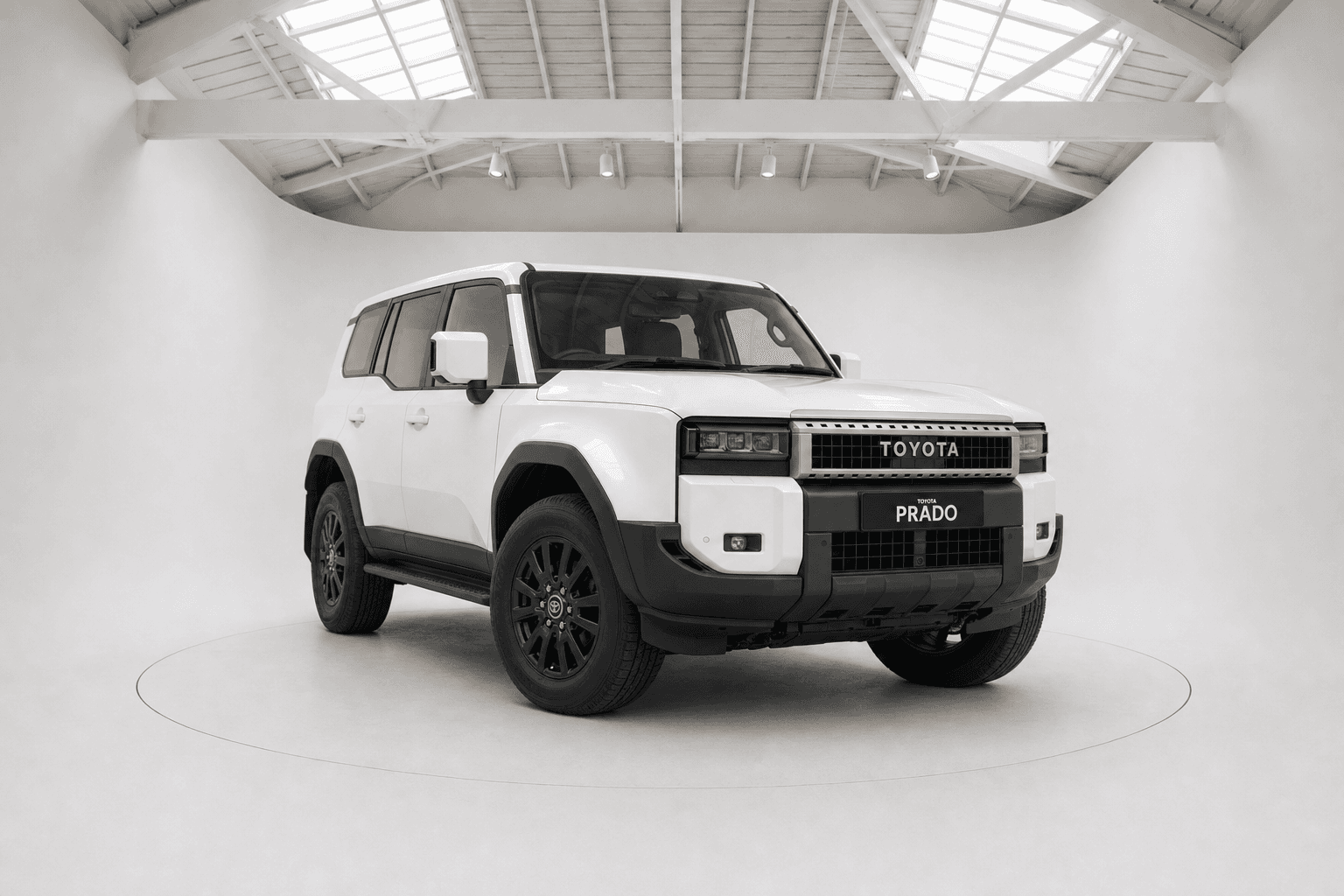
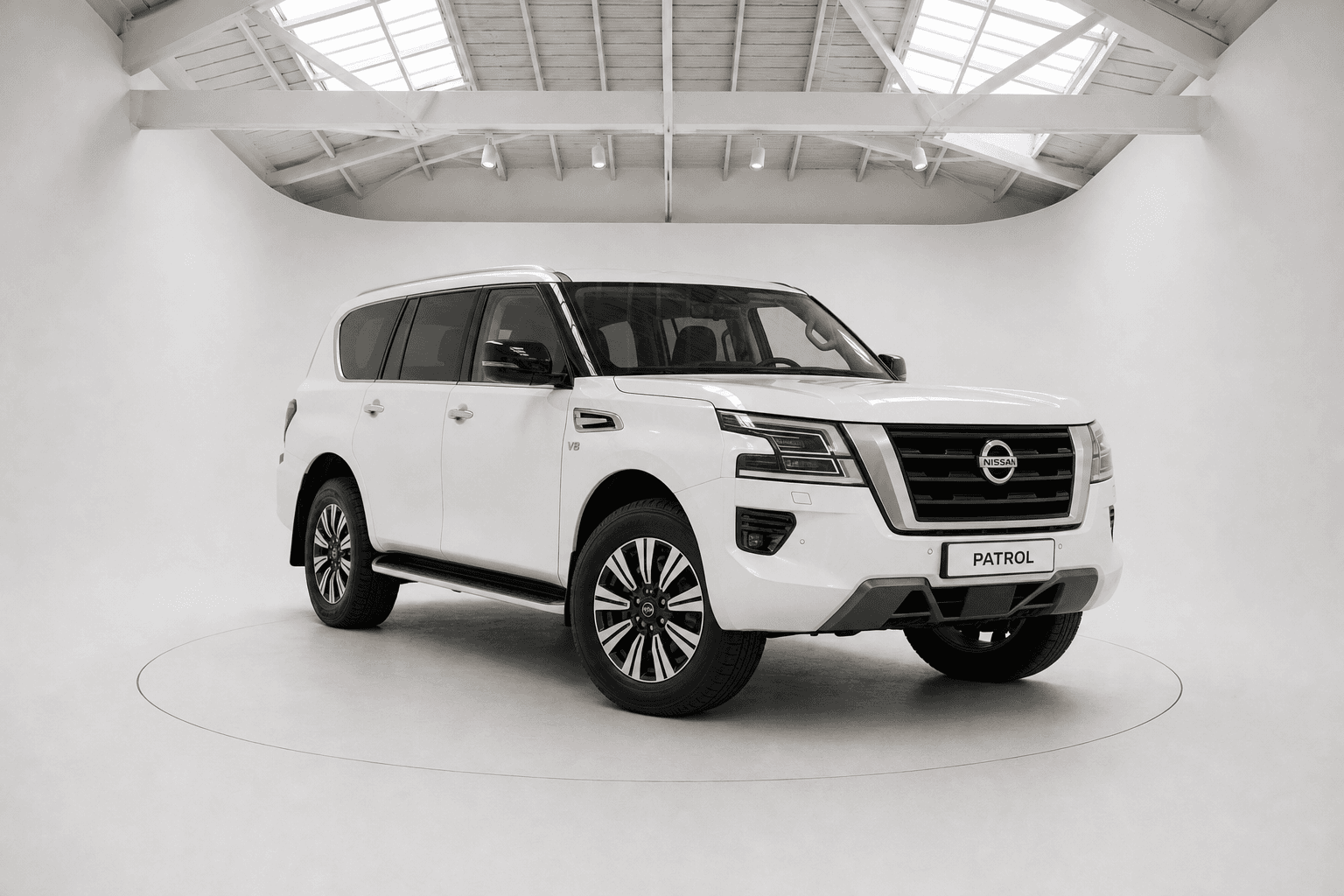
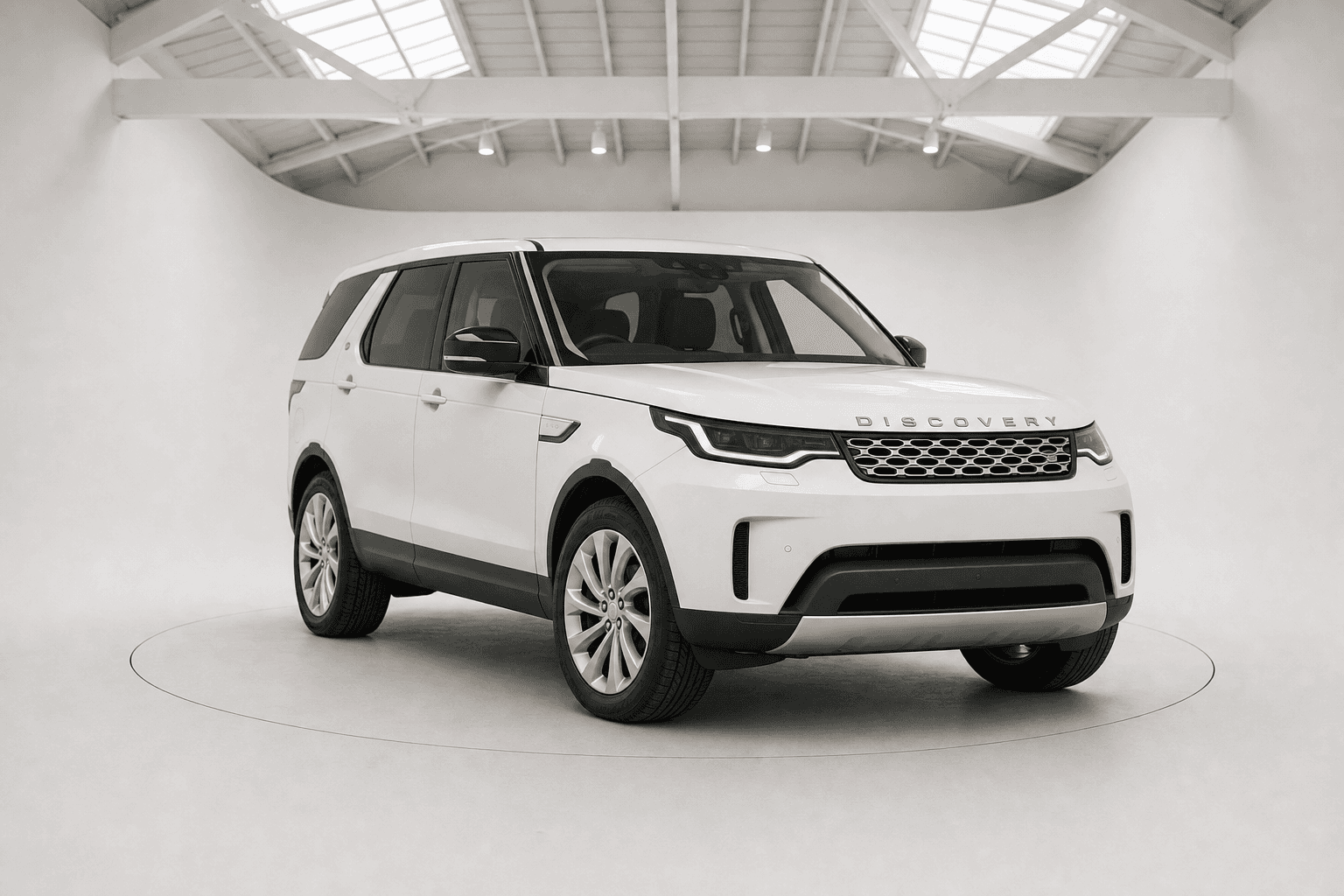
The Defender's face is the most distinctive in the segment, a clean, upright panel of round LED headlights and a simple grille that reads as modern-industrial rather than aggressive. It looks engineered rather than styled, and the deployable side steps and optional 22-inch wheels signal how far up-market the range climbs. Nothing else here looks quite like it, which is much of the appeal.
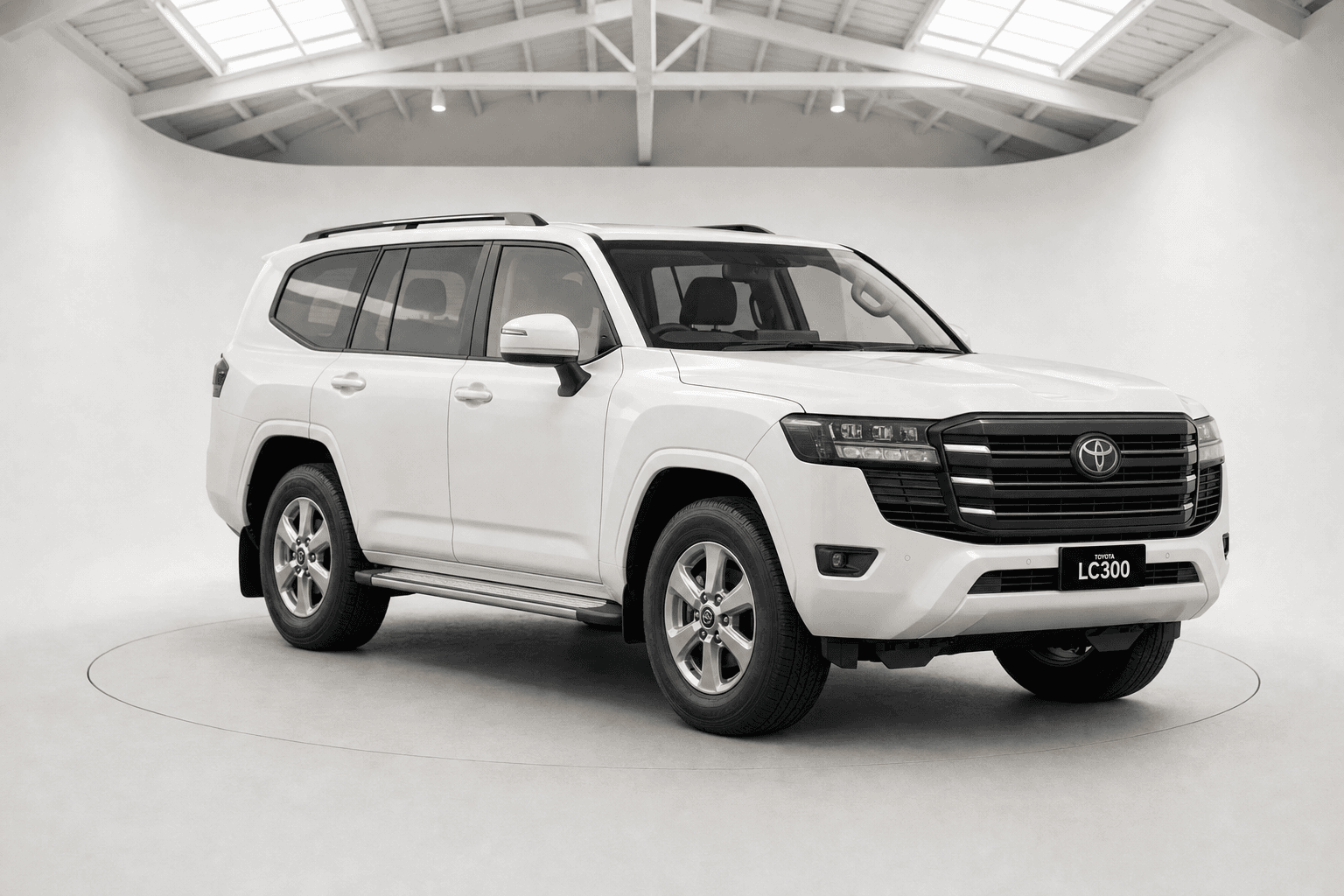
The LandCruiser 300's nose is broad, squared and unmistakably Toyota, built to look durable rather than fashionable. The grille is large and the detailing restrained, and the whole face trades on familiarity and the trust that comes with it. It is the more conservative of the two, and it wears the years the way a tool does, without chasing the Defender's design statement.
Images are illustrative and digitally rendered. They may not reflect the exact variant, colour or trim. Details →
Defender
LandCruiser 300
Both are rated to tow 3,500 kg braked. Hitched at their maximums, the Land Rover Defender keeps 165 kg more payload.
3,500 kg
Braked towing3,500 kg
645 kg
Payload680 kg
495 kg
Payload at max tow330 kg
GVM
Limit that bites firstGVM
150 kg
Max ball weight350 kg
Assuming 10 per cent of the trailer weight.
Two adults plus luggage is roughly 400 kg.
Land Rover Defender OCTA Black
Over a limit. This combination does not comply.
Tow rating
0 kg under the 3,500 kg braked rating
Vehicle GVM
Over GVM by 105 kg. Lighten the load or the ball.
Combined GCM
245 kg spare across the whole combination
Tow ball limit
Over the 150 kg ball limit by 200 kg
Toyota LandCruiser 300 GR Sport
Over a limit. This combination does not comply.
Tow rating
0 kg under the 3,500 kg braked rating
Vehicle GVM
Over GVM by 70 kg. Lighten the load or the ball.
Combined GCM
250 kg spare across the whole combination
Tow ball limit
0 kg under the 350 kg ball limit
Manufacturer maximums; the compliance plate of your exact vehicle governs. Ball weight assumed at 10 per cent where unpublished; kerb or payload calculated where the maker omits one. Check any car against your van with the towing calculator.
The Defender is the broadest single nameplate in the segment, and that reach is the point.
The LandCruiser 300 does not try to be everything the Defender is, and that focus is its strength.
By Yuri Cartland, Editor
Opinions are our own.
Off-road capability, on-road refinement and cabin technology matter most, and you want the one nameplate that spans a $113,000 diesel to a 467kW OCTA in the 2026 range. You value the air-suspension ride and the class-best cabin, you will keep the truck inside warranty or lease it, and you accept the reliability question and the resale hit as the price of the most versatile 4WD in the class.
Explore the DefenderProven durability, resale and safety outweigh tech and polish, and you plan to keep the truck for years and take it a long way from help. You want the more recent five-star rating and ten airbags, the longer touring range from the bigger tank, and the low capped-price servicing, and you would rather have the vehicle that has earned the outback's trust than the one still proving itself.
Explore the LandCruiser 300