Large 4WD
Discovery vs LandCruiser 300
Land Rover · Toyota
Head to head
Discovery
S D350
Patrol
Ti-L
Last updated September 2026
From$132,147
From$117,483
The Land Rover Discovery S is the pick for the long-distance family: 700Nm of diesel torque, a claimed 7.8L/100km against the Nissan Patrol Ti-L's 14.4, air suspension, a 1,137-litre boot and seven standard seats. The Nissan Patrol Ti-L is the better buy on kit: a 298kW V8 and heated and ventilated leather-accented seats, for less than the entry Discovery.
140Nm
The Nissan Patrol Ti-L holds the power crown at 298kW, but the Discovery S D350 answers with 700Nm, 140 more than the V8, on a little over half the claimed fuel.
Pick a priority — we’ll show the numbers that matter and tell you which car we’d choose.
| Land Rover Discovery | vsspecification | Nissan Patrol |
|---|---|---|
257 kW | Power | 298 kW (leads) |
700 Nm (leads) | Torque | 560 Nm |
3,500 kg | Braked towing | 3,500 kg |
7.8 L/100km (leads) | Fuel economy | 14.4 L/100km |
Based on Essentials, we’d pick the Land Rover Discovery.
| Land Rover Discovery | vsspecification | Nissan Patrol |
|---|---|---|
286 mm (leads) | Ground clearance | 273 mm |
33.6° (leads) | Approach | 28° |
30° (leads) | Departure | 26.3° |
A genuine split. The Discovery rides on height-adjustable air suspension and clears steeper approach and departure angles, with terrain-response modes for varied ground. The Patrol Ti-L counters with a proven, simple drivetrain, a rear diff lock, low range and V8 torque, plus a reputation for durability far from help. So the Discovery is the more adjustable off-roader on paper, the Patrol the more rugged and proven one. Both are seriously capable.
A genuine tie.
Both cars handle off-roadequally well — this one’s a draw.
| Land Rover Discovery | vsspecification | Nissan Patrol |
|---|---|---|
3,500 kg | Braked towing | 3,500 kg |
3,245 kg | GVM | 3,500 kg (leads) |
Line-ball on paper. Both are rated to tow 3500kg braked, the full benchmark, so either will legally pull a big van. The Patrol's V8 offers effortless power for the job but drinks heavily doing it, where the Discovery's torquey diesel tows on far less fuel. The Patrol has a little more combined-mass headroom; the Discovery the economy. For most towing duties, the two are closely matched.
A genuine tie.
Both cars handle towing & weightsequally well — this one’s a draw.
| Land Rover Discovery | vsspecification | Nissan Patrol |
|---|---|---|
257 kW | Power | 298 kW (leads) |
700 Nm (leads) | Torque | 560 Nm |
7.8 L/100km (leads) | Fuel economy | 14.4 L/100km |
The Patrol takes outright power. Its 5.6-litre petrol V8 makes 298kW to the Discovery diesel's 257kW, with the eager top-end a petrol V8 delivers. The Discovery counters with 700Nm of torque to the Patrol's 560, more low-down pull for towing and touring, and it does it on far less fuel. So the Patrol wins power and character; the Discovery torque and economy. For V8 pace, the Nissan leads.
Based on Engine & efficiency, we’d pick the Nissan Patrol.
| Land Rover Discovery | vsspecification | Nissan Patrol |
|---|---|---|
7.8 L/100km (leads) | Fuel economy | 14.4 L/100km |
The Patrol Ti-L wins value on equipment. It is the loaded top of the Patrol range, priced well below the base Discovery S, with leather, heated and ventilated seats and a V8 the entry Land Rover does without. The Discovery's money buys efficiency and engineering rather than kit. For cabin and power per dollar, the Patrol leads clearly.
Based on Running costs, we’d pick the Nissan Patrol.
| Land Rover Discovery | vsspecification | Nissan Patrol |
|---|---|---|
8 (leads) | Airbags | 6 |
Yes | AEB | Yes |
Yes | Adaptive cruise | Yes |
Yes | Blind-spot monitor | Yes |
Yes | 360° camera | Yes |
A shared weakness rather than a contest. Neither holds a current ANCAP rating: the Patrol's Y62 has never been tested to a current protocol, and the Discovery's 2017 five-star lapsed at the end of 2023. On passive kit the Discovery edges it, with eight airbags to the Patrol's six and a newer platform. Both run the expected driver aids. With no rating on either, safety is where this pair is weakest.
A genuine tie.
Both cars handle safetyequally well — this one’s a draw.
| Land Rover Discovery | vsspecification | Nissan Patrol |
|---|---|---|
7 | Seats | 7 |
11.4″ | Touchscreen | 12.3″ (leads) |
The Discovery is the more sensible family seven-seater. It brings a bigger boot at 1137 litres, the efficient diesel that halves the Patrol's fuel bill, air suspension and eight airbags. The Patrol Ti-L answers with a more loaded cabin, heated and ventilated seats, a sunroof and a lower price. For running costs and cargo the Discovery leads; for cabin comfort and value the Patrol makes its case.
Based on Everyday & family, we’d pick the Land Rover Discovery.
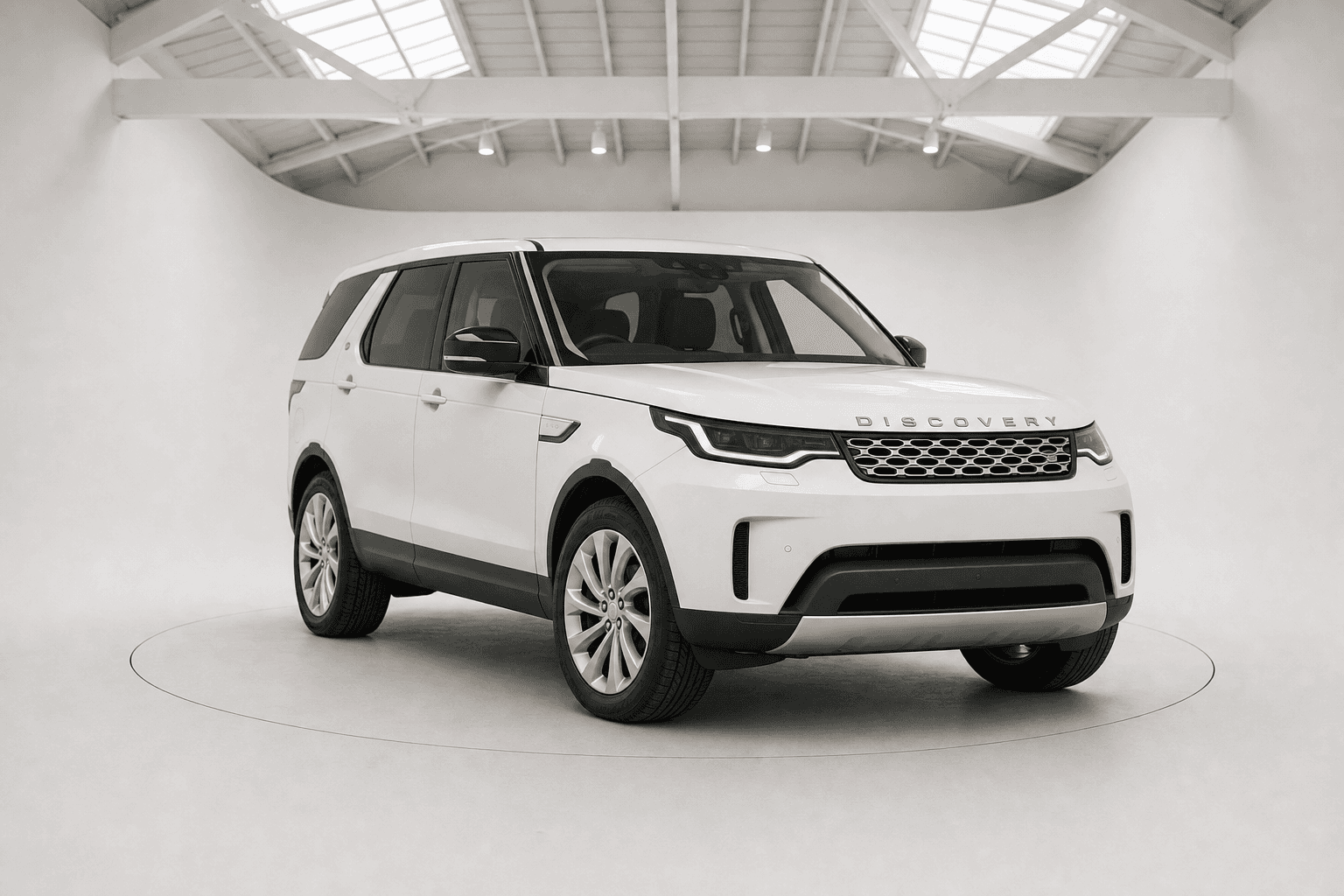
The Discovery's face is cleaner and more car-like, a slim grille and swept headlights giving it a softer, more premium look than the upright Patrol. Even in base S trim it reads as modern and considered rather than rugged, the styling leaning on smooth surfaces and proportion. Where the Patrol is imposing and traditional, the Discovery is sleek and contemporary, a family SUV that happens to go off-road rather than a hardcore wagon.
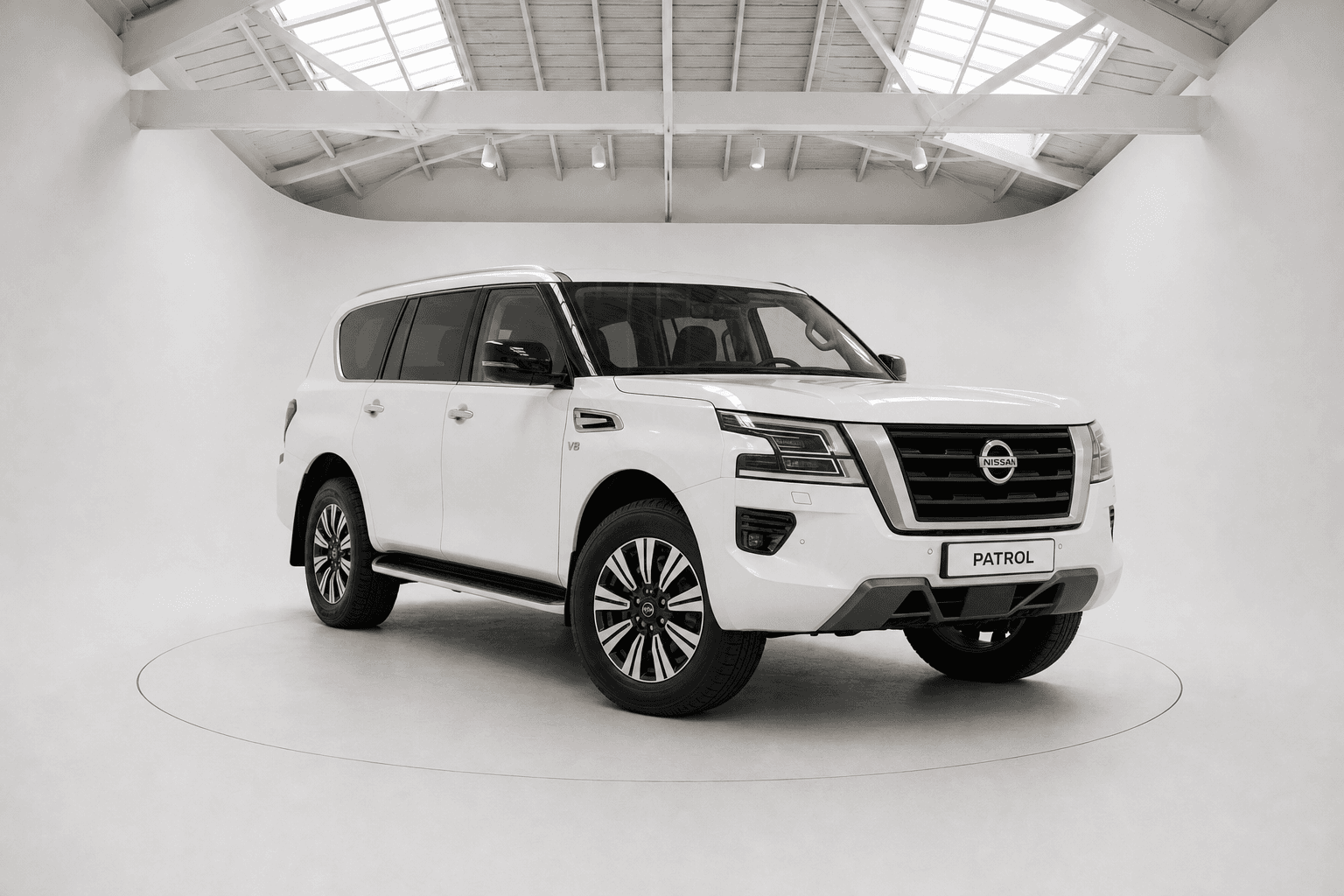
The Patrol Ti-L wears the full flagship face, a big upright chrome grille and a tall bonnet that leave no doubt about its size or its rank in the range. It presents as a big, traditional wagon, heavy on chrome and unmistakably a V8, the kind of front that means to be noticed. In top trim it carries the chrome and lights to match its price, and next to the Discovery it is the more overtly bulky and commanding of the two from the front.
Images are illustrative and digitally rendered. They may not reflect the exact variant, colour or trim. Details →
Discovery
Patrol
Both are rated to tow 3,500 kg braked. Hitched at their maximums, the Land Rover Discovery keeps 150 kg more payload.
3,500 kg
Braked towing3,500 kg
803 kg
Payload653 kg
453 kg
Payload at max tow303 kg
GVM
Limit that bites firstGVM
350 kg
Max ball weight350 kg
Assuming 10 per cent of the trailer weight.
Two adults plus luggage is roughly 400 kg.
Land Rover Discovery S D350
Fits within every published limit.
Tow rating
0 kg under the 3,500 kg braked rating
Vehicle GVM
53 kg spare after the ball weight and your load
Combined GCM
403 kg spare across the whole combination
Tow ball limit
0 kg under the 350 kg ball limit
Nissan Patrol Ti-L
Over a limit. This combination does not comply.
Tow rating
0 kg under the 3,500 kg braked rating
Vehicle GVM
Over GVM by 97 kg. Lighten the load or the ball.
Combined GCM
253 kg spare across the whole combination
Tow ball limit
0 kg under the 350 kg ball limit
Manufacturer maximums; the compliance plate of your exact vehicle governs. Ball weight assumed at 10 per cent where unpublished; kerb or payload calculated where the maker omits one. Check any car against your van with the towing calculator.
The Discovery S is the entry to its range, and it asks a clear step up over the flagship Patrol, so its case is efficiency and engineering rather than kit.
The Patrol Ti-L is the loaded V8 flagship you can buy for less than the entry Discovery, and that is its pitch.
By Yuri Cartland, Editor
Opinions are our own.
Efficiency, boot space, air-suspension engineering and a modern cabin matter more to you than a loaded interior or the lower price. You want the 257kW diesel's economy, the standard seven seats, the height-adjustable air suspension and the bigger boot, and you accept the plainer base trim, the higher price and Land Rover's ownership record to have the more sophisticated seven-seater.
Explore the DiscoveryThe most equipment, V8 power and seven seats for the money matter more to you than efficiency or the newest engineering. You want the 298kW petrol V8, the leather-accented, heated and ventilated seats, the sunroof and tri-zone climate, all for thousands less than the entry Discovery, and you accept the thirsty petrol fuel use and an older platform to have a loaded flagship.
Explore the Patrol