Lexus
GX
From $130,715

Land Rover
Model Profile
From $132,147
Driveaway estimate · NSW · priced Aug 2026. Varies by state. Details →
In its own showroom the Discovery is the unloved middle child. Park it beside the Defender and watch where the crowd drifts: the boxy newcomer took the spotlight, the trophies and the sales, and left the Disco, quietly the more practical of the pair, to do the work. And it is real work: seven adult seats, 3,500kg of braked towing, genuine off-road hardware and 900mm of wading depth, wrapped in an air-suspension diesel that rides like something dearer. The catches are the ones a premium badge brings: diesel only, no current ANCAP star, an options list that climbs fast, and a resale and reliability record trailing the Japanese benchmarks. Even so, it is the capable Land Rover hiding in plain sight.
Fits adults
A genuine seven-seater, with the third row covered by the curtain airbags.
900mm
On air suspension, with a 3,500kg braked tow rating.
Rating expired
Five stars when tested in 2017; that rating lapsed at the end of 2023.
257kW
Power700Nm
Torque3500kg
Braked towing7.8L/100km
Fuel economyRange shown across the Discovery line-up. Pick a priority to see the numbers that matter to you.
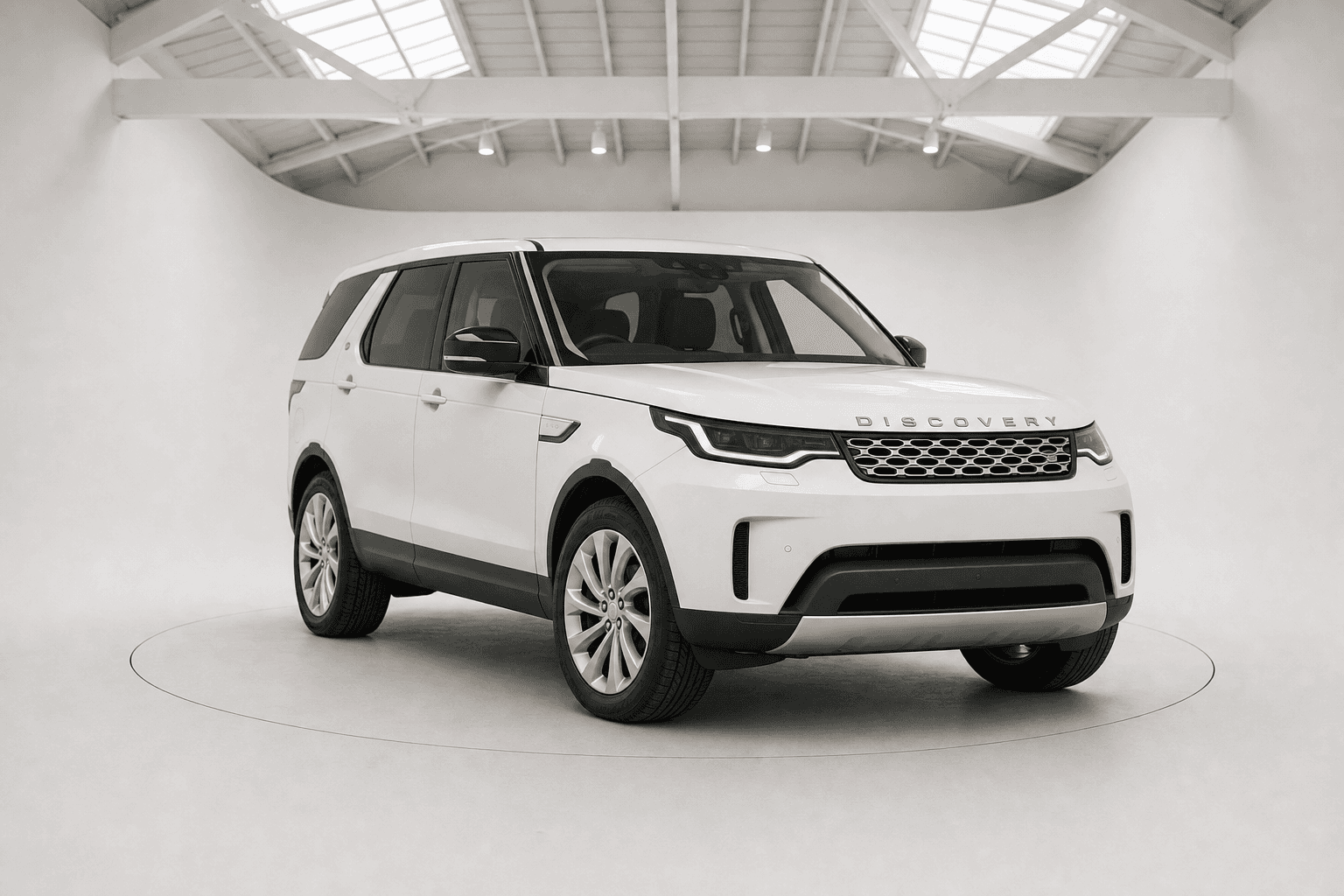
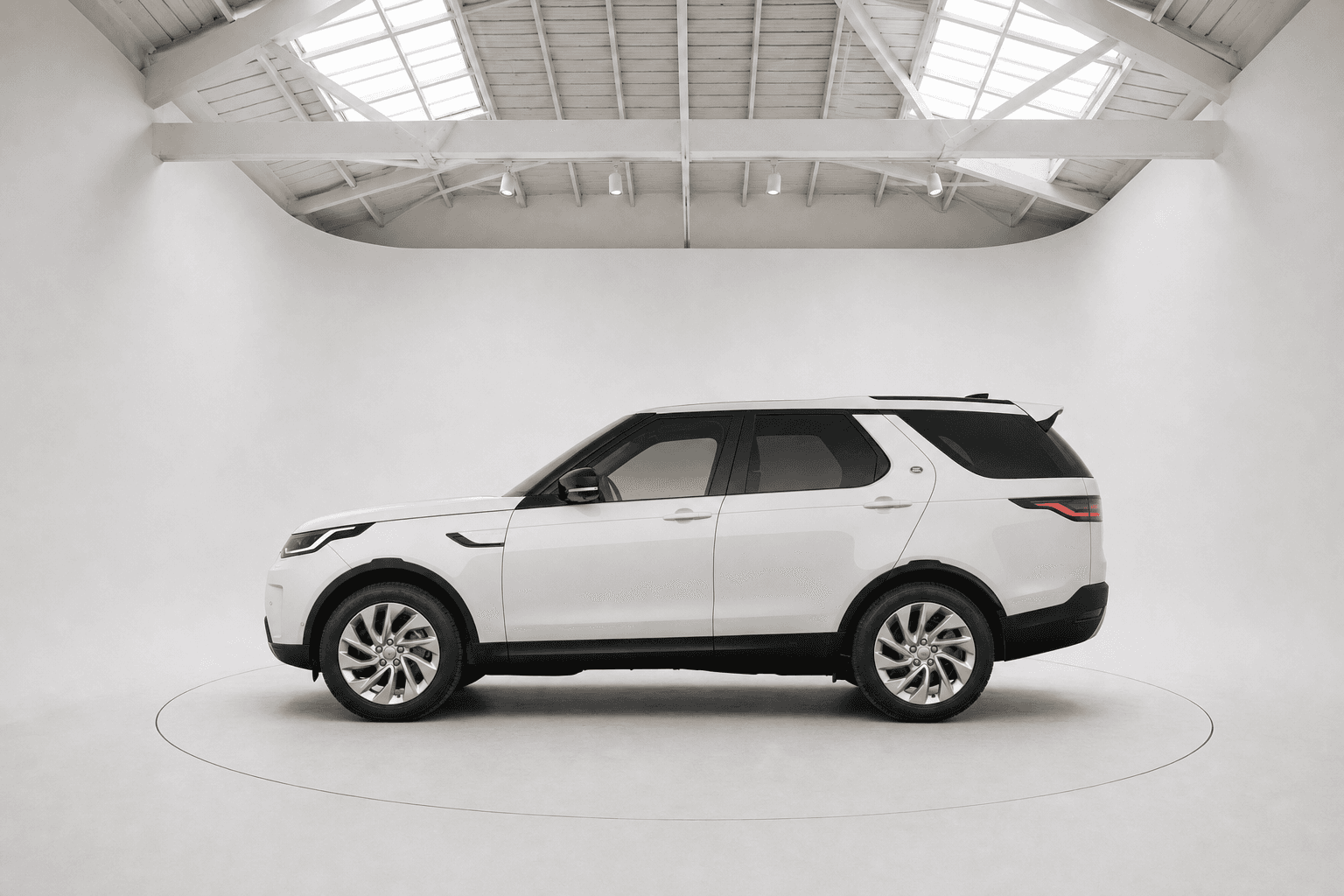
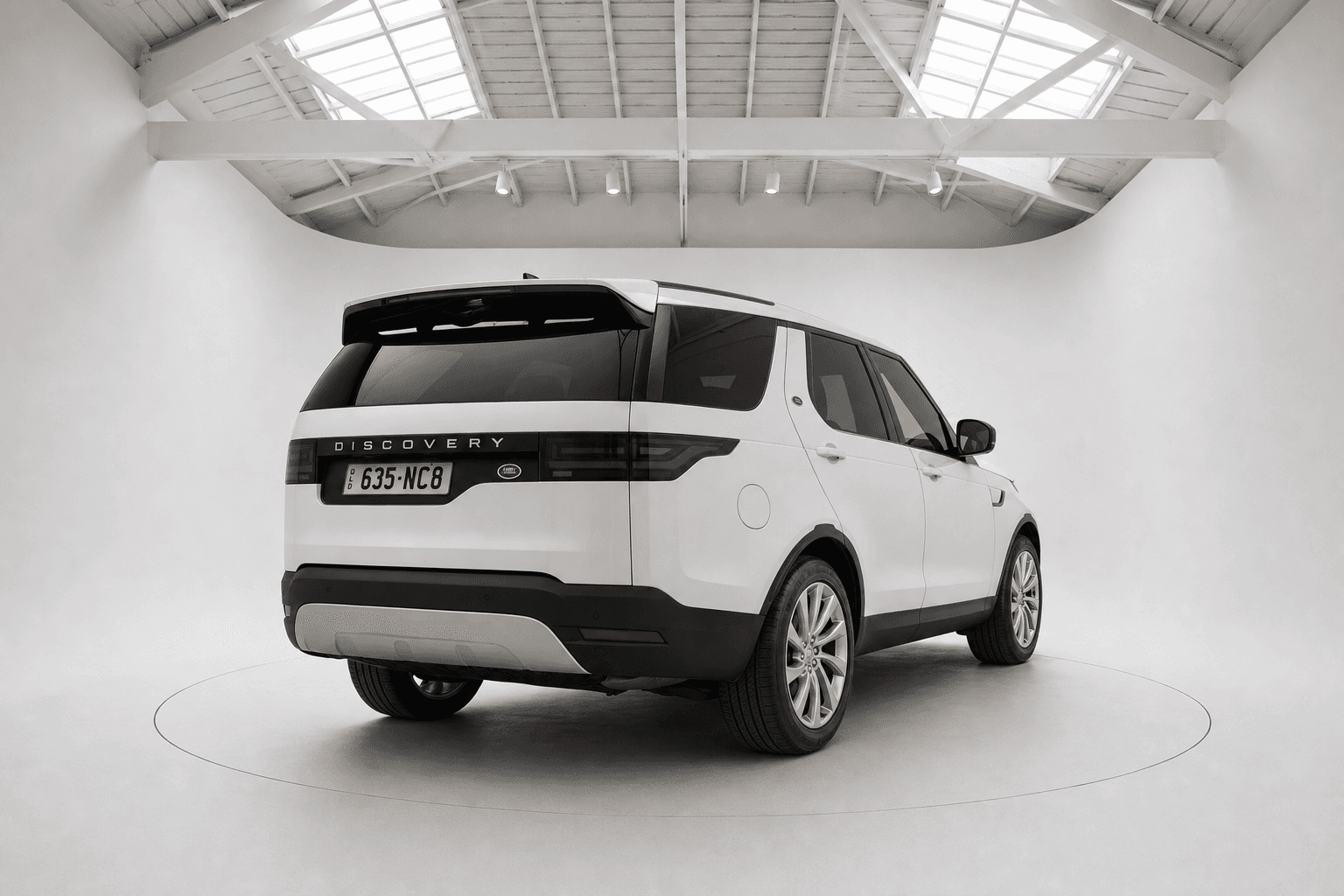
Images are illustrative and digitally rendered. They may not reflect the exact variant, colour or trim. Details →
Breadth made the Defender famous; the Discovery's gift is focus. It does one thing better than almost anything near its price: carry seven adults and their gear a long way, on road or off it, in real comfort. Australian reviews have called it an undervalued gem for years, and the 2026 car still is, even late in life. The trouble is in-house. Its own sibling does the showroom-cred part better, and the Discovery has become the Land Rover hardly anyone chooses.
The 2026 range is diesel only, which simplifies the sums. Every grade runs the same 257kW/700Nm D350 inline-six, so the engine reviewers praise for quiet, effortless torque is standard from the entry S at $132,376 driveaway (as of June 2026). The cheaper trims give up cosmetics and comfort kit, not capability: the off-road hardware, the 3,500kg tow rating and all seven seats are there at the bottom of the range. Running costs are reasonable for the size, a claimed 7.8L/100km from an 89-litre tank, under a five-year, unlimited-kilometre warranty with capped-price servicing. The cost that never shows on the sticker is reliability, where Land Rover trails the Japanese benchmarks in owner surveys, and the reason some buyers lease this car rather than own it.
What sets the Discovery apart is doing two hard things at once. It is a genuine off-roader, with 285mm of ground clearance, a 33.6-degree approach angle, 900mm of wading depth and Land Rover's Terrain Response electronics, so it follows a serious ladder-frame 4WD down a rutted track rather than waving it goodbye. And it is a true seven-seater, with a third row sized for adults and covered by the curtain airbags, plus 1,137 litres of boot behind a folded middle row and 2,391 with both rear rows down. The luxury soft-roaders cannot match the first; the ute-based seven-seaters cannot match the refinement around the second.
Underneath sits an aluminium monocoque on air suspension that rises for clearance and kneels to let you load, and on road it turns the Discovery into a hushed, supple cruiser belying its size. The cabin pairs quality materials with the Pivi Pro touchscreen and, refreshingly, real climate knobs, though the dense screen takes some learning. The honest catches: the newer Defender overlaps it on price and out-guns it on street appeal, the options and dearer editions inflate the real cost quickly, the styling has always divided opinion, and there is no current ANCAP star, the 2017 five-star having expired at the end of 2023. The strongest buy is the entry S, which already carries the engine, the capability and the seven seats defining the car, so the money above it buys comfort rather than substance. Buyers who lead with resale or a current safety rating should read the cross-shop in the verdict below.
9 to 1
Land Rover sold roughly nine Defenders for every Discovery last year. The Disco is the sibling nobody talks about.
The Discovery range is unusually simple for 2026: four diesel-only D350 grades that share an identical engine, drivetrain, off-road hardware and seven-seat cabin. What separates them is wheels, trim and comfort kit, not capability. Prices below are NSW driveaway, as of June 2026.
From $132,147
The honest entry at $132,376. Twenty-inch wheels, dual-zone climate and a 14-way driver's seat, but every mechanical and safety fact the dearer trims have: the 257kW diesel, the off-road geometry, 3,500kg towing and all seven seats.
From $140,471
For about $8,000 more (a $140,471 list), 21-inch wheels and an 18-way power driver's seat, plus the Meridian audio, contrast roof and richer trim that lift the cabin's feel. A cosmetic and comfort step, not a capability one.
From $147,897
From $150,800
At $150,800, the family-friendly jump: four-zone climate, rear climate control and air vents, heated front seats, a head-up display and privacy glass, dressed in the Gemini edition's Sedona Red and Narvik Black pack.
From $163,647
The $162,645 range-topper: 22-inch wheels, Matrix LED headlights, full leather, ventilated and heated front seats, a heated steering wheel and ambient lighting, plus the Tempest's copper-accented styling pack.
Driveaway estimate · NSW · priced Aug 2026. Varies by state. Details →
Fuel or charging, insurance, servicing, tyres and rego, with repayments if you finance it. Estimates for a NSW private buyer, not a quote.
The Land Rover Discovery is rated to tow up to 3,500 kg with a braked trailer and 750 kg without trailer brakes.
Heaviest braked trailer allowed, quoted as ATM: the loaded trailer including ball weight.
3,500 kg
Limit for trailers without their own brakes.
750 kg
Gross vehicle mass: the most the loaded vehicle may weigh, ball weight included.
3,245 kg
Gross combination mass: vehicle and trailer together, both fully loaded.
6,745 kg
The vehicle as delivered, before people, cargo and accessories.
2,442 kg
Everything you may add, ball weight included. Calculated: 3,245 kg GVM minus 2,442 kg kerb weight.
803 kg
Calculated
Downward load on the tow ball; it counts toward GVM.
350 kg
Hook up 3,500 kg with 350 kg on the ball and the Dynamic SE has 453 kg of payload left for people, cargo and accessories.
The GCM allows the full payload and the full tow rating at the same time, which is rarer than it sounds in this class.
Assuming 10 per cent of the trailer weight.
Two adults plus luggage is roughly 400 kg.
Fits within every published limit.
Tow rating
0 kg under the 3,500 kg braked rating
Vehicle GVM
53 kg spare after the ball weight and your load
Combined GCM
403 kg spare across the whole combination
Tow ball limit
0 kg under the 350 kg ball limit
Figures are manufacturer maximums for the Dynamic SEand can change with model year; the compliance plate and handbook of your exact vehicle govern. In Australia, trailers over 750 kg GTM (the loaded weight on the trailer's own wheels) need their own brakes, and over 2,000 kg they need brakes on all wheels plus a breakaway system. Ball weight typically runs 8 to 12 per cent of ATM. Axle loads and tyre ratings are not modelled here. Checking a different car against your van? Use the towing calculator.
This model doesn't carry an ANCAP safety rating. Here's the active-safety equipment fitted across the range.
Buy the Discovery to put seven adults, real off-road capability and a 3,500kg van behind one quietly-luxurious diesel, a trio the soft-roader luxury SUVs and the ute-based seven-seaters cannot both manage. The entry S has everything that defines the car, so step up to the $162,645 Tempest (June 2026 pricing) for comfort and cosmetics, not capability. The cross-shop is honest: buy the Defender instead if image and resale lead your thinking, a Toyota Prado or LandCruiser if service reach and resale do, or a Ford Everest if outright value does. Just go in knowing it is unrated and that the options screen adds up fast.
Past generations. Context, not the car on sale today.
Few family 4WDs carry as much history as the Discovery, and few have drifted as far from the spotlight. It began in 1989 as the clever, affordable Land Rover that slotted between the workaday Defender and the plush Range Rover, and it has spent more than thirty-five years growing steadily more capable and more expensive. Knowing the lineage helps, especially the eras to approach with care if you shop used.
The Discovery launched at the 1989 Frankfurt show as a more affordable family 4x4 on Range Rover underpinnings, reaching Australia in 1991. Its Conran-designed cabin won a British Design Award, and it built its name competing in the Camel Trophy in Land Rover's signature sandglow yellow. The Series 2 of 1998 added a proper seven-seat body and the Td5 diesel, but rust and head-gasket troubles dog early cars.
The clean-sheet Discovery 3 of 2004 introduced the Integrated Body Frame, independent air suspension and Land Rover's first Terrain Response system, and the Discovery 4 of 2009 polished it and pushed it upmarket. These are the capable, comfortable used buys, but also the cautionary ones: air-suspension failures, a large Australian brake-vacuum recall on the diesels, and TDV6 crankshaft-bearing trouble are all known weak points.
The current Discovery switched to a lighter aluminium monocoque in 2017 and moved decisively upmarket, past $100,000. Its softer, rounded styling and offset rear numberplate divided opinion, and early cars drew recalls for a door latch, an electrical power loss and a fuel-hose fire risk. The 2021 update added the inline-six mild-hybrid engines and lifted it firmly into luxury-SUV territory.
The Discovery's modern story is really about its sibling. The reborn Defender of 2020 took its sales and its image, and Australian Discovery sales fell to a few hundred a year. In 2023 Land Rover's House of Brands restructure elevated Discovery to a brand in its own right, and the company has since confirmed a next-generation model, though without a firm date.
The model on this page. For 2026 the Discovery became diesel-only, dropping the petrol P360, the Dynamic HSE trim and the one-off 35th Anniversary edition, and adding the Gemini and Tempest special editions. All four grades now share the upgraded 257kW D350 diesel.
By Yuri Cartland, Editor