Stablemate showdown
Defender vs Discovery
Land Rover · Land Rover
Head to head
Discovery
Range Rover Sport
Last updated August 2026
From$132,147
From$183,751
The Land Rover Discovery is the pick for most buyers cross-shopping the pair: it seats seven, holds more boot, runs the stronger 257kW diesel and opens about $51,000 cheaper. Choose the Range Rover Sport for its plusher cabin, bigger screen and current five-star ANCAP rating, luxuries the Discovery cannot answer.
36kW
The $132,376 Discovery S runs a 257kW D350 diesel; the $183,751 Range Rover Sport Dynamic SE opens with a 221kW D300 (NSW driveaway, August 2026). The cheaper Land Rover is the stronger one.
Pick a priority — we’ll show the numbers that matter and tell you which car we’d choose.
| Land Rover Discovery | vsspecification | Land Rover Range Rover Sport |
|---|---|---|
257 kW (leads) | Power | 221 kW |
700 Nm (leads) | Torque | 650 Nm |
3,500 kg | Braked towing | 3,500 kg |
7.8 L/100km | Fuel economy | 7.3 L/100km (leads) |
Based on Essentials, we’d pick the Land Rover Discovery.
| Land Rover Discovery | vsspecification | Land Rover Range Rover Sport |
|---|---|---|
286 mm (leads) | Ground clearance | 283 mm |
33.6° (leads) | Approach | 33° |
30° (leads) | Departure | 29.8° |
900 mm | Wading depth | 900 mm |
Photocopy territory. Both wade 900mm on air suspension, clearance runs 285mm to 283, and every published angle sits within a degree. Both entry grades run single-speed transfer boxes with low range on the options list, so neither base car is the full off-road tool its badge suggests. The split is philosophical rather than measurable: the Discovery carries its capability as the family workhorse, the Sport as luxury held in reserve. A genuine tie.
A genuine tie.
Both cars handle off-roadequally well — this one’s a draw.
| Land Rover Discovery | vsspecification | Land Rover Range Rover Sport |
|---|---|---|
3,500 kg | Braked towing | 3,500 kg |
3,245 kg (leads) | GVM | 3,220 kg |
A tie at the headline: 3,500kg braked, 750kg unbraked and 350kg on the ball for both. The fine print leans to the Discovery: 700Nm at entry against 650, a 6,745kg combination mass to 6,720, and an 89-litre tank against 80 for longer legs between fills. Neither publishes a payload figure here. Call it even for the weekender; the Discovery reads slightly better for the heavy annual lap.
A genuine tie.
Both cars handle towing & weightsequally well — this one’s a draw.
| Land Rover Discovery | vsspecification | Land Rover Range Rover Sport |
|---|---|---|
257 kW (leads) | Power | 221 kW |
700 Nm (leads) | Torque | 650 Nm |
7.8 L/100km | Fuel economy | 7.3 L/100km (leads) |
6.3 s (leads) | 0–100 | 6.4 s |
The price ladder says the Sport should win here; the spec sheet disagrees at entry. The Discovery's sole engine is the 257kW, 700Nm D350, hitting 100km/h in 6.3 seconds, while the $51,375-dearer entry Sport (August 2026) runs a 221kW D300 at 6.4. The Sport's counter is its range: its own D350, a plug-in hybrid and V8s to 467kW. At matching entry money the Discovery wins; the Sport wins if the budget keeps climbing.
Based on Engine & efficiency, we’d pick the Land Rover Discovery.
| Land Rover Discovery | vsspecification | Land Rover Range Rover Sport |
|---|---|---|
7.8 L/100km | Fuel economy | 7.3 L/100km (leads) |
The inversion theme, condensed. The Discovery gives you more power, two more seats, more boot and a bigger tank for $51,375 less at entry, $132,376 against $183,751 driveaway as of August 2026, and its published $3,500 five-year servicing adds certainty the Sport's unpublished total cannot. The Sport's value case is the honest luxury one: the money buys cabin, refinement and safety currency, not more machine. On the numbers, the Discovery wins value comfortably.
Based on Running costs, we’d pick the Land Rover Discovery.
| Land Rover Discovery | vsspecification | Land Rover Range Rover Sport |
|---|---|---|
Yes | AEB | Yes |
Yes | Adaptive cruise | Yes |
Yes | Blind-spot monitor | Yes |
Yes | 360° camera | Yes |
The clearest split on the page. The Range Rover Sport holds a current five-star ANCAP rating from 2022 across every variant, scoring 85 per cent adult occupant and 86 child occupant. The Discovery is officially unrated, its 2017 score expired, though its equipment list has not thinned: eight airbags, autonomous emergency braking, lane keep assist and adaptive cruise control remain standard. The Sport wins on the rating buyers and fleets actually check.
Based on Safety, we’d pick the Land Rover Range Rover Sport.
| Land Rover Discovery | vsspecification | Land Rover Range Rover Sport |
|---|---|---|
7 (leads) | Seats | 5 |
1,137 L (leads) | Boot | 835 L |
11.4″ | Touchscreen | 13.1″ (leads) |
Seven seats against five settles most of it. The Discovery carries a third row AU reviews consistently rate as adult-usable, curtain-airbag coverage included, plus the bigger boot in every configuration. The Sport answers with the plusher rear cabin, the larger screen and the current five-star ANCAP rating, real family currency for a five-person household. The Discovery is the family pick when the third row is the job; the Sport when it never comes up.
Based on Everyday & family, we’d pick the Land Rover Discovery.
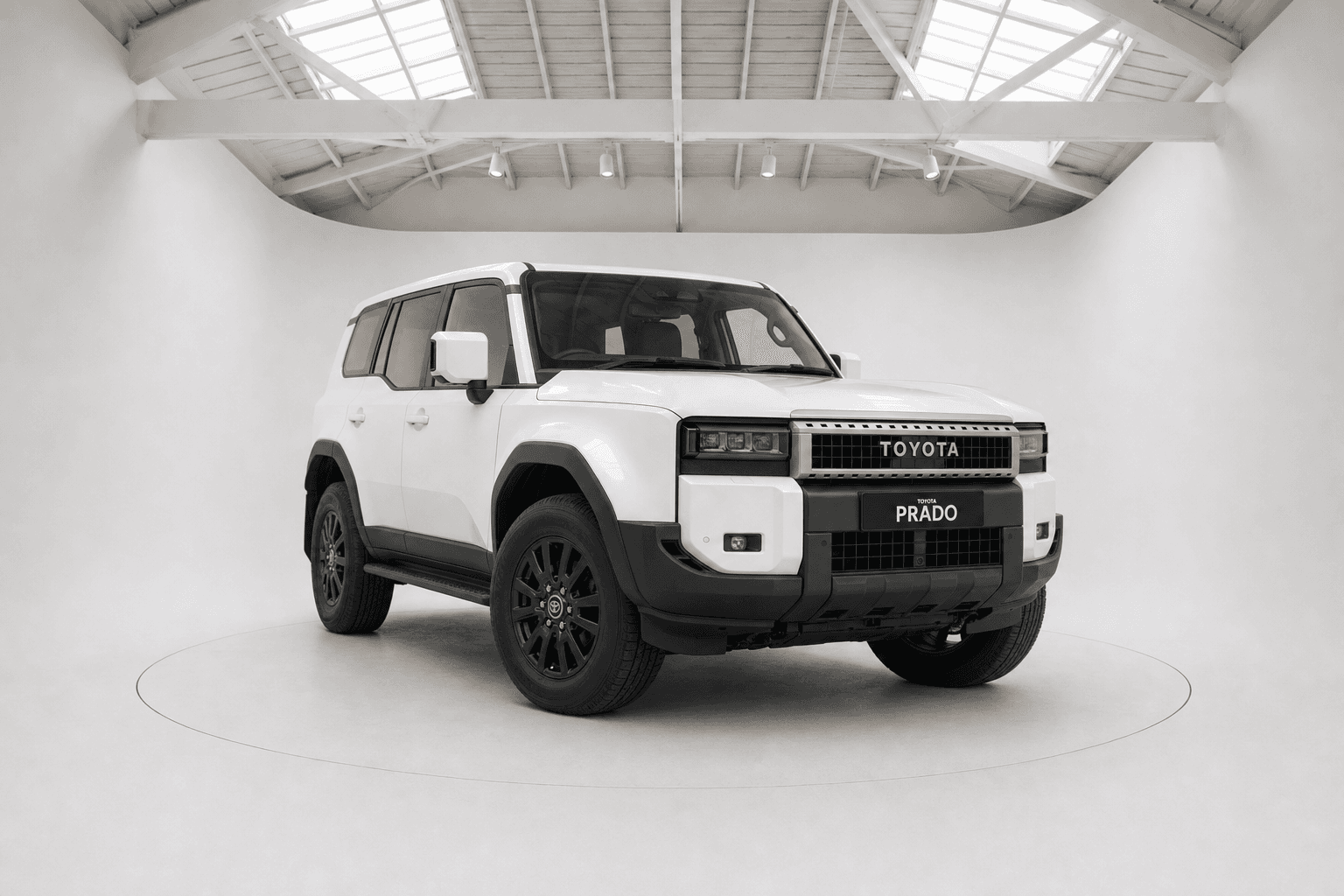
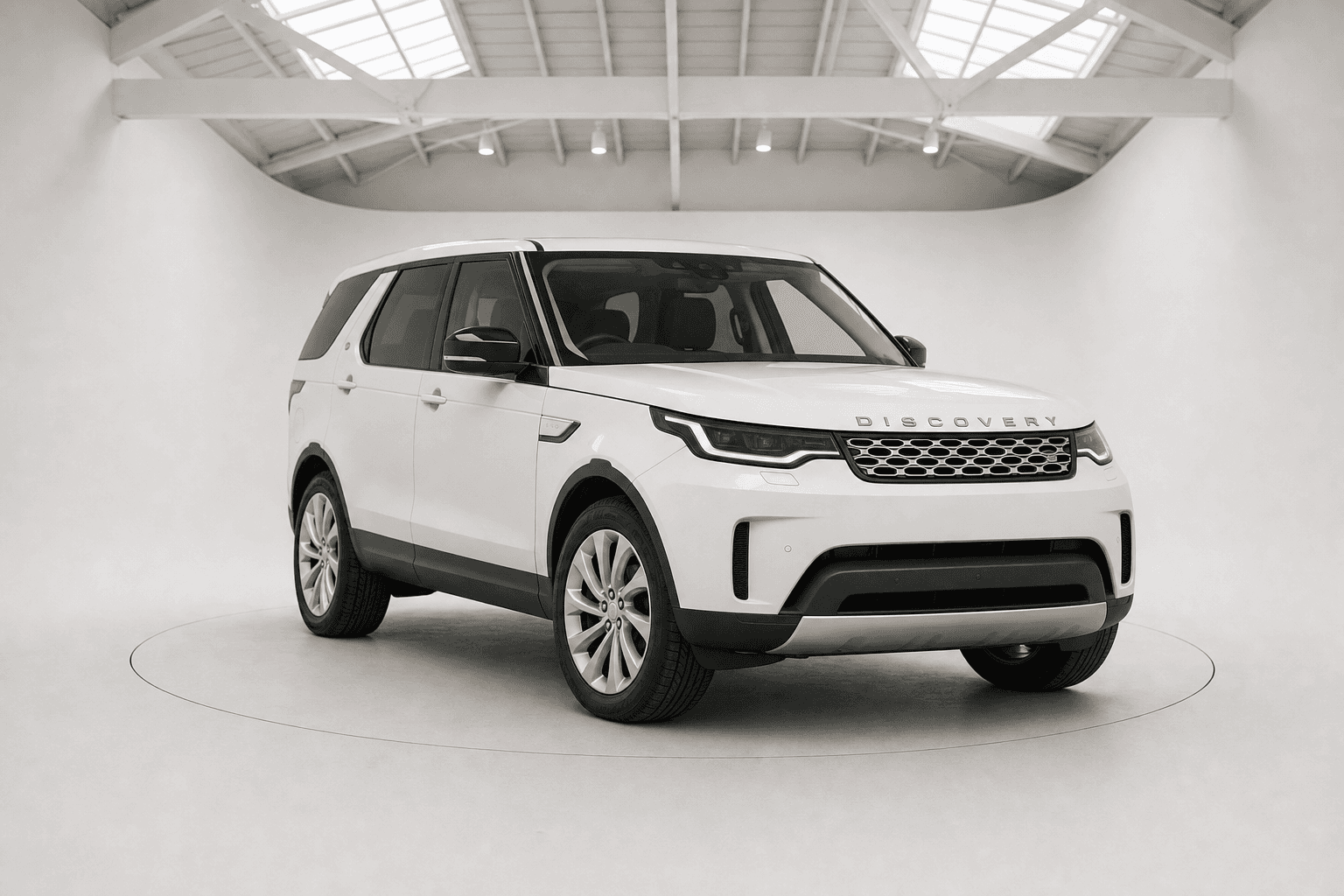
The Discovery wears the soft, rounded face of the range's quiet achiever: upright glasshouse, gentle surfacing, none of its siblings' theatre. The look divides opinion in AU coverage, but it reads unmistakably as the practical Land Rover, the one shaped around what it carries.
The Range Rover Sport leads with presence: a low nose, slim lights and the clean, shrink-wrapped surfacing of the current Range Rover family. It is the design-first face of this pairing, and at every set of lights it looks like the dearer car. It is.
Images are illustrative and digitally rendered. They may not reflect the exact variant, colour or trim. Details →
Discovery
Range Rover Sport
Both are rated to tow 3,500 kg braked. Hitched at their maximums, the Land Rover Discovery keeps 18 kg more payload.
3,500 kg
Braked towing3,500 kg
803 kg
Payload785 kg
453 kg
Payload at max tow435 kg
GVM
Limit that bites firstGVM
350 kg
Max ball weight350 kg
Assuming 10 per cent of the trailer weight.
Two adults plus luggage is roughly 400 kg.
Land Rover Discovery Dynamic SE
Fits within every published limit.
Tow rating
0 kg under the 3,500 kg braked rating
Vehicle GVM
53 kg spare after the ball weight and your load
Combined GCM
403 kg spare across the whole combination
Tow ball limit
0 kg under the 350 kg ball limit
Land Rover Range Rover Sport Autobiography D350 AWD
Fits within every published limit.
Tow rating
0 kg under the 3,500 kg braked rating
Vehicle GVM
35 kg spare after the ball weight and your load
Combined GCM
385 kg spare across the whole combination
Tow ball limit
0 kg under the 350 kg ball limit
Manufacturer maximums; the compliance plate of your exact vehicle governs. Ball weight assumed at 10 per cent where unpublished; kerb or payload calculated where the maker omits one. Check any car against your van with the towing calculator.
The Discovery is the value story in this showroom, which is not a sentence anyone expects to write about a $132,376 car.
The Range Rover Sport bets the extra money on how the car feels rather than what it carries.
By Yuri Cartland, Editor
Opinions are our own.
You need seven seats, or you simply read the numbers. The Discovery brings the stronger 257kW, 700Nm diesel, an adult-usable third row, 2,391 litres folded and an 89-litre tank, all from $132,376 driveaway (NSW, August 2026), about $51,000 under the entry Sport. Every grade shares the engine and the capability, so the S already does everything the car is for; the Tempest at $162,645 adds the flagship trim.
Explore the DiscoveryLuxury leads and the third row never comes up. The Sport buys the plush air-sprung ride AU reviewers keep returning to, full leather, the 13.1-inch screen and a current five-star ANCAP rating, with a ladder stretching to a 467kW V8. Start at the $183,751 Dynamic SE only if sealed roads are the whole brief; step to the Dynamic HSE D350 at $202,862 (NSW, August 2026) for the stronger diesel and standard low range.
Explore the Range Rover Sport