Large 4WD SUV
Everest vs MU-X
Ford · Isuzu
Head to head
Everest
Prado
Last updated September 2026
From$60,000
From$79,390
The Ford Everest is the pick for the family that tows heavy: up to 855kg of payload against the Toyota Prado's 580kg keeps a loaded caravan legal, and the V6 makes 184kW to the Prado's 150kW. The Toyota Prado is the stronger tourer: a 110-litre tank, full-time 4WD with low range on every grade, and the fresher ANCAP result.
182L
Seven seats up, the Toyota Prado's hybrid battery leaves just 182 litres of boot to the Ford Everest's 259. Fold everything flat and the Prado pulls back level.
Pick a priority — we’ll show the numbers that matter and tell you which car we’d choose.
| Ford Everest | vsspecification | Toyota Prado |
|---|---|---|
125 kW | Power | 150 kW (leads) |
405 Nm | Torque | 500 Nm (leads) |
3,500 kg | Braked towing | 3,500 kg |
7.1 L/100km (leads) | Fuel economy | 7.6 L/100km |
Based on Essentials, we’d pick the Toyota Prado.
| Ford Everest | vsspecification | Toyota Prado |
|---|---|---|
229 mm (leads) | Ground clearance | 210 mm |
30.4° | Approach | 31° (leads) |
25.3° (leads) | Departure | 17° |
800 mm (leads) | Wading depth | 700 mm |
Off-road, these two split the difference. Both run a low-range transfer case, hill-descent control and a locking differential. The Prado leans traditional: a lockable centre diff, crawl control and the steeper approach (32 to 30.4 degrees). The Everest counters with a rear diff lock, terrain modes, the better departure (25.3 to 17) and deeper wading (800 mm to 700); clearance is near-even at 229 mm to 221. Mechanical locks and a climbing approach favour the Prado; departure, wading and electronic breadth favour the Everest.
A genuine tie.
Both cars handle off-roadequally well — this one’s a draw.
| Ford Everest | vsspecification | Toyota Prado |
|---|---|---|
3,500 kg | Braked towing | 3,500 kg |
855 kg (leads) | Payload | 605 kg |
3,100 kg | GVM | 3,100 kg |
The towing headline ties; the fine print doesn't. Both pull 3500 kg braked and 750 kg unbraked. The Prado holds the higher gross combination mass (6600 kg to the Everest's 6250), but the Everest holds far more payload (up to 855 kg against 580), and once a loaded van's tow-ball weight lands, the Prado runs short, the documented 250 Series squeeze. That payload headroom is what tows a heavy van legally, so the Everest is the pick despite the Prado's higher combined ceiling.
Based on Towing & weights, we’d pick the Ford Everest.
| Ford Everest | vsspecification | Toyota Prado |
|---|---|---|
125 kW | Power | 150 kW (leads) |
405 Nm | Torque | 500 Nm (leads) |
7.1 L/100km (leads) | Fuel economy | 7.6 L/100km |
Performance breaks on how much engine you want. Both are diesel 4WDs, and both pull cleanly with a van behind. The Everest's 3.0-litre V6 makes 184 kW and 600 Nm through a 10-speed auto against the Prado's 150 kW and 500 Nm from a 2.8 with 48-volt assist through an 8-speed. On outright grunt the Everest is the clear pick; the Prado trades it for mild-hybrid delivery that reviewers call quieter but only adequate for its 2.5-tonne mass, not strong.
Based on Engine & efficiency, we’d pick the Ford Everest.
| Ford Everest | vsspecification | Toyota Prado |
|---|---|---|
7.1 L/100km (leads) | Fuel economy | 7.6 L/100km |
Value depends on whether you mean cost-in or cost-out. Both come with a five-year, unlimited-kilometre warranty. The Everest opens at $60,000 to the Prado's $79,267 and gives more payload, power and boot per dollar; the Prado answers with a fresher safety rating, a plusher cabin, longer roadside cover on current data and the resale a LandCruiser badge carries. On the money it takes to get in, the Everest wins value clearly; the Prado earns its keep only later, in stronger resale.
Based on Running costs, we’d pick the Ford Everest.
| Ford Everest | vsspecification | Toyota Prado |
|---|---|---|
5★ | ANCAP | 5★ |
86% (leads) | Adult occupant | 85% |
86% (leads) | Safety assist | 82% |
9 | Airbags | 9 |
Yes | AEB | Yes |
Yes | Adaptive cruise | Yes |
Yes | Blind-spot monitor | Yes |
Yes | 360° camera | Yes |
Freshness splits this one, not stars. Both wear 5-star ANCAP ratings and share autonomous emergency braking, adaptive cruise control, blind-spot monitoring and nine airbags. The Prado holds the newer 2024 result to the Everest's 2022, scores higher for vulnerable-road-user protection (84 to 74 per cent), and adds standard auto high beam, which the Everest fits on the Wildtrak and Platinum. That currency and the assist gear hand the Prado the safety win, though the Everest's adult and child occupant scores sit marginally higher.
Based on Safety, we’d pick the Toyota Prado.
| Ford Everest | vsspecification | Toyota Prado |
|---|---|---|
5 | Seats | 5 |
898 L | Boot | 954 L (leads) |
12.0″ | Touchscreen | 12.3″ (leads) |
Family practicality pulls two ways. Both seat seven on the higher grades, both carry the full active-safety stack, and both are big, comfortable highway cars. The Prado brings three-zone climate, heated and ventilated seats and the newer safety rating; the Everest brings a far bigger boot (898 litres to 640) and a lower price into the V6 grades. Rank cabin comfort and safety currency first and the Prado is the family pick; put boot space and value first and it's the Everest.
A genuine tie.
Both cars handle everyday & familyequally well — this one’s a draw.
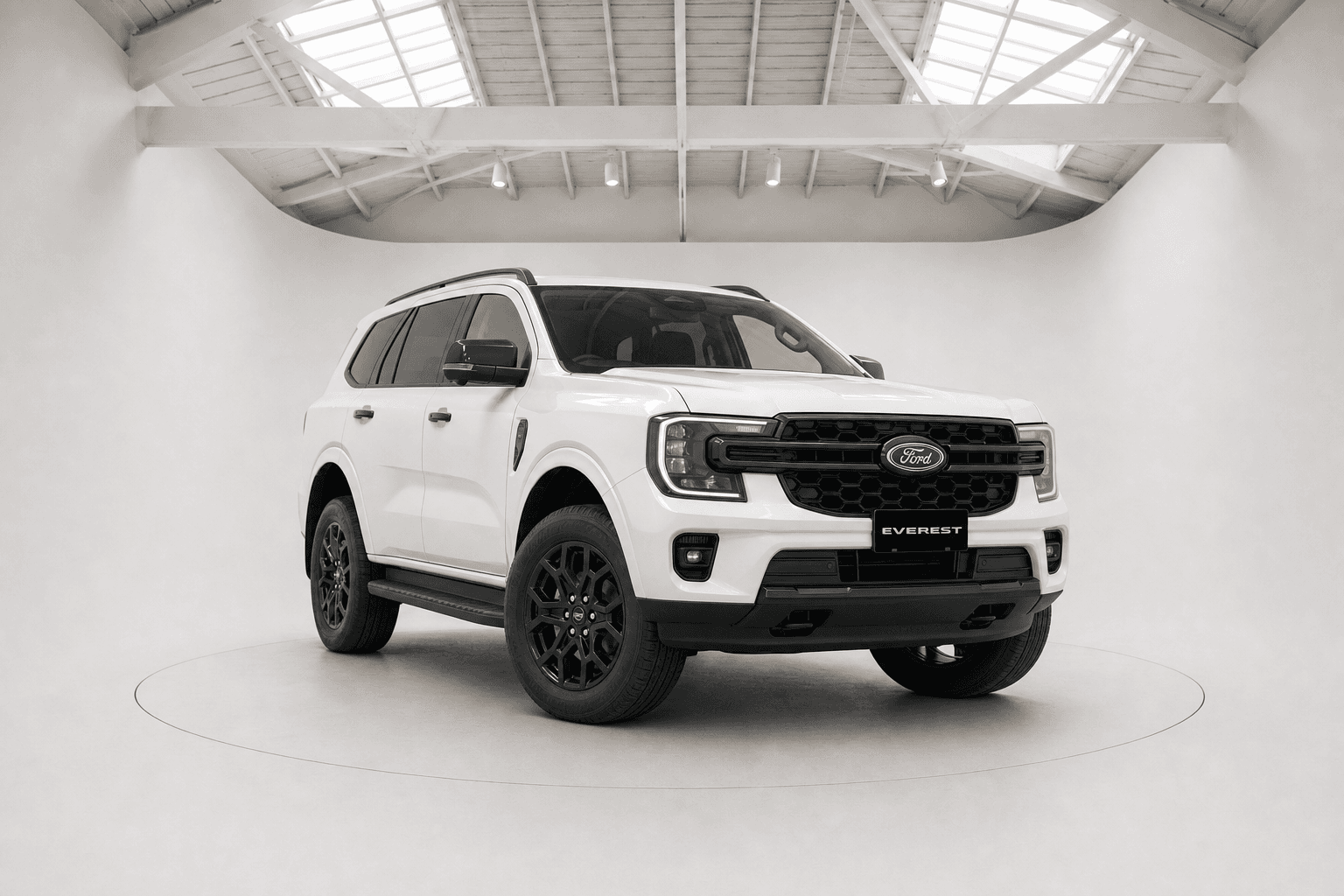
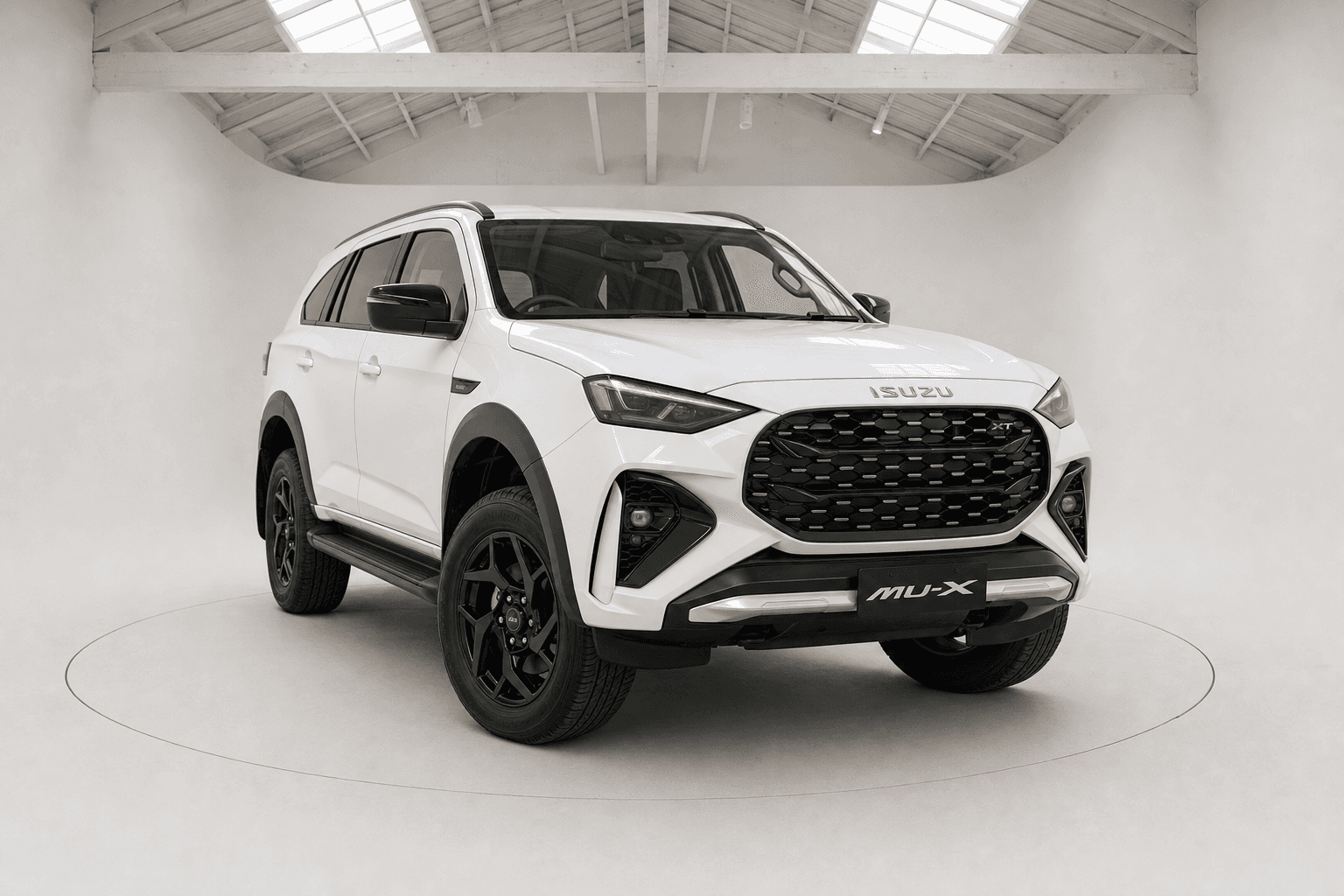
The Everest wears the Ranger's hard-edged face: the C-clamp headlamps, the upright grille, a stance reading work-ready, not refined. The Tremor's off-road grille and recovery hooks push it further. It looks like the tool it is.
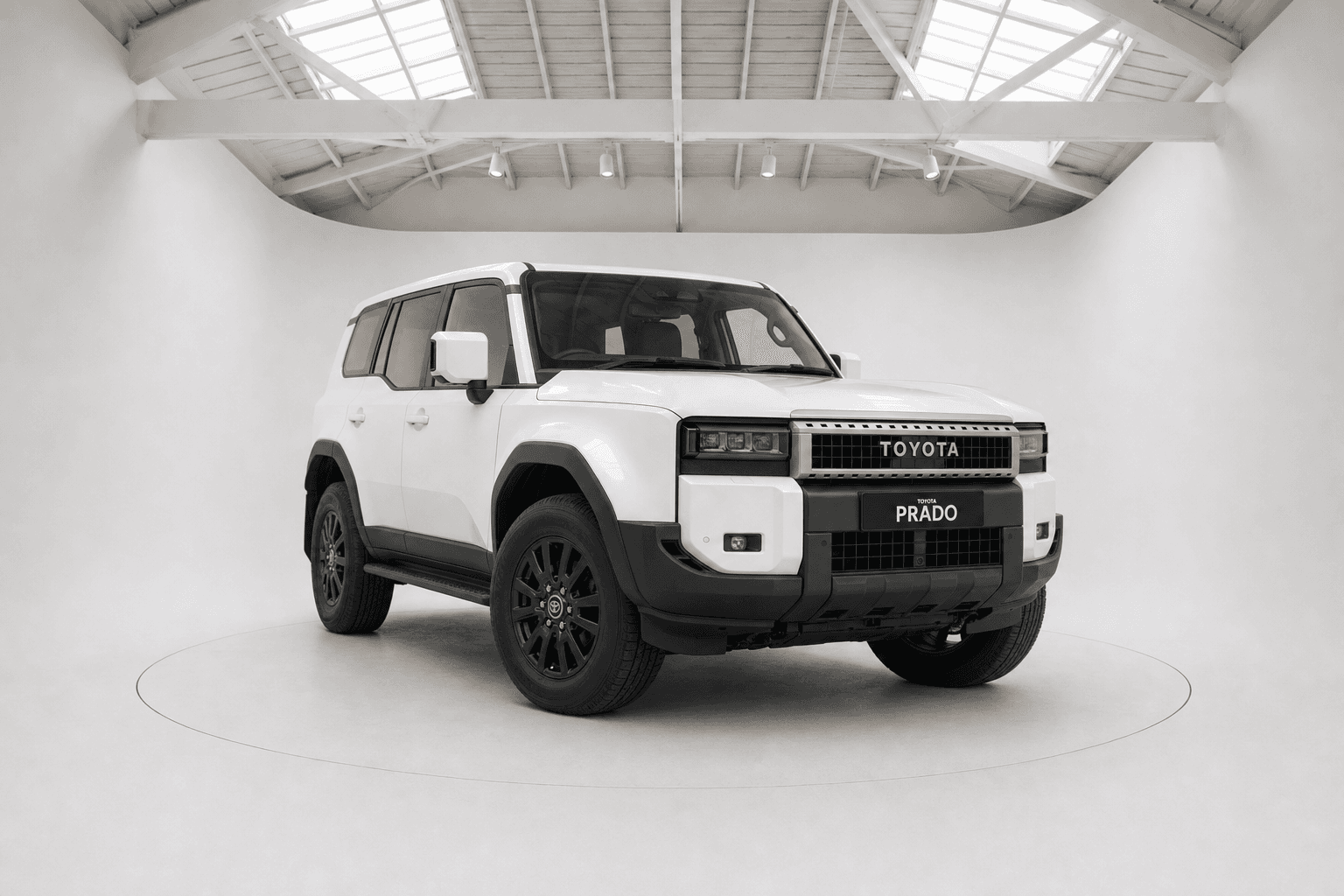
The Prado leans into heritage: the upright glasshouse and retro-square treatment nodding to LandCruisers past, echoing the 70 Series and the original FJ40. It's the more deliberate, more expensive-looking design of the two, and the badge does plenty of the talking.
Images are illustrative and digitally rendered. They may not reflect the exact variant, colour or trim. Details →
Everest
Prado
Both are rated to tow 3,500 kg braked. Hitched at their maximums, the Ford Everest keeps 275 kg more payload.
3,500 kg
Braked towing3,500 kg
855 kg
Payload580 kg
505 kg
Payload at max tow230 kg
GVM
Limit that bites firstGVM
350 kg
Max ball weightNot published
Assuming 10 per cent of the trailer weight.
Two adults plus luggage is roughly 400 kg.
Ford Everest Active 2.0L Turbo Diesel AWD
Fits within every published limit.
Tow rating
0 kg under the 3,500 kg braked rating
Vehicle GVM
105 kg spare after the ball weight and your load
Combined GCM
105 kg spare across the whole combination
Tow ball limit
0 kg under the 350 kg ball limit
Toyota Prado Altitude
Over a limit. This combination does not comply.
Tow rating
0 kg under the 3,500 kg braked rating
Vehicle GVM
Over GVM by 170 kg. Lighten the load or the ball.
Combined GCM
190 kg spare across the whole combination
Tow ball limit
No published limit. Vans usually need 8 to 12 per cent of ATM on the ball.
Manufacturer maximums; the compliance plate of your exact vehicle governs. Ball weight assumed at 10 per cent where unpublished; kerb or payload calculated where the maker omits one. Check any car against your van with the towing calculator.
The Everest is the jack-of-all-trades car of this pair, and on a vehicle you take to work, the supermarket and the bush, that counts.
The Prado answers a different question, the way LandCruisers have for forty years.
By Yuri Cartland, Editor
Opinions are our own.
You tow near the limit or haul a full car, and the maths has to work. The Everest leaves more payload spare (up to 855 kg), brings 184 kW and 600 Nm of V6 torque, swallows an 898-litre boot, and opens $19k below the Prado. Pick the mid-range Sport for the sweet spot of grunt and price; step to the Tremor if its off-road hardware earns its keep.
Explore the EverestYour trips run long and remote, and you keep cars for the long haul. The Prado's 110-litre tank, full-time 4WD with a lockable centre diff and low range, fresher 2024 safety and plusher cabin earn the premium, and LandCruiser resale softens the cost over time. Pick the five-seat GXL for the value sweet spot; step to the Altitude for the stabiliser-disconnect off-road hardware and all-terrain tyres.
Explore the Prado