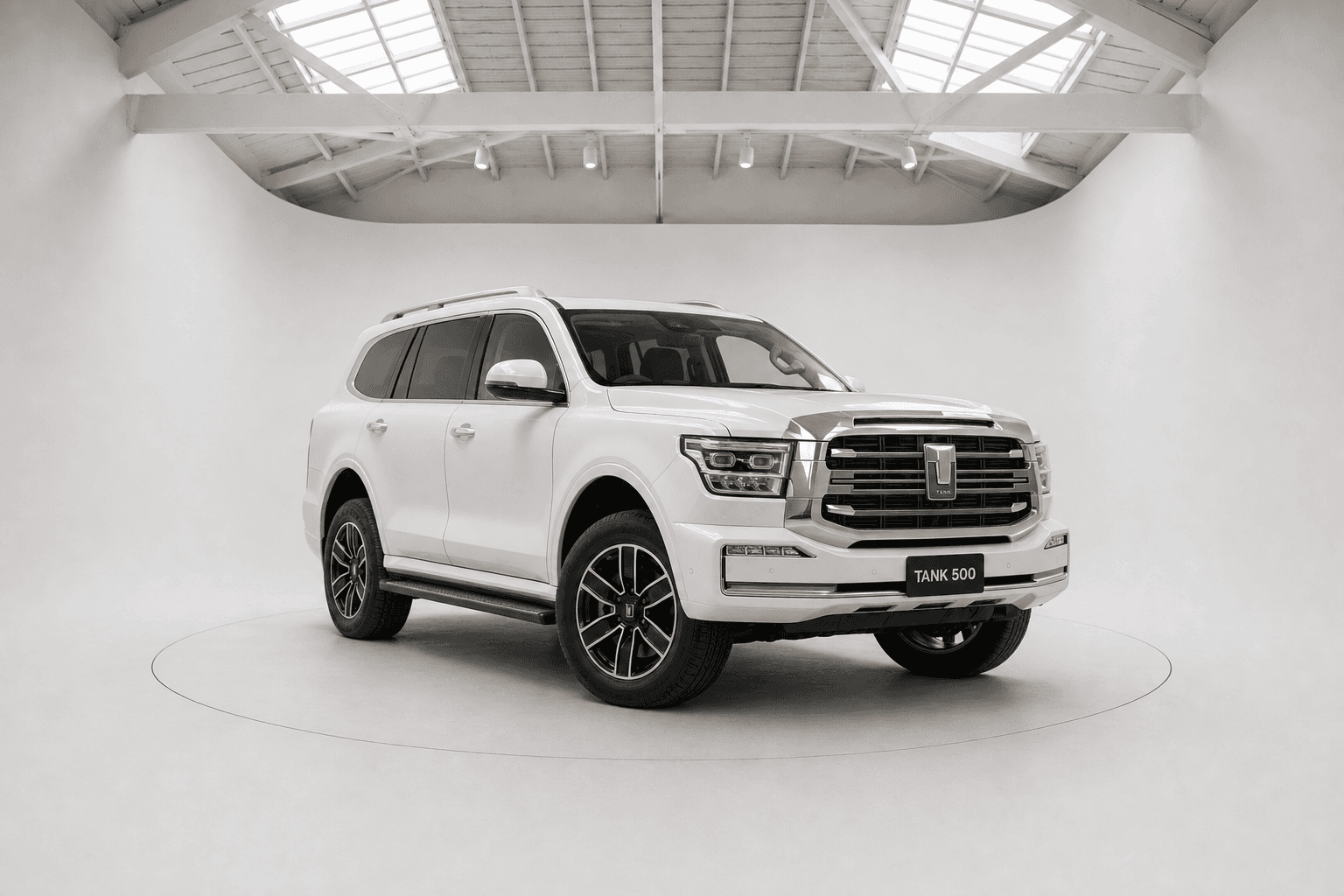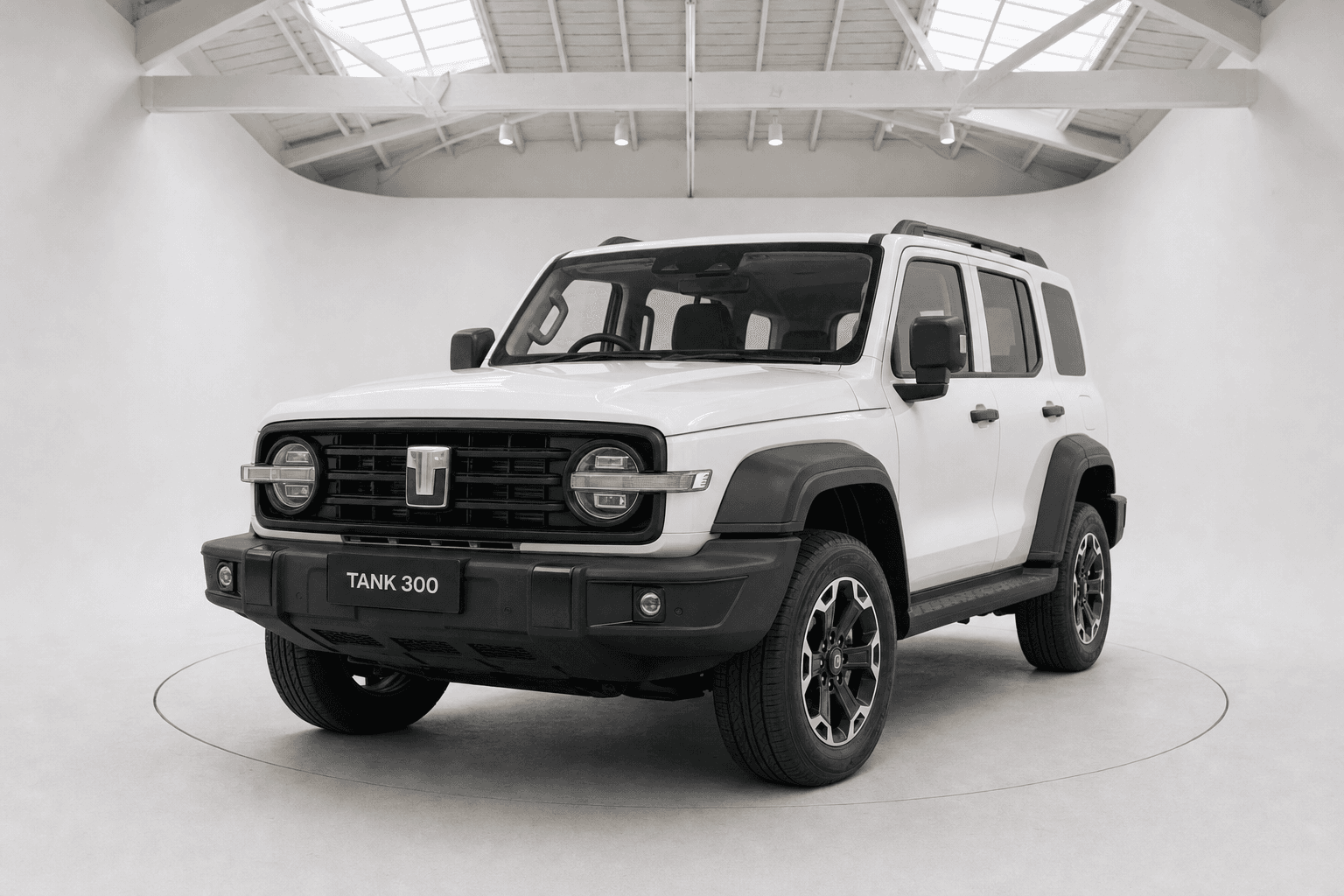
GWM
Tank 300
From $47,990

Ford
Model Profile
From $60,000
Offer price · priced Jul 2026. Limited-time offer. Details →
The Ford Everest pulls off a trick most large SUVs gave up on. It's built on a ladder frame like a proper four-wheel drive, wades 800mm and locks its rear diff, yet AU reviewers near-unanimously rate its ride and steering the most composed in the ladder-frame class. It topped the large-SUV segment on VFACTS registrations in 2025 and held number one into 2026, and the mid-life MY26.5 update widens the appeal again: the V6 diesel is now offered from the entry grade up, the trim ladder is simpler, and a 12-inch touchscreen is standard across the range. It's less a reinvention than a sharpening of a tool that has deeply embedded itself in the hearts and minds of Australian car buyers.
2025
Topped the segment on VFACTS registrations, ahead of the Prado, and held the lead into 2026.
800mm
Ladder frame, low-range transfer case and a locking rear diff make it a genuine off-roader.
5 stars
Rated 2022, with 93 per cent child-occupant protection and nine airbags.
125–184kW
Power405–600Nm
Torque3500kg
Braked towing7.1–9.3L/100km
Fuel economyRange shown across the Everest line-up. Pick a priority to see the numbers that matter to you.
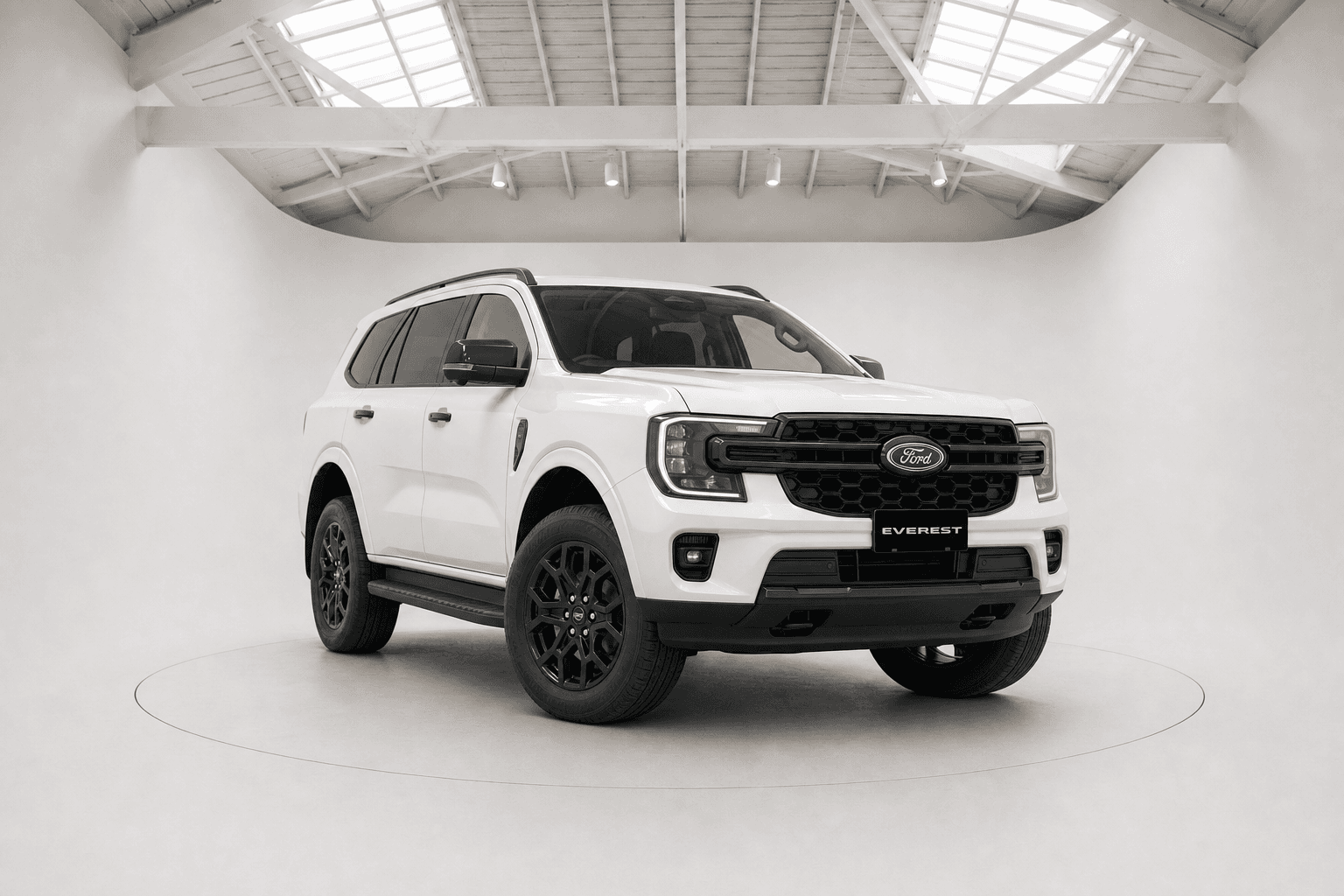
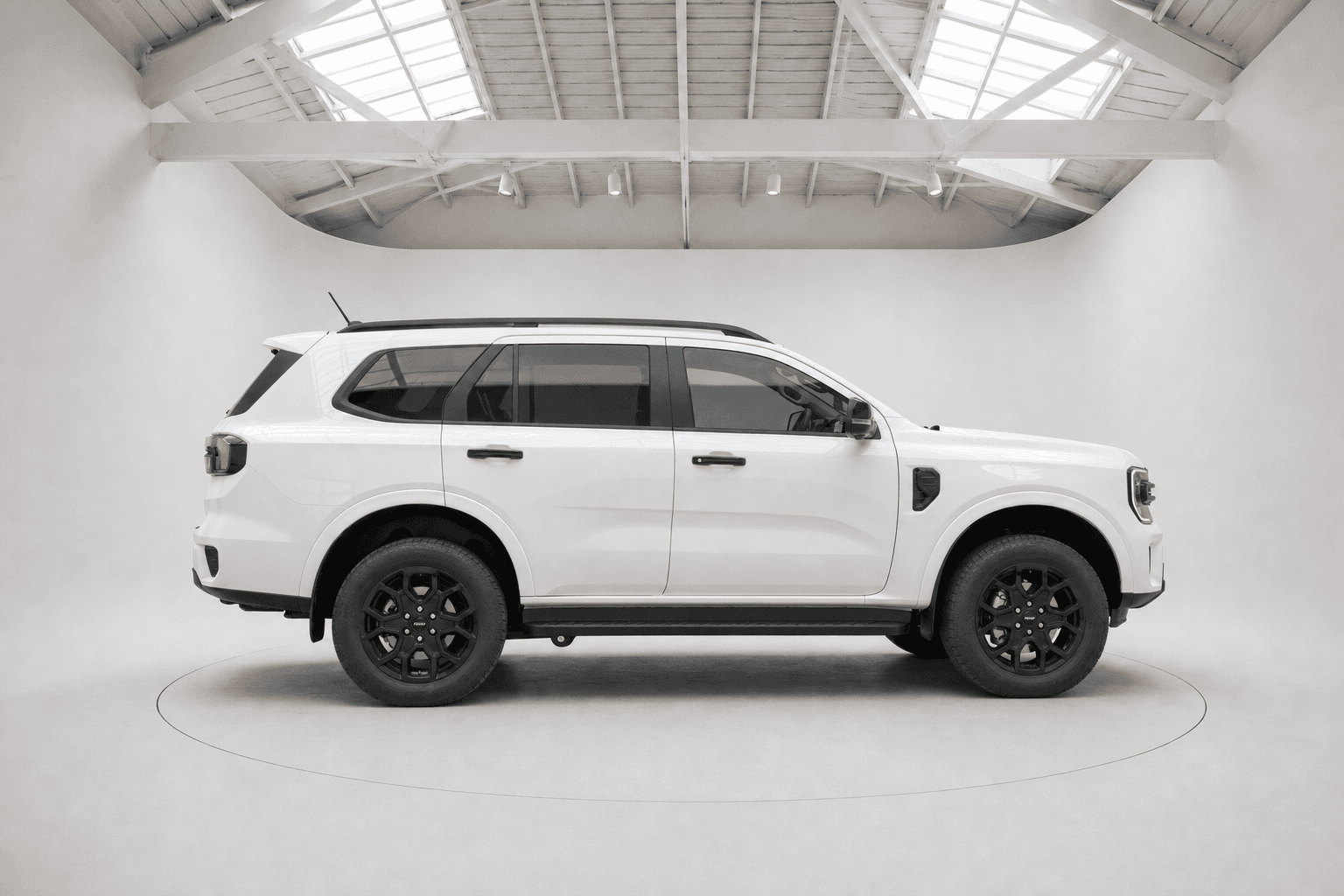
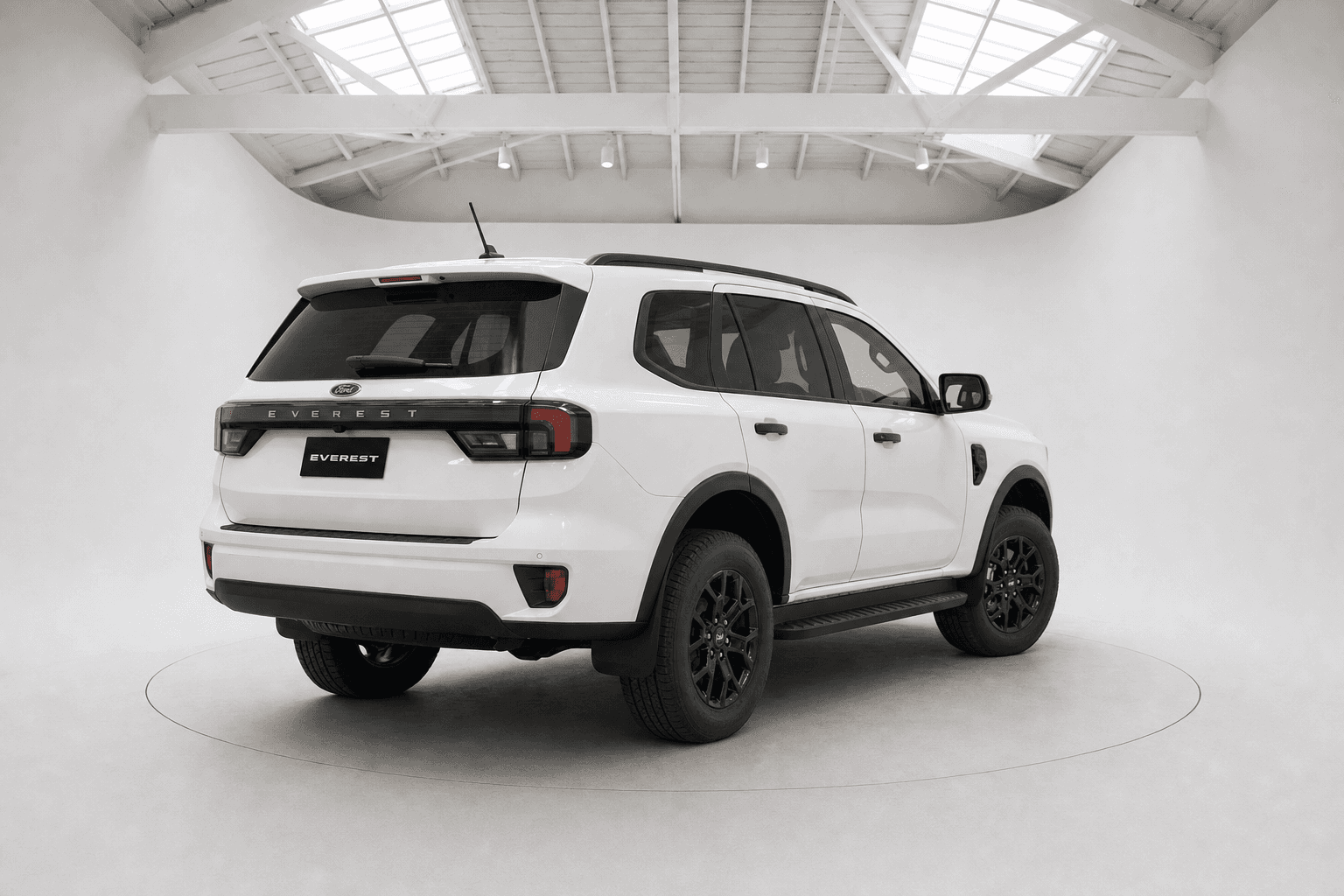
Images are illustrative and digitally rendered. They may not reflect the exact variant, colour or trim. Details →
The Everest's appeal rests on a split personality the soft-roader crowd cannot match. Underneath, it shares the Ranger's body-on-frame platform and the genuine four-wheel-drive hardware that comes with it: a low-range transfer case, a locking rear differential, selectable terrain modes and 800mm of wading depth. On the road, though, it behaves like something far more civilised, with a ride and steering balance Australian reviewers consistently rate best-in-class for a ladder-frame SUV. Its dual nature, a real off-roader genuinely pleasant on the daily commute, is why it sits at the top of its segment.
The MY26.5 update, with deliveries from mid-2026, is the most significant change since the current generation launched. The headline is engine choice: the 184kW/600Nm 3.0-litre V6 turbo-diesel, previously reserved for dearer grades, is now available from the entry Active up. The old 2.0-litre bi-turbo four has been retired in favour of a revised single-turbo 2.0-litre making 125kW and 405Nm, now paired with the same 10-speed automatic as the V6. The trim ladder is cleaner too: the former Ambiente and Trend grades give way to a single, better-equipped Active, and every Everest is now four-wheel drive.
However you spec it, the towing and touring credentials are serious. Every grade is rated to 3,500kg braked, and a 6,250kg gross combination mass means you can get closer to towing and loading at the same time than some rivals allow. The V6 is the effortless choice for heavy trailers and long-distance touring; the revised 2.0-litre, smoother now on the 10-speed, is the clever pick for buyers who mostly stay in town. For the off-road set, the Tremor goes furthest: Bilstein position-sensitive dampers, a raised ride height that lifts clearance to 255mm and the angles to 32 and 26 degrees, General Grabber all-terrain tyres and a Rock Crawl mode.
It's not perfect. The revised 2.0-litre makes less power and torque than the bi-turbo it replaces, and the four-cylinder grades step down to part-time four-wheel drive where the V6 runs a full-time system. The climb to the top Platinum gets pricey, and badge-prestige shoppers will feel the pull of other flagships. But on the things a large-SUV buyer actually weighs, space, safety, towing, genuine off-road ability and on-road comfort, few rivals are as complete. The Everest is the pick for the household wanting one car to tow the van, work off the bitumen and still drive well on the Monday commute, and the mid-range Sport is where the case is cheapest to make. City-Centric buyers can save the V6 premium; heavy towers and tourers shouldn't.
Tuned here
The Everest is engineered and road-tuned in Australia, which reviewers credit for its rare on-road polish.
 Side elevation
 Front elevation
0mm
Length0–2207mm
Width0mm
Height0mm
WheelbaseThe MY26.5 Everest ladder runs across five grades, with the entry Active and mid Sport offered with either the 2.0-litre four or the V6, and the off-road Tremor, the limited-edition Wildtrak and luxury Platinum V6-only. Prices shown are NSW driveaway estimates.
From $60,000
The new entry grade. Five seats, 18-inch alloys, a locking rear diff, leather-accented trim, dual-zone climate, the 12-inch touchscreen and the full safety suite. A seven-seat layout is a small option.
From $73,894
The same Active kit on the 3.0-litre V6. The 184kW/600Nm diesel and full-time four-wheel drive replace the 2.0-litre four's part-time system: the cheapest way into the engine you actually want for towing and touring.
From $75,994
The volume pick. Adds seven seats as standard, 20-inch alloys, a power tailgate, zone lighting, heated and ventilated power front seats and a 400W power inverter.
From $84,394
The volume-pick Sport with the V6 under the bonnet. The seven seats, heated and ventilated front chairs and power tailgate all carry over; the 600Nm V6 and full-time four-wheel drive make it the Sport to tow and tour with.
From $88,257
The off-road grade, V6 only. Adds Bilstein position-sensitive dampers, a raised ride height, General Grabber all-terrain tyres, a Rock Crawl mode and heavy-duty side steps.
From $88,257
A limited-edition run of around 1,000 cars, V6 only. Adds signature Wildtrak styling: C-Clamp Matrix LED headlights, 20-inch gloss-black alloys, Ignite Orange accents inside and out, a 360-degree camera and seven leather-accented seats. It slots in just below the Platinum.
From $92,114
The flagship, V6 only. Adds Matrix LED headlights, 21-inch alloys, a panoramic roof, a 12-speaker B&O sound system, quilted leather, a power-folding third row and heated rear seats.
Offer price · priced Jul 2026. Limited-time offer. Details →
Fuel or charging, insurance, servicing, tyres and rego, with repayments if you finance it. Estimates for a NSW private buyer, not a quote.
The Ford Everest is rated to tow up to 3,500 kg with a braked trailer and 750 kg without trailer brakes.
Heaviest braked trailer allowed, quoted as ATM: the loaded trailer including ball weight.
3,500 kg
Limit for trailers without their own brakes.
750 kg
Gross vehicle mass: the most the loaded vehicle may weigh, ball weight included.
3,100 kg
Gross combination mass: vehicle and trailer together, both fully loaded.
6,250 kg
The vehicle as delivered, before people, cargo and accessories.
2,245 kg
Everything you may add: people, cargo, accessories and ball weight.
855 kg
Downward load on the tow ball; it counts toward GVM.
350 kg
Hook up 3,500 kg with 350 kg on the ball and the Active 2.0L Turbo Diesel AWD has 505 kg of payload left for people, cargo and accessories.
The GCM allows the full payload and the full tow rating at the same time, which is rarer than it sounds in this class.
Assuming 10 per cent of the trailer weight.
Two adults plus luggage is roughly 400 kg.
Fits within every published limit.
Tow rating
0 kg under the 3,500 kg braked rating
Vehicle GVM
105 kg spare after the ball weight and your load
Combined GCM
105 kg spare across the whole combination
Tow ball limit
0 kg under the 350 kg ball limit
Figures are manufacturer maximums for the Active 2.0L Turbo Diesel AWDand can change with model year; the compliance plate and handbook of your exact vehicle govern. In Australia, trailers over 750 kg GTM (the loaded weight on the trailer's own wheels) need their own brakes, and over 2,000 kg they need brakes on all wheels plus a breakaway system. Ball weight typically runs 8 to 12 per cent of ATM. Axle loads and tyre ratings are not modelled here. Checking a different car against your van? Use the towing calculator.
ANCAP · Tested 2022
This vehicle achieved the highest possible ANCAP safety rating, with strong results across occupant protection, pedestrian safety and safety-assist technology.
The Everest is the large SUV that refuses to choose between capability and comfort, which is exactly why it leads its segment. Every grade tows 3,500kg braked, wades 800mm and carries a five-star ANCAP rating, yet it rides and steers better on the road than almost any ladder-frame rival. The MY26.5 update sharpens the case by opening the punchy V6 diesel to the whole range and simplifying the ladder. Pick the V6 if you tow or tour, the revised 2.0-litre if you mostly stay in the city, and the Tremor if you head off the bitumen often. The mid-range Sport is the sweet spot for everyone else. Shop the Prado for prestige and the Isuzu MU-X for value, but the Everest remains the most complete all-rounder in the class.
Past generations. Context, not the car on sale today.
The Everest arrived in Australia in 2015 as Ford's Ranger-based body-on-frame SUV, and was reinvented with the current generation in 2022. Over that time it has grown into Australia's favourite large SUV on the strength of genuine four-wheel-drive ability paired with on-road manners few ladder-frame rivals match. One engine note is worth knowing before you shop used.
The first Australian Everest, sharing the previous Ranger's platform and powered initially by a 3.2-litre five-cylinder turbo-diesel, later the 2.0-litre bi-turbo. It established the on-road and off-road balance the nameplate is now known for.
Moved to the Ranger T6.2 platform and added the 184kW/600Nm 3.0-litre V6 turbo-diesel option. The off-road Tremor and other grades followed, broadening the range.
The previous 2.0-litre bi-turbo four used a wet timing belt that caused concern among some owners. The MY26.5 update replaces it with a revised single-turbo 2.0-litre that uses a timing chain, which Ford says improves durability. If you shop a used pre-MY26.5 four-cylinder Everest, it is worth being aware of.
By Yuri Cartland, Editor