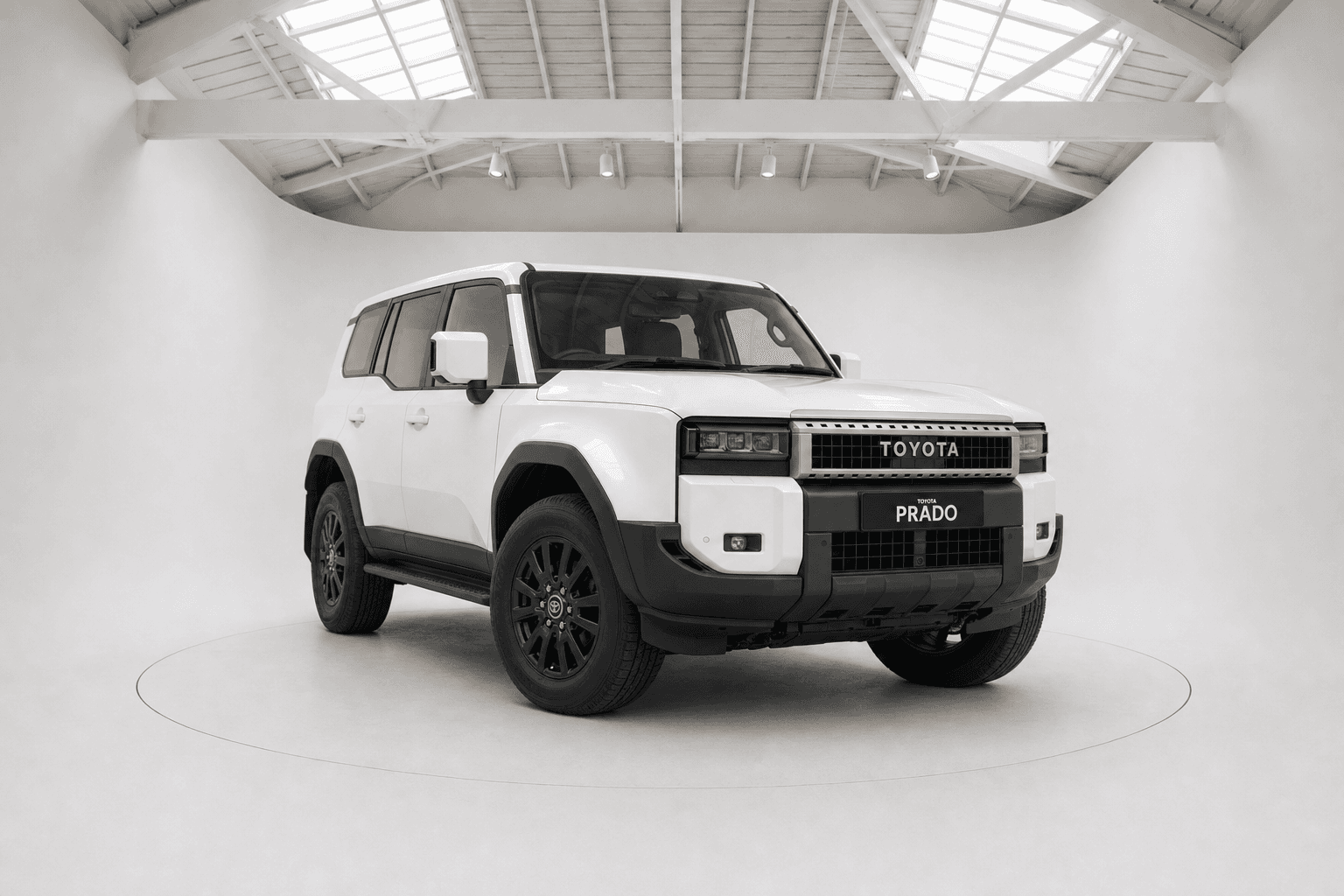
Large 4WD SUV
Everest vs LandCruiser Prado
Ford · Toyota
Head to head
Everest
Patrol
Last updated July 2026
From$60,000
From$105,408
The Ford Everest suits most buyers, because it uses roughly 40 percent less fuel, costs about half as much to service and holds a current five-star ANCAP rating the Nissan Patrol has never been tested for. Choose the Patrol when eight seats or a near-three-tonne van make it the only one that genuinely does the job.
393kg
Both are rated to tow 3,500 kg. Hitch that to the Ford Everest and 393 kg is left for people and gear. Hitch it to the Nissan Patrol and 714 kg is left, its entire payload.
Pick a priority — we’ll show the numbers that matter and tell you which car we’d choose.
| Ford Everest | vsspecification | Nissan Patrol |
|---|---|---|
125 kW | Power | 298 kW (leads) |
405 Nm | Torque | 560 Nm (leads) |
3,500 kg | Braked towing | 3,500 kg |
7.1 L/100km (leads) | Fuel economy | 14.4 L/100km |
Based on Essentials, we’d pick the Nissan Patrol.
| Ford Everest | vsspecification | Nissan Patrol |
|---|---|---|
229 mm | Ground clearance | 273 mm (leads) |
30.4° | Approach | 34.4° (leads) |
25.3° | Departure | 26.3° (leads) |
The Patrol takes the geometry. It clears 273 mm to the Everest's 229, approaches at 34.4 degrees against 30.4, and departs at 26.3 against 25.3. Both run a locking rear differential and a low-range transfer case. The Everest answers with a published 800 mm wading depth and a 22.2 degree rampover, neither of which Nissan publishes for the Patrol, and it turns in 11.8 m against 12.5. Nothing here separates them on capability so much as on size: the Patrol is 261 mm longer on a 175 mm longer wheelbase, which helps stability and hurts tight technical work.
Based on Off-road, we’d pick the Nissan Patrol.
| Ford Everest | vsspecification | Nissan Patrol |
|---|---|---|
3,500 kg | Braked towing | 3,500 kg |
855 kg (leads) | Payload | 714 kg |
3,100 kg | GVM | 3,500 kg (leads) |
Both are rated to 3,500 kg braked, 750 kg unbraked, 350 kg on the ball. The dead heat ends at gross combination mass. The Patrol is rated to 7,000 kg against the Everest's 6,250, and that difference decides what you can put in the car. Hitch 3,500 kg to the Patrol and 3,500 kg of its combined rating remains, enough for its full 714 kg payload on top of a 2,786 kg kerb weight. Do the same on the Everest and 2,750 kg remains against a 2,357 kg kerb, leaving 393 kg. Same advertised capacity, very different loaded reality.
Based on Towing & weights, we’d pick the Nissan Patrol.
| Ford Everest | vsspecification | Nissan Patrol |
|---|---|---|
125 kW | Power | 298 kW (leads) |
405 Nm | Torque | 560 Nm (leads) |
7.1 L/100km (leads) | Fuel economy | 14.4 L/100km |
Two different answers to the same problem. The Patrol's 5.6-litre naturally aspirated petrol V8 makes 298 kW, 114 kW clear of the Everest's 3.0-litre V6 turbo diesel, and it is the more powerful car by a margin no gearbox closes. But the Everest makes more torque, 600 Nm against 560, and delivers it low. The Patrol runs a seven-speed automatic, the Everest a ten-speed. Weight frames all of it: 2,786 kg against 2,357 kg, a 429 kg difference the V8 spends much of its advantage carrying.
Based on Engine & efficiency, we’d pick the Nissan Patrol.
| Ford Everest | vsspecification | Nissan Patrol |
|---|---|---|
7.1 L/100km (leads) | Fuel economy | 14.4 L/100km |
Not close over any real ownership period. The Everest opens at $73,894 driveaway against the Patrol's $105,212, both quoted July 2026, and the gap widens from there. Fuel is the larger half: 8.5 L/100km against 14.4, so the Patrol burns roughly 69 percent more. Servicing is $1,596 across five years against $3,000, with the Patrol back at a dealer every six months or 10,000 km at $600 a visit. Both carry five years of warranty with unlimited kilometres and a year of roadside assistance.
Based on Running costs, we’d pick the Ford Everest.
| Ford Everest | vsspecification | Nissan Patrol |
|---|---|---|
9 (leads) | Airbags | 6 |
Yes | AEB | Yes |
Yes | Adaptive cruise | Yes |
Yes | Blind-spot monitor | Yes |
Yes | 360° camera | Yes |
The one axis with a verified answer on only one side. The Everest holds a five-star ANCAP rating from its 2022 test, scoring 86 percent adult occupant, 93 percent child occupant, 74 percent vulnerable road user and 86 percent safety assist, with nine airbags. The Patrol has never been ANCAP tested, so there is no rating to compare in either direction. On equipment the two are close, and the Patrol is ahead in places: both carry autonomous emergency braking, lane keep assist, adaptive cruise, blind-spot monitoring, rear cross-traffic alert and pedestrian detection, while the Patrol adds a driver attention monitor and automatic high beam the Everest Active goes without.
Based on Safety, we’d pick the Ford Everest.
| Ford Everest | vsspecification | Nissan Patrol |
|---|---|---|
5 | Seats | 8 (leads) |
12.0″ | Touchscreen | 12.3″ (leads) |
The Patrol seats eight, the Everest Active seats five, and that is a hard filter rather than a preference. Seven seats in an Everest start at the Sport grade. The Patrol is the roomier car by every dimension, 5,175 mm long and 1,940 mm tall on a 3,075 mm wheelbase, and it runs tri-zone climate control against the Everest's dual-zone. The Everest answers with an 898-litre boot behind its second row, extending to 1,823 litres folded, though that figure belongs to the five-seat Active rather than the seven-seat grades.
Based on Everyday & family, we’d pick the Nissan Patrol.
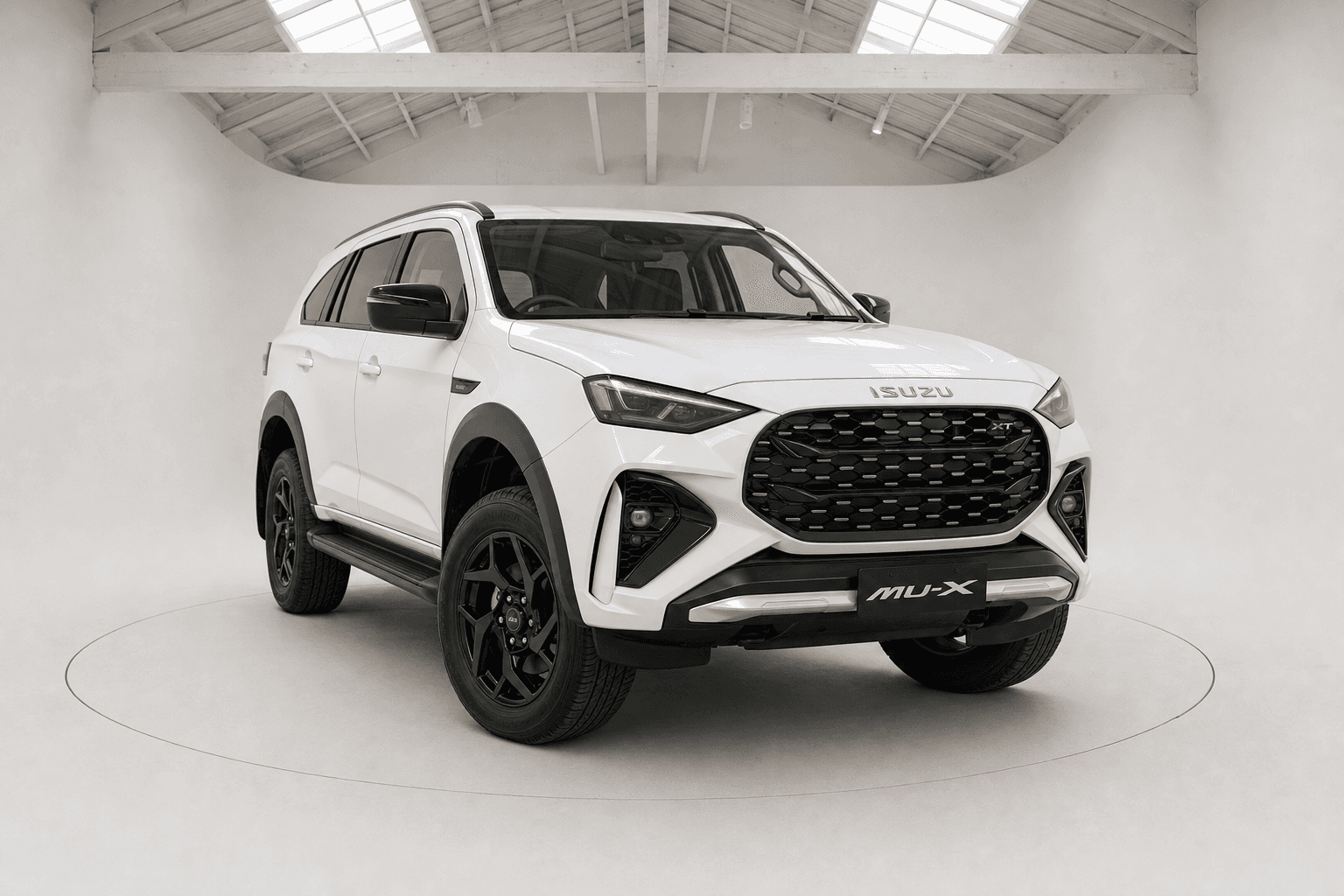
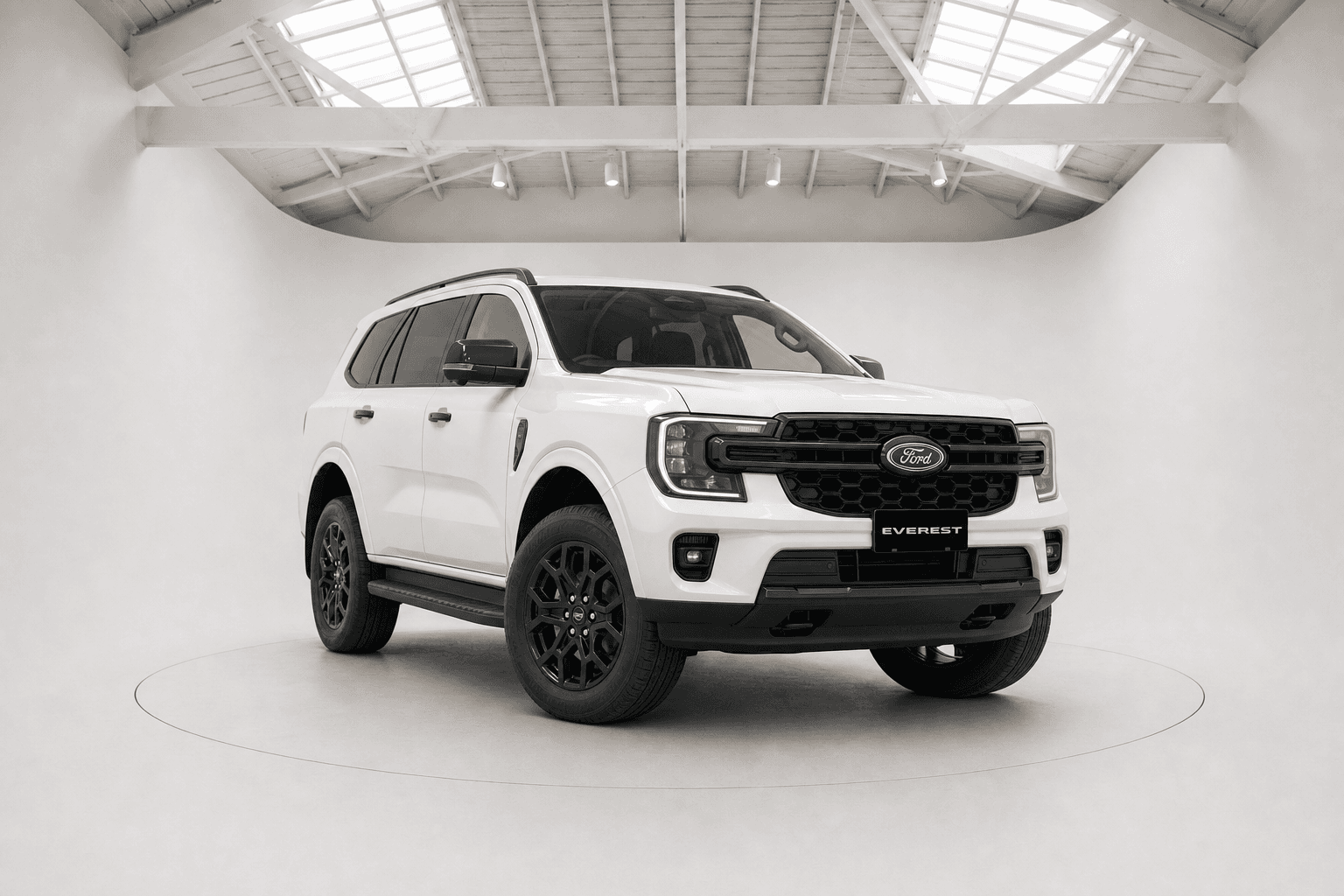
The Everest wears the T6.2 Ranger's face with the Active's own black grille and C-clamp LED headlamps. At 4,914 mm long and 1,841 mm tall it reads as a big wagon rather than a full-size one, and the 18-inch alloys sit under bodywork that has grown less upright with each update.
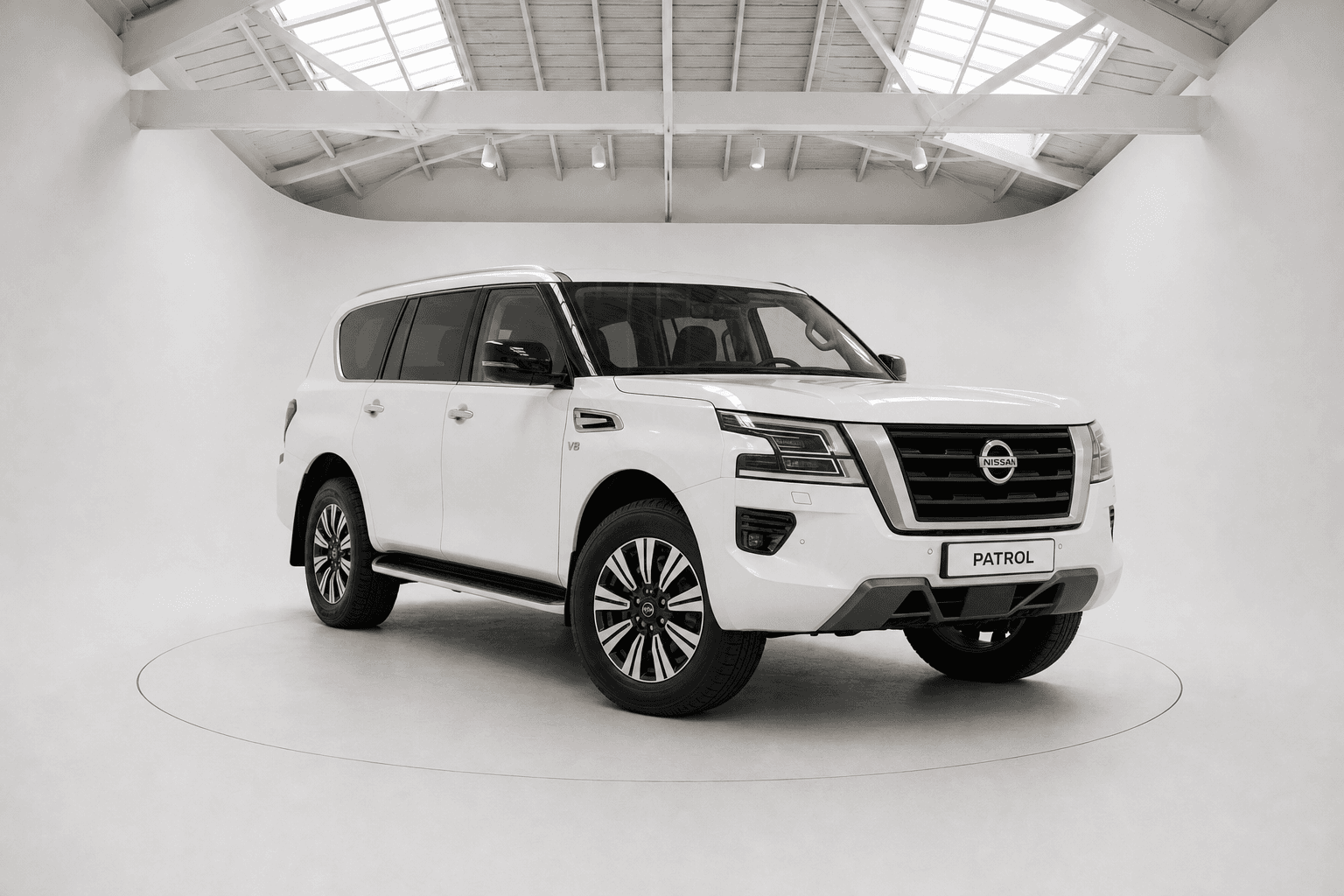
The Patrol's 2020 facelift sharpened a shape that dates to 2014, and it still reads as the largest thing in most car parks: 5,175 mm long, 1,940 mm tall, upright and slab-sided. The boomerang tail lamps and 52-LED headlights are the clearest markers of the updated car.
Images are illustrative and digitally rendered. They may not reflect the exact variant, colour or trim. Details →
Everest
Patrol
Both are rated to tow 3,500 kg braked. Hitched at their maximums, the Ford Everest keeps 141 kg more payload.
3,500 kg
Braked towing3,500 kg
855 kg
Payload714 kg
505 kg
Payload at max tow364 kg
GVM
Limit that bites firstGVM
350 kg
Max ball weight350 kg
Assuming 10 per cent of the trailer weight.
Two adults plus luggage is roughly 400 kg.
Ford Everest Active 2.0L Turbo Diesel AWD
Fits within every published limit.
Tow rating
0 kg under the 3,500 kg braked rating
Vehicle GVM
105 kg spare after the ball weight and your load
Combined GCM
105 kg spare across the whole combination
Tow ball limit
0 kg under the 350 kg ball limit
Nissan Patrol Ti
Over a limit. This combination does not comply.
Tow rating
0 kg under the 3,500 kg braked rating
Vehicle GVM
Over GVM by 36 kg. Lighten the load or the ball.
Combined GCM
314 kg spare across the whole combination
Tow ball limit
0 kg under the 350 kg ball limit
Manufacturer maximums; the compliance plate of your exact vehicle governs. Ball weight assumed at 10 per cent where unpublished; kerb or payload calculated where the maker omits one. Check any car against your van with the towing calculator.
The Everest is the sensible answer to a question the Patrol answers with a V8, and on the numbers that recur every month it is not close.
The Patrol is a 5.6-litre naturally aspirated petrol V8, and the market has legislated nearly all of them away.
By Yuri Cartland, Editor
Opinions are our own.
You are towing under about two and a half tonnes, you cover real distance, and the fuel and servicing bills matter more than the badge. At 8.5 L/100km and $1,596 over five years on July 2026 figures the Everest costs roughly half the Patrol to run and carries 79 kg more payload. It is also the tested one: five stars from ANCAP in 2022, with 93 percent for child occupant protection. Budget past the entry grade if you need seven seats.
Explore the EverestYou need eight seats, or your loaded rig runs past 6,250 kg. Its 7,000 kg combined mass rating lets it tow the full 3,500 kg braked and still carry 714 kg, where the Everest is down to 393 kg doing the same job. It also clears 273 mm and approaches at 34.4 degrees. Go in having budgeted 14.4 L/100km and $3,000 of servicing across five years, and knowing Australian production ends in August 2026.
Explore the Patrol