Off-road luxury
Defender vs LandCruiser 300
Land Rover · Toyota
Head to head
Defender
110 X D350
LX
LX 500d Luxury
Last updated July 2026
From$182,652
From$177,319
Buy the Land Rover Defender 110 X for capability: it is lighter, more powerful, sharper off-road and swallows more cargo than the Lexus LX 500d Luxury for similar money. Choose the Lexus if you need seven seats, a hushed cabin and the proven LandCruiser 300 driveline behind Toyota's resale reputation.
37.6°
At its off-road height the Land Rover Defender 110 X clears a 37.6-degree approach angle against the Lexus LX 500d Luxury's road-biased 23 degrees, the clearest sign these two diesel luxury SUVs chase very different ground for similar money.
Pick a priority — we’ll show the numbers that matter and tell you which car we’d choose.
| Land Rover Defender | vsspecification | Lexus LX |
|---|---|---|
257 kW (leads) | Power | 227 kW |
700 Nm | Torque | 700 Nm |
3,500 kg | Braked towing | 3,500 kg |
8.1 L/100km (leads) | Fuel economy | 8.9 L/100km |
Based on Essentials, we’d pick the Land Rover Defender.
| Land Rover Defender | vsspecification | Lexus LX |
|---|---|---|
293 mm (leads) | Ground clearance | 210 mm |
37.6° (leads) | Approach | 23° |
41.9° (leads) | Departure | 22° |
Off-road is the Defender's clearest win. Air suspension lifts it to a 37.6-degree approach angle against the road-biased Lexus Luxury's 23, it wades 900mm, and it clears 293mm of ground to the Lexus's 210. Both run low range and terrain modes, and the LX shares the LandCruiser 300's proven hardware, so it is no soft-roader. But Lexus reserves its serious dirt tuning for the Overtrail grade, not this Luxury. On geometry, the Defender is the more capable tool here.
Based on Off-road, we’d pick the Land Rover Defender.
| Land Rover Defender | vsspecification | Lexus LX |
|---|---|---|
3,500 kg | Braked towing | 3,500 kg |
3,200 kg | GVM | 3,280 kg (leads) |
Towing is a dead heat on paper. Both are rated to 3,500kg braked and 750kg unbraked, the class ceiling. The Defender publishes a 6,700kg gross combination mass and draws praise from reviewers for towing composure on its air suspension and eight-speed automatic. Lexus does not publish a combination mass for this grade in our data, so the full loaded-while-towing sum stays open. For most buyers both will pull a big van steadily, so the decision sits elsewhere.
A genuine tie.
Both cars handle towing & weightsequally well — this one’s a draw.
| Land Rover Defender | vsspecification | Lexus LX |
|---|---|---|
257 kW (leads) | Power | 227 kW |
700 Nm | Torque | 700 Nm |
8.1 L/100km (leads) | Fuel economy | 8.9 L/100km |
6.4 s (leads) | 0–100 | 8.0 s |
Performance goes to the Defender. Its 3.0-litre inline-six diesel makes 257kW and 700Nm and reaches 100km/h in 6.4 seconds, against the Lexus LX 500d's 227kW from a 3.3-litre twin-turbo V6. Torque is line-ball at 700Nm each, so both have the low-down pull for towing and touring, but the Defender carries 329kg less and gives up nothing at the top. The Lexus is the more relaxed cruiser; the Defender is the quicker, keener car.
Based on Engine & efficiency, we’d pick the Land Rover Defender.
| Land Rover Defender | vsspecification | Lexus LX |
|---|---|---|
8.1 L/100km (leads) | Fuel economy | 8.9 L/100km |
Value leans to the Lexus, narrowly. The two cost within a few thousand dollars of each other, so the tie-breaker is what happens after you buy. The Lexus rides on the LandCruiser 300's mechanicals, which underpin Toyota's strong resale and reliability reputation, and it lists a capped-price servicing program, though the intervals are short. The Defender answers with better fuel economy and a bigger tank, but a thinner dependability record and an options list that climbs fast. On ownership risk, the Lexus edges it.
Based on Running costs, we’d pick the Lexus LX.
| Land Rover Defender | vsspecification | Lexus LX |
|---|---|---|
6 | Airbags | 10 (leads) |
Yes | AEB | Yes |
Yes | Adaptive cruise | Yes |
Yes | Blind-spot monitor | Yes |
Yes | 360° camera | Yes |
Safety is a genuine split. The Defender holds a five-star ANCAP rating that covers every non-V8 110 and runs to the end of 2026, a tested credential the Lexus cannot show. But it earned that with six airbags and no centre airbag on an older protocol. The Lexus LX carries no ANCAP rating at all, untested rather than unsafe, and answers with ten airbags and the full active-safety suite. A proven result against more hardware: call it even.
A genuine tie.
Both cars handle safetyequally well — this one’s a draw.
| Land Rover Defender | vsspecification | Lexus LX |
|---|---|---|
5 | Seats | 7 (leads) |
972 L (leads) | Boot | 174 L |
13.1″ (leads) | Touchscreen | 12.3″ |
Family duty favours the Lexus. It seats seven to the Defender 110 X's five, adds four-zone climate and ten airbags, and wraps it in the quiet cabin Australian reviewers praise. The Defender counters with a bigger load bay and a current ANCAP rating, but five seats cap its people-moving. For a household that fills the third row, the Lexus is the natural pick; for one that carries gear more than passengers, the Defender's packaging works harder.
Based on Everyday & family, we’d pick the Lexus LX.
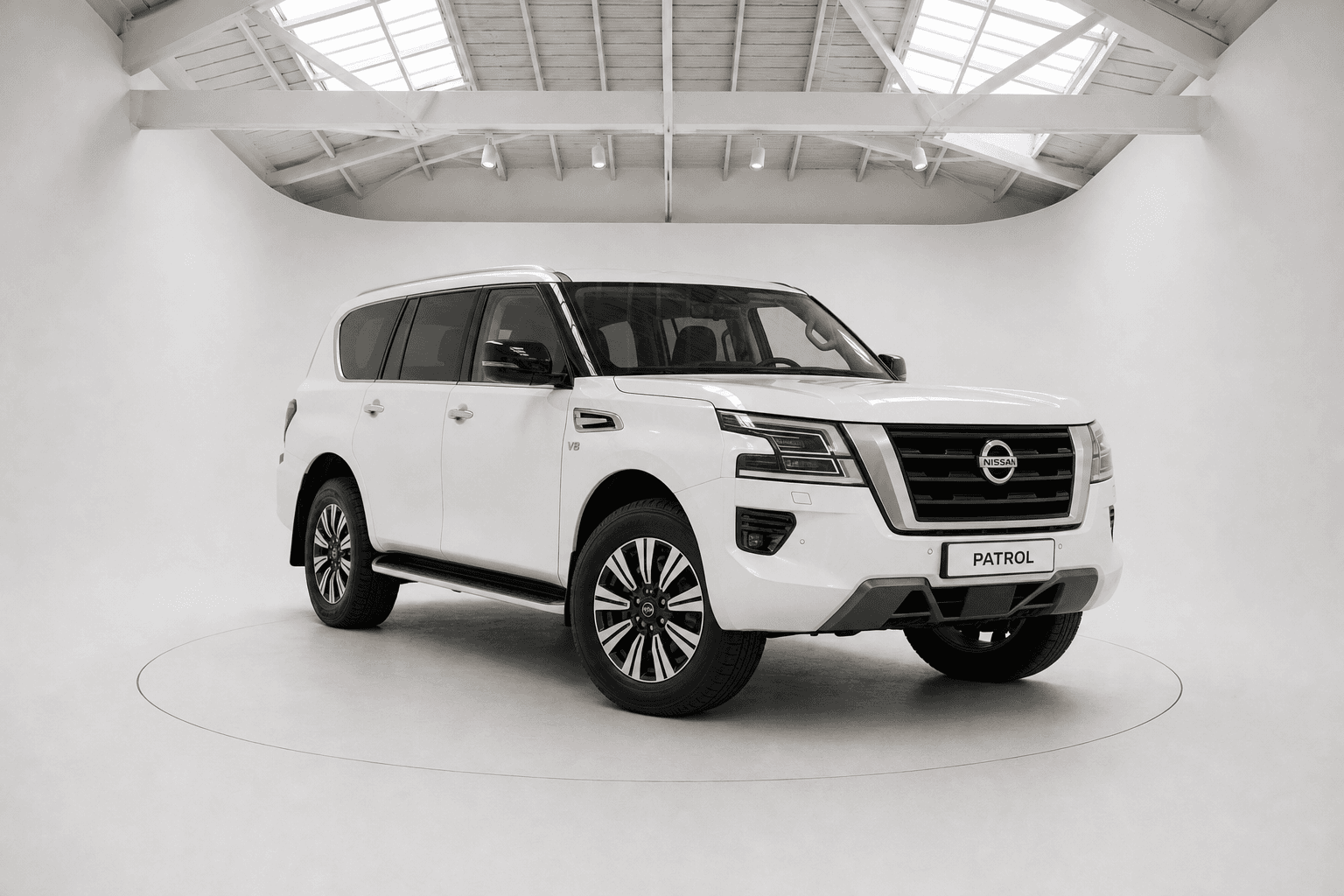
The Defender 110 X wears the reborn Defender's clean, upright face: short overhangs, round LED headlights set into a flat grille, and a squared-off bonnet that reads modern and deliberate rather than retro. On 22-inch wheels and air suspension it stands tall and purposeful. It looks like the design-led statement it is, closer to a concept car made real than to the utilitarian icon it replaced.
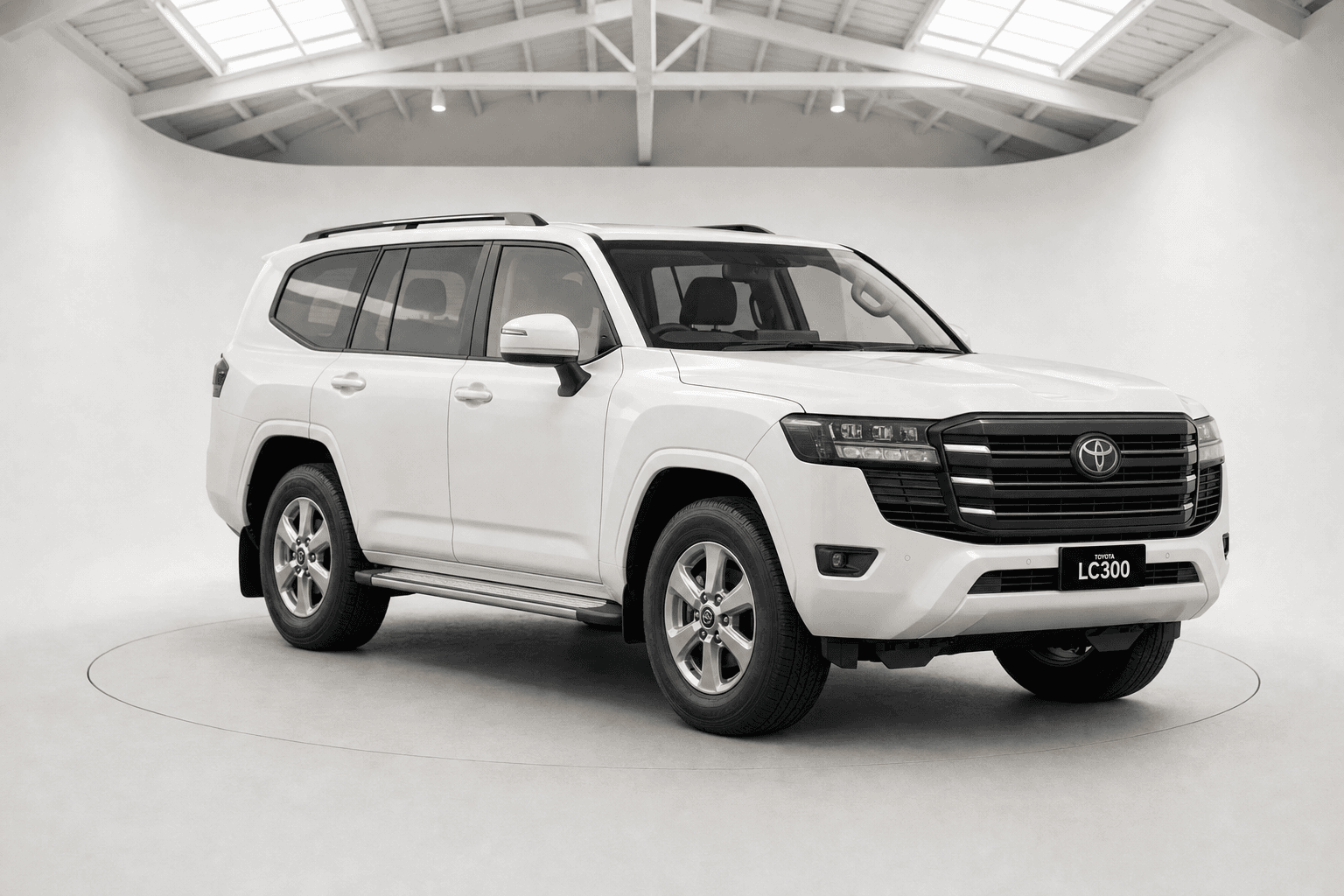
The Lexus LX 500d Luxury leads with the brand's vast spindle grille and a wide, imposing front that telegraphs old-money presence over ruggedness. It is the more conservative, more formal face of the two, closely related to the LandCruiser 300 beneath but dressed in chrome and sharper lighting. Where the Defender looks adventurous, the Lexus looks like a luxury flagship that happens to go off-road.
Images are illustrative and digitally rendered. They may not reflect the exact variant, colour or trim. Details →
Defender
LX
Both are rated to tow 3,500 kg braked. Hitched at their maximums, the Land Rover Defender keeps 74 kg more payload.
3,500 kg
Braked towing3,500 kg
764 kg
Payload590 kg
414 kg
Payload at max tow340 kg
GVM
Limit that bites firstGVM
350 kg
Max ball weight250 kg
Assuming 10 per cent of the trailer weight.
Two adults plus luggage is roughly 400 kg.
Land Rover Defender 110 X D350
Fits within every published limit.
Tow rating
0 kg under the 3,500 kg braked rating
Vehicle GVM
14 kg spare after the ball weight and your load
Combined GCM
44 kg spare across the whole combination
Tow ball limit
0 kg under the 350 kg ball limit
Lexus LX LX 500d Luxury
Over a limit. This combination does not comply.
Tow rating
0 kg under the 3,500 kg braked rating
Vehicle GVM
Over GVM by 160 kg. Lighten the load or the ball.
Combined GCM
GCM not published for this vehicle
Tow ball limit
Over the 250 kg ball limit by 100 kg
Manufacturer maximums; the compliance plate of your exact vehicle governs. Ball weight assumed at 10 per cent where unpublished; kerb or payload calculated where the maker omits one. Check any car against your van with the towing calculator.
The Defender 110 X and the Lexus LX 500d Luxury cost within a few thousand dollars of each other, and they answer that money in almost opposite ways.
The Lexus LX 500d Luxury makes its case on refinement, seats and proven hardware rather than outright capability.
By Yuri Cartland, Editor
Opinions are our own.
Capability leads your brief. The Defender is lighter by 329kg, makes 30kW more, and clears a 37.6-degree approach angle against the Lexus's 23, with 900mm of wading and a bigger load bay behind the second row. It carries a current five-star ANCAP rating too. You accept Land Rover's reliability question mark, an options list that climbs fast, and resale that trails a LandCruiser.
Explore the DefenderYou need seven seats and a quiet, proven car. The Lexus adds two seats over the Defender's five, ten airbags, four-zone climate and a 25-speaker stereo, all on the LandCruiser 300's durable body-on-frame hardware and Toyota's resale reputation. You give up 30kW, the sharper off-road geometry and a bigger boot, and you live without an ANCAP rating, untested rather than unsafe.
Explore the LX